Swedish Lapland town known for winter vehicle testing and Lappstaden, a preserved Sami church town.
Arvidsjaur sits deep in Swedish Lapland, roughly 800 kilometres north of Stockholm, and it gets cold here — genuinely, bracingly cold. That's partly the point. Winter temperatures regularly plunge to -20°C and below, which is why the town draws car manufacturers for cold-weather testing and why the frozen lake doubles as a test track each January.
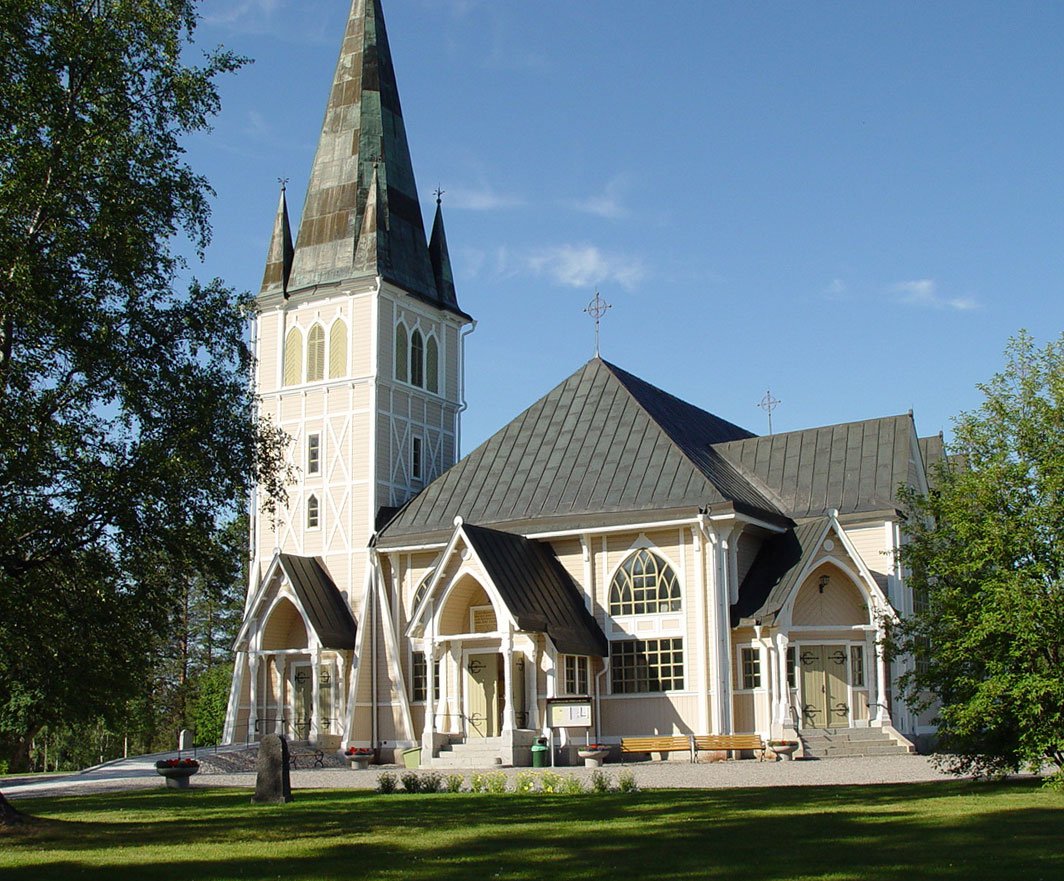
The town's most distinctive sight is Lappstaden, the oldest preserved Sami church town in Sweden. Built from the 18th century onwards, it consists of nearly 80 timber huts that Sami reindeer herders used when travelling to town for church services and market days. In winter it stands largely empty and blanketed in snow; in summer a handful of Sami families still use the huts, and the site is open as a living museum. Walking among the low wooden buildings gives a tangible sense of how seasonal Lapland life once worked.
Beyond Lappstaden, Arvidsjaur is a base for the classic Lapland outdoors: ice fishing on Lake Storavan, snowmobile safaris across the taiga, and dog sledding in the surrounding forest. In summer the same landscape offers hiking, canoeing, and the long Arctic evenings — and the steam train of the Inlandsbanan runs short heritage trips out of the station.
Guide
Getting There
Arvidsjaur Airport (AJR), 13 km south of town, has scheduled flights to Stockholm Arlanda — usually two or three daily in season. It also handles a substantial volume of winter charter flights from Germany and elsewhere, brought in by the car-testing industry.
By road, the E45 (Inlandsvägen) runs through town from south to north. The drive from Stockholm is about 11 hours; from Östersund 5 hours; from the Norwegian border (Mo i Rana) around 4 hours.
In summer, the Inlandsbanan railway stops at Arvidsjaur on its long run between Östersund and Gällivare — a slow but classic journey through Lapland forest.
Guide
When to Go
Winter (December–March) is what most visitors come for. Temperatures often sit between −10 and −25°C; the lakes are solidly frozen; the Northern Lights are regularly visible; and the dog sledding, snowmobiling, and ice-driving season is in full swing. Daylight is short — three to four hours in mid-winter — but the snow reflects what light there is.
Summer (June–August) is the opposite: the midnight sun never quite sets in June and July; temperatures are mild (15–20°C); and the forest, lakes, and mountains open up for hiking, fishing, and canoeing. The mosquitoes are intense around midsummer.
Avoid spring (April–May) if you want either extreme — the snow is melting and travel can be muddy.