Note: Crimea has been under Russian military occupation since 2014. Most Western governments advise against travel to the territory. This page describes Sevastopol as it was before the occupation and as it exists historically.
Sevastopol is a major port city on the southwest tip of Crimea, long associated with naval history and military significance. The city was founded in 1783 as the base for Russia's Black Sea Fleet and has been shaped ever since by its military identity. The Siege of Sevastopol during the Crimean War (1854–55) and the devastating defence of the city in World War II — when it held out against German and Romanian forces for 250 days — give the city an atmosphere heavy with military commemoration.
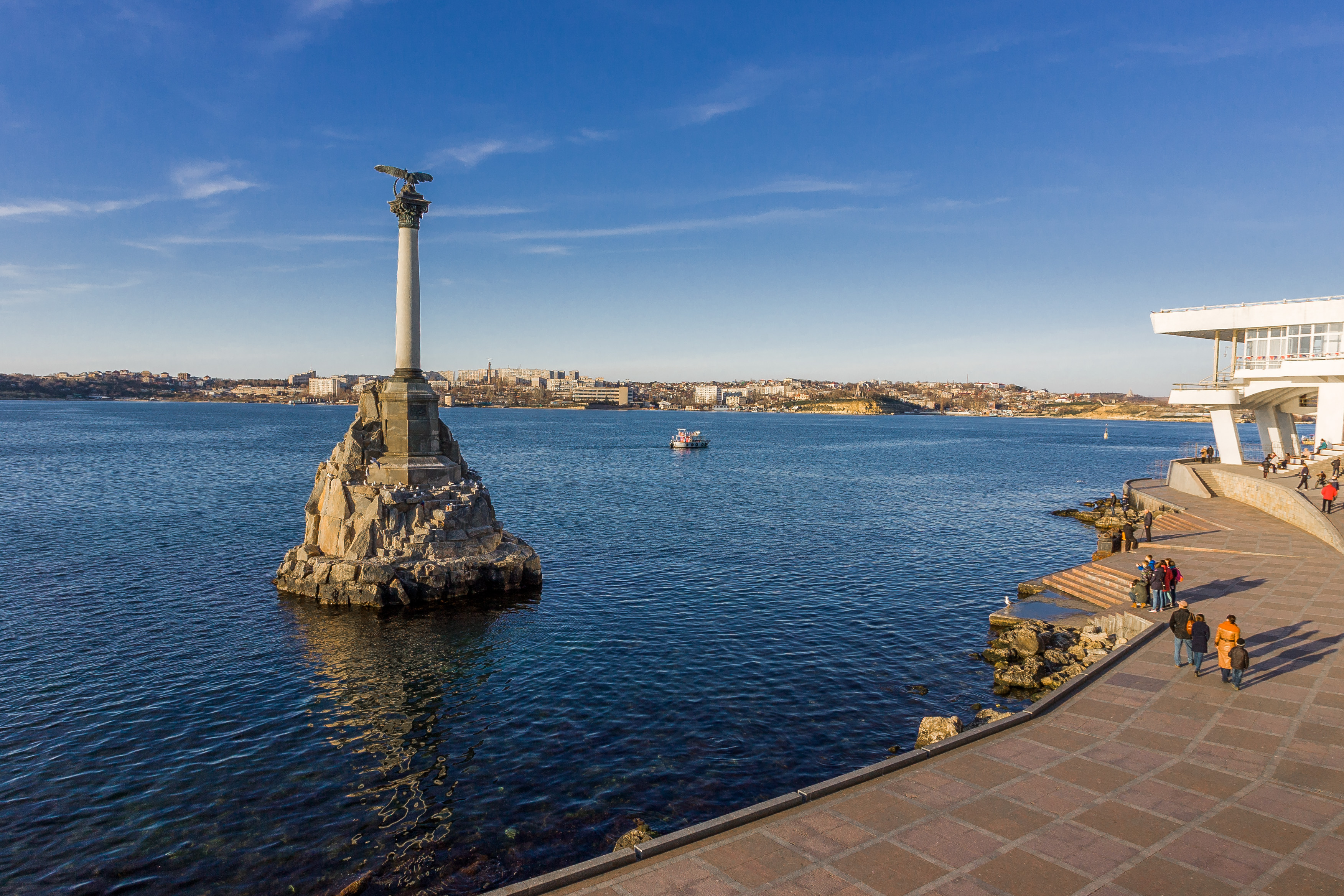
The most visible landmark is the Monument to the Sunken Ships, a stone column rising from the harbour with a double-headed eagle, marking where the Russian fleet was deliberately scuttled to block the British and French. The city centre along Nakhimov Square and Primorsky Boulevard is handsome — neoclassical facades, sweeping views over the bay, and St Vladimir's Cathedral serving as a mausoleum for the four admirals who died in the Crimean War. The Malakhov Kurgan memorial hill preserves the earthworks from both the Crimean War and World War II sieges.
The most important historical attraction is Chersonesus, the ancient Greek colony founded over 2,500 years ago and now a UNESCO-listed archaeological site and museum within the city limits. Extensive ruins, a basilica, and the cathedral where Prince Vladimir of Kyiv was baptised in 988 AD make it unmissable.