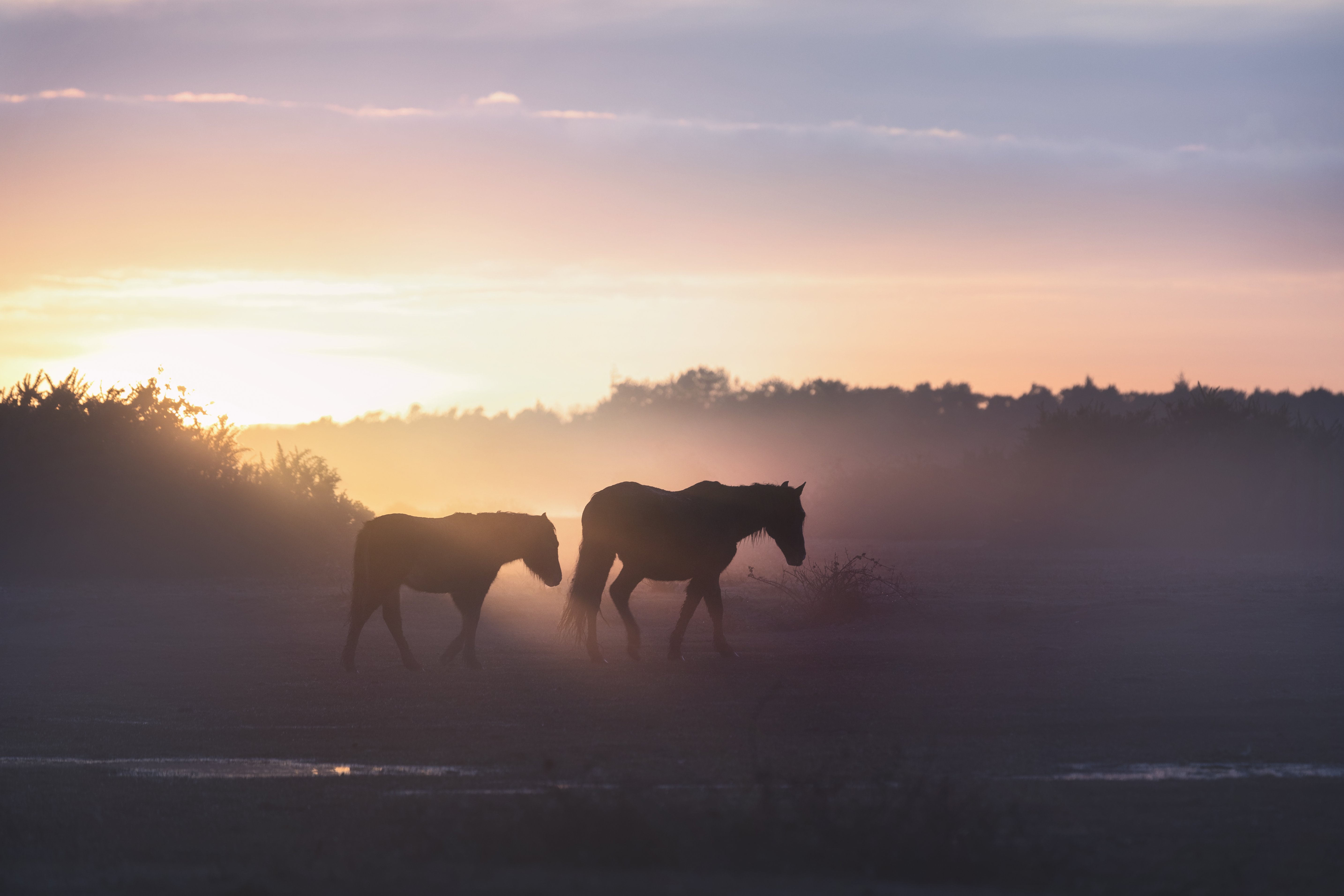
The New Forest is one of England's newest national parks, designated in 2005, but the forest itself is anything but new. William the Conqueror established it as a royal hunting ground in 1079, displacing villages and farming communities to do so. His son William Rufus was killed here in a hunting accident — or perhaps not an accident — in 1100. The Rufus Stone, set in a clearing near Brook, marks the spot where he is said to have fallen.
Today the forest covers about 220 square miles of heathland, ancient woodland and bog in south-west Hampshire. Its most famous residents are the New Forest ponies, which roam freely across roads and through villages alongside donkeys, cattle and occasional pigs. These animals belong to local commoners who have held grazing rights here for centuries; feeding them is illegal and genuinely dangerous. Drive carefully, especially at night — the speed limit across the open forest is 40mph for good reason.
Walking and cycling are the main draws. The forest has an excellent network of gravel cycle tracks, largely flat and well suited to families. The villages of Lyndhurst (the unofficial capital), Brockenhurst and Burley make good bases. Burley leans into its reputation for witchcraft and cider with some enthusiasm, which is either charming or irritating depending on your temperament.
The southern edge brings a different character: the Beaulieu River and estuary, the ruins of Beaulieu Abbey, and the National Motor Museum at Beaulieu, which holds around 250 vehicles including Donald Campbell's Bluebird. The Solent shoreline beyond offers sailing, birdwatching and long mudflat walks.
The New Forest is easily reached from Southampton or Portsmouth, and South Western Railway trains from London Waterloo reach Brockenhurst in under two hours.