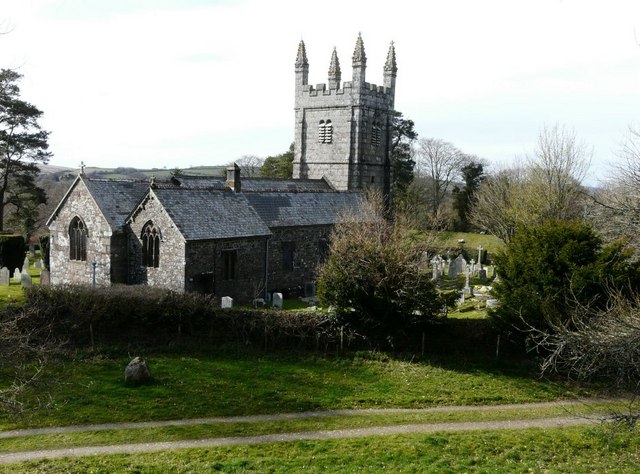
Lydford is a small village on the north-western edge of Dartmoor, tucked into a fold of the moor above the River Lyd. It's not a touring base or a destination for a long stay, but it has three things that make it worth the detour: a dramatic river gorge, a well-preserved Norman castle, and a handsome medieval church.
The gorge is the main draw. The Lyd has cut a narrow, steep-sided slot through the rock that feels disproportionately wild for such a small river — the water churns through pools and over falls in a wooded ravine that stays cool and mossy even in summer. A path runs the length of the gorge to the White Lady waterfall. The National Trust manages access; allow an hour or two.
The castle is a short walk from the church — a squat twelfth-century keep that served at various points as a gaol and a stannary court for the local tin-mining industry. It's small but in good condition, and you can climb it. The village church of St Petroc is equally ancient, with a churchyard full of carved Devon slate headstones.
A few miles south-east, the volcanic plug of Brent Tor rises from the moor with a tiny Norman church perched at its summit — one of the most dramatically sited parish churches in England. The approach is steep but short, and the views on a clear day stretch to both coasts. The granite outcrop of Brat Tor, with its Widgery jubilee cross, lies a comparable distance to the north-east and makes an easy half-day walk.