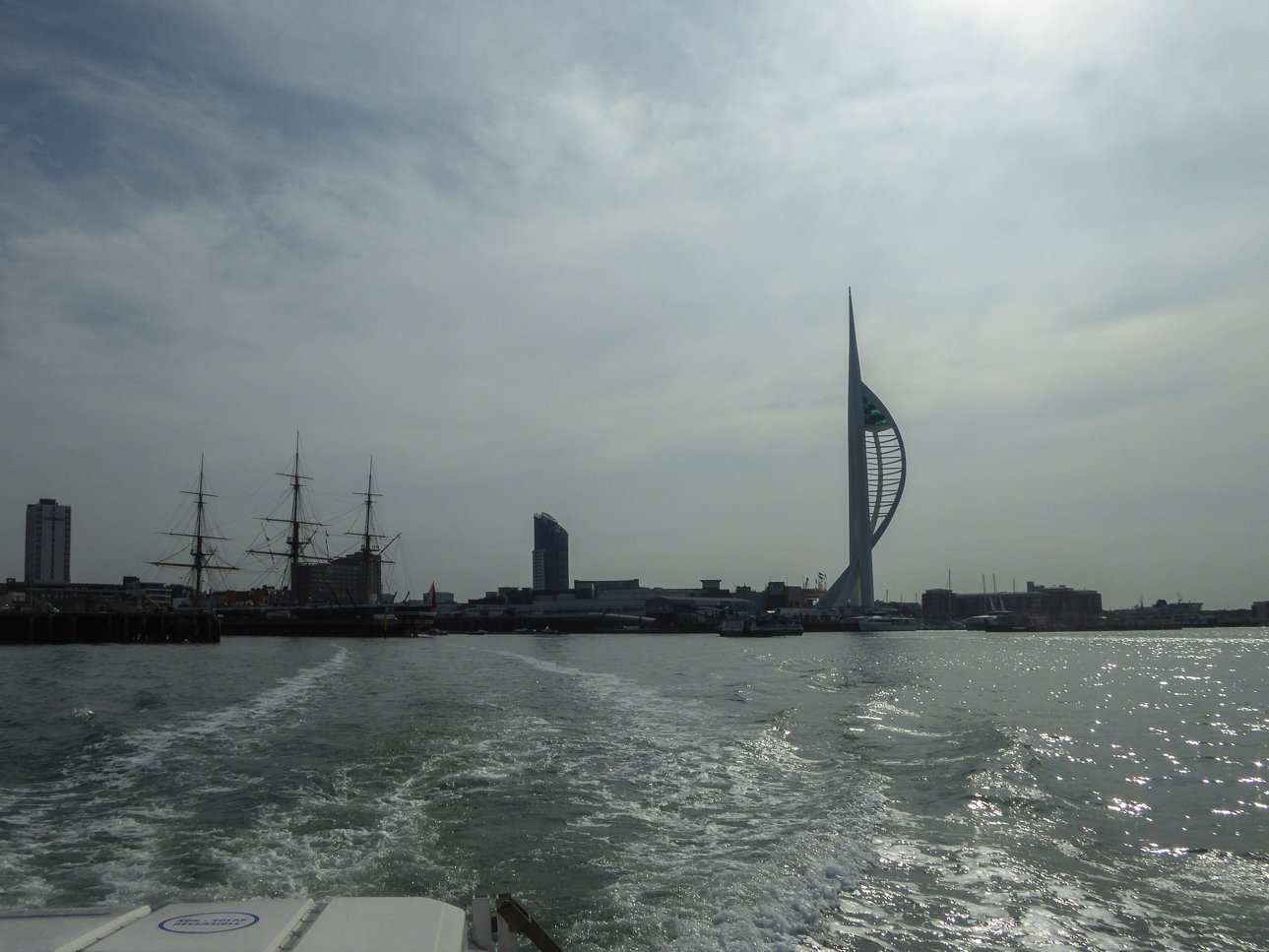
Portsmouth is Britain's foremost naval city, built on Portsea Island on the Hampshire coast. Its sheltered harbour, protected by the Isle of Wight to the south and Portsdown Hill to the north, has made it the home of the Royal Navy for centuries.
The Historic Dockyard is the main draw. Here you can board HMS Victory, Nelson's flagship at the Battle of Trafalgar, and stand on the spot where he fell. Nearby, the recovered wreck of the Mary Rose, Henry VIII's Tudor warship that sank in Portsmouth Harbour in 1545, is displayed in its own museum. HMS Warrior, the world's first iron-hulled warship, completes the trio of historic ships.
Beyond the dockyard, Gunwharf Quays is a waterfront development with outlet shopping, restaurants and the Spinnaker Tower, a striking 170-metre viewing platform with glass floors and panoramic views across the Solent. Old Portsmouth, at the harbour mouth, has cobbled streets, fishermen's cottages and good pubs overlooking the water.
The seafront at Southsea stretches east from Old Portsmouth, with a long promenade, shingle beach and views across to the Isle of Wight. The D-Day Story here tells the story of the Normandy landings, for which Portsmouth was a major embarkation point. Southsea Castle, built by Henry VIII in 1544, sits on the seafront nearby. Inland to the east, Portchester Castle preserves the most complete Roman fortress walls in northern Europe with a Norman keep inside.
Portsmouth has daily ferry crossings to France, Spain, Jersey and Guernsey, and the hovercraft to the Isle of Wight takes just ten minutes from Southsea.