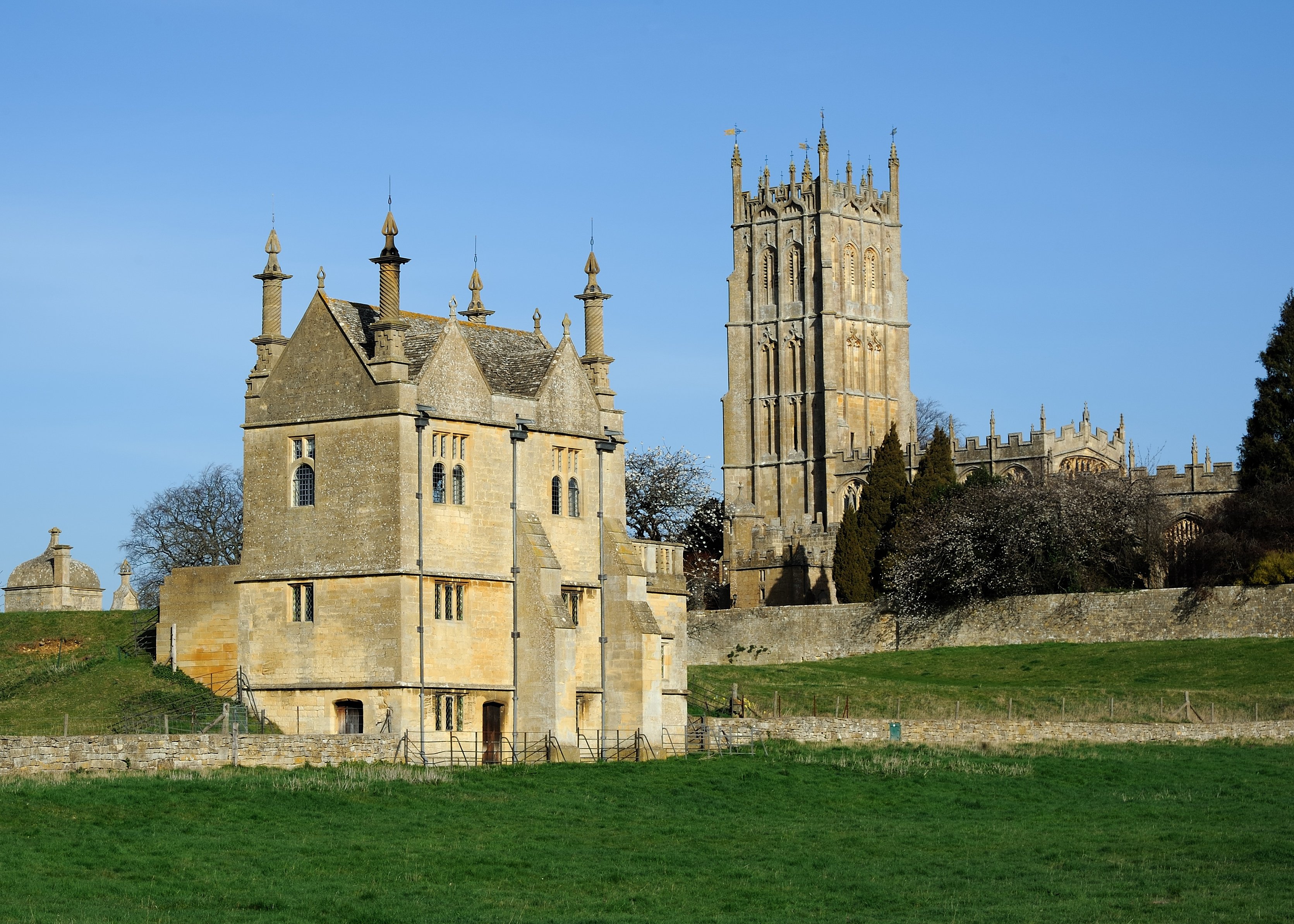
Chipping Campden is the most architecturally complete of the Cotswold market towns — a single long High Street of gabled wool merchants' houses built in the 14th and 15th centuries from the local honey-coloured limestone, largely unchanged since. The medieval Market Hall (1627), the great Perpendicular wool church, and the almshouses at the top of the street form a sequence of architecture that rewards slow walking.
The town's wealth came entirely from wool: in the Middle Ages, the Cotswolds produced much of England's finest fleece, and Chipping Campden was the centre of the trade. The merchant William Grevel, described on his memorial brass as "the flower of the wool merchants of all England," built the finest house on the High Street in the late 14th century; it still stands.
The Cotswold Way long-distance footpath both begins and ends here — it runs 102 miles south to Bath through the best of the Cotswold escarpment. Dover's Hill, just outside town, is the site of the Cotswold Olimpicks, a boisterous annual gathering of traditional games and competition that dates back to 1612.
Hidcote Manor Garden (National Trust), one of England's most influential 20th-century gardens, is 4 miles north. Snowshill Manor and Kiftsgate Court Garden are similarly close. The town makes an excellent base for exploring the northern Cotswolds.