Tintagel is a small village on the north Cornwall coast with an outsized place in British mythology — it is inextricably linked with the legend of King Arthur, who is said to have been conceived and perhaps born here. Whether you believe the Arthurian connection or not, the setting is magnificent: Tintagel Castle sits on a rocky headland almost completely surrounded by sea, its medieval ruins rising above cliffs of dark slate above crashing Atlantic surf. The drama of the location was enough to attract Geoffrey of Monmouth in the 12th century, who placed Arthur's birth here, and enough to make it one of the most visited sites in the southwest today.
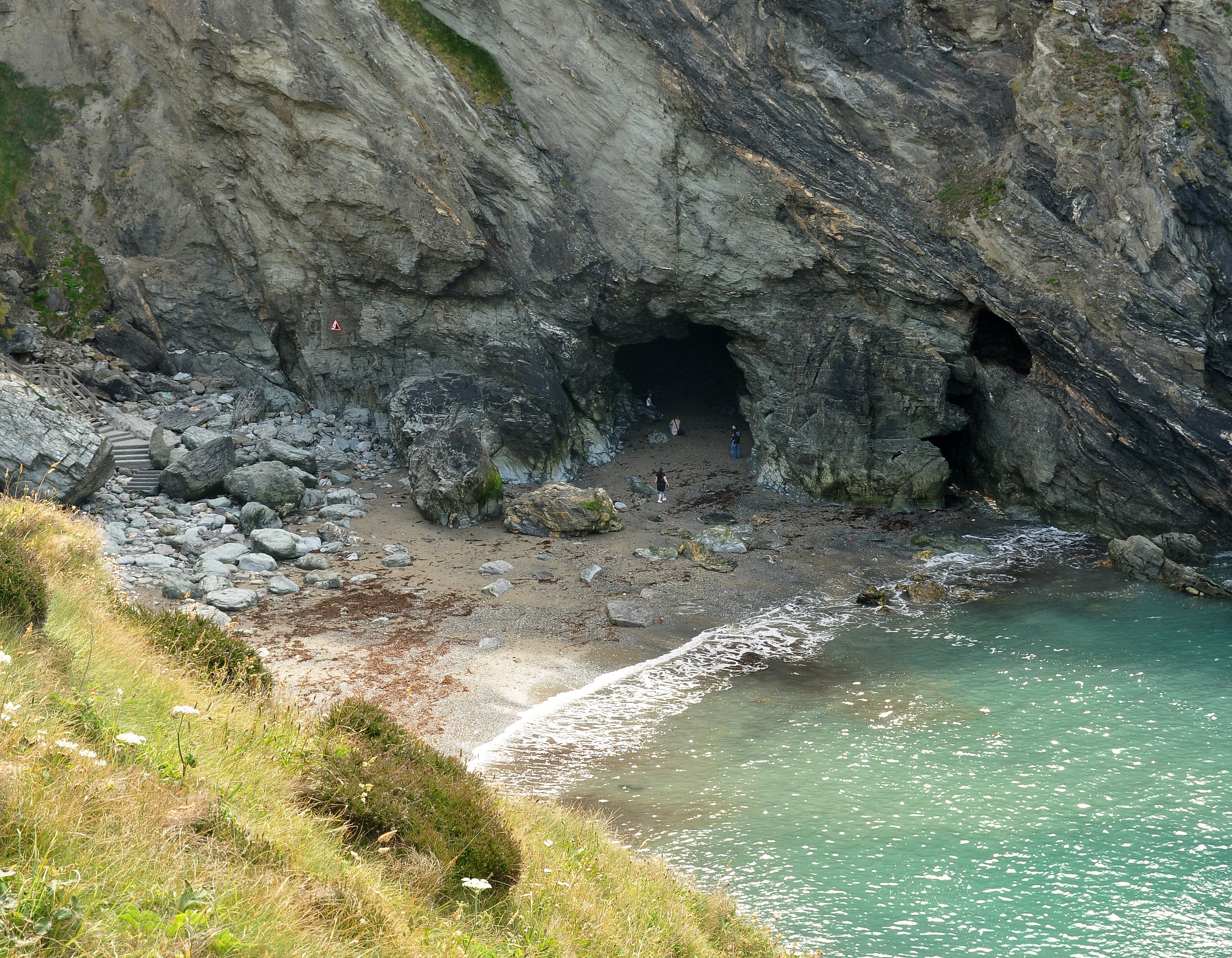
The castle ruins themselves are managed by English Heritage and require a ticket. A dramatic bridge crossing the gap between the mainland and the island was rebuilt in 2019, replacing the precarious staircase that had been the only access for many years. Within the castle enclosure, excavations have found evidence of a substantial 5th and 6th-century settlement — the period of the historical Arthur, if he existed at all — with imports from the Mediterranean suggesting it was a place of real wealth and power in the Dark Ages. Merlin's Cave, accessible at low tide beneath the castle headland, is a natural sea tunnel that the legend has long associated with the wizard.
In the village itself, the Tintagel Old Post Office is the other major attraction — a 14th-century stone manor house, small and eccentric in its proportions, maintained by the National Trust and furnished as a Victorian post office inside. The narrow main street is given over almost entirely to shops selling Arthurian merchandise, which is either charming or tiresome depending on your tolerance for such things. A mile or so outside the village, St Nectan's Glen offers a quieter and more genuinely atmospheric experience — a wooded valley leading to a waterfall pouring through a rock basin, a site of pilgrimage and quiet wonder.