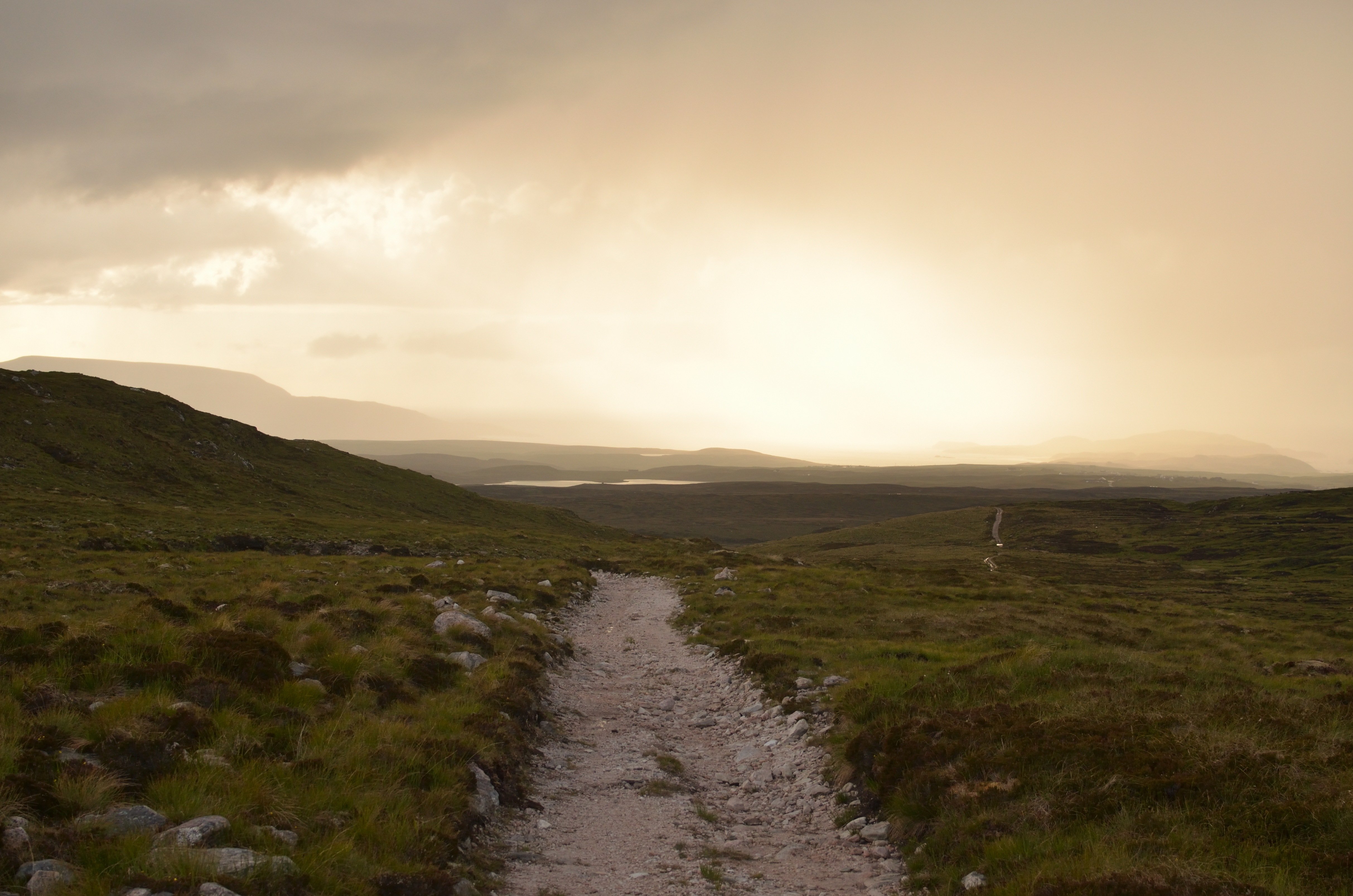
Durness is a remote Sutherland village near Cape Wrath, Atlantic beaches, and Smoo Cave.
Durness is as far north-west as you can get by car in mainland Scotland — a small village on the Atlantic coast of Sutherland, with views across to the Orkney Islands on clear days. There is a saying here: if you can see the Orkneys, it's going to rain; if you can't see them, it is already raining. Plan accordingly.
The village itself is tiny, but it earns its place on the itinerary as the base for two exceptional excursions. The first is Cape Wrath, the most north-westerly point in Scotland. To get there you take a passenger ferry across the Kyle of Durness and connect with a minibus to the lighthouse — the road does not connect to any other, which is why the cape remains so wild. Puffins and other nesting auks can be seen from the cliffs in season, though the drops are precipitous. The second is Smoo Cave, a five-minute walk from the village centre: an impressive sea cave with an 80-foot underground waterfall and an estuary that opens to a stunning coastal view.
There is some accommodation in the village, including a campsite, and Sandwood Bay — arguably the most beautiful unspoilt beach in Britain — is about 25km to the south-west.
Guide
Day Trips
Handa Island, a RSPB bird sanctuary, is accessible by passenger ferry from Scourie (off the A894, reached via the A838 south-west from Durness). No dogs are allowed. In nesting season the island is packed with guillemots, razorbills, puffins, fulmars, cormorants, terns, and skuas — for the last two, a hat is advisable as they defend their nests aggressively. A café near the ferry landing on the mainland side does meals and light bites.
Guide
Getting There
Durness is one of the most remote villages in mainland Britain, and getting there requires commitment. There is no railway. By car from Inverness, the most common approach is via the A9 north, then A838 through Tongue and along the north coast — a drive of around three hours in good conditions, longer in winter. From the south-west, the route through Ullapool and Kylesku is spectacular but slower.
Citylink and some local operators run seasonal bus services to Durness from Inverness and Lairg, but timetables are limited — check before you travel. The summer-only North Coast 500 tourist route passes through Durness, which has increased traffic and accommodation pressure in the village since it became popular.
Fuel up before you arrive. The nearest petrol station can be a long way off, and running empty on the far northwest coast is a genuinely inconvenient problem.