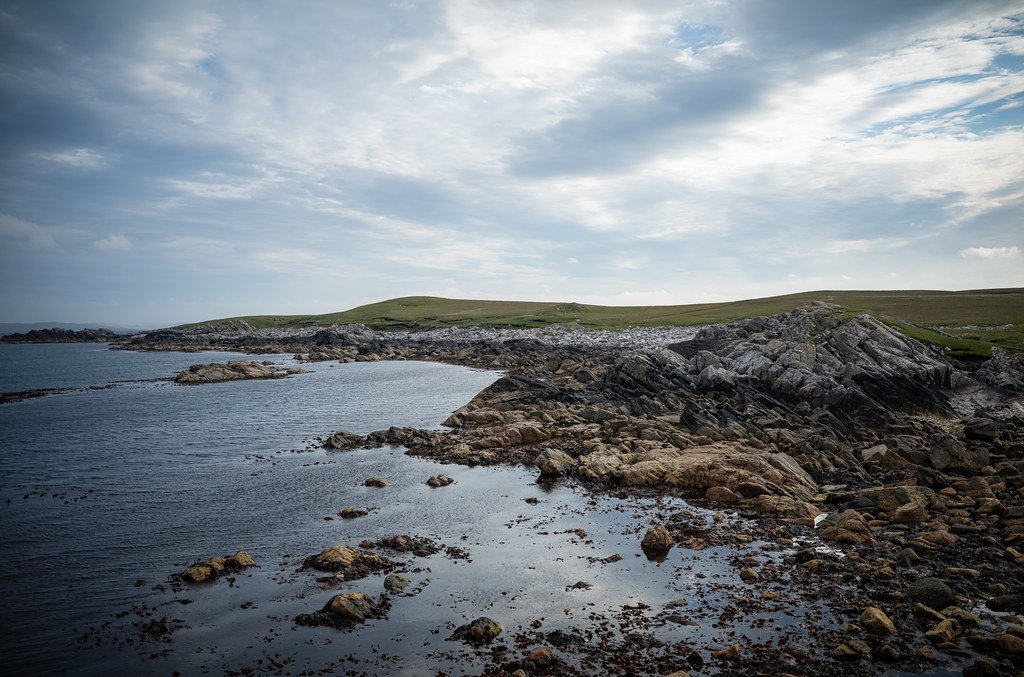
Yell is the middle island of the Shetland chain, sandwiched between Mainland and the northernmost island of Unst, and it is the most peat-covered island in Britain — roughly eighty percent of its surface is blanket bog, a vast, spongy, treeless landscape that absorbs sound and weather alike. This is not a place of conventional beauty; it takes time to appreciate. But the light here — especially in summer, when the sun barely sets — does extraordinary things to the brown and amber moorland, and the island has a quiet, self-contained character that draws people back repeatedly.
Otters are the island's best-known residents, and Yell has a legitimate claim to being one of the best places in Britain to see them. They hunt and rest along the voes — the long, sheltered sea inlets that cut deep into the island's coast — and patient watching from rocky shorelines or high ground above the water is rewarded more often here than almost anywhere else. Dawn and dusk are the prime times. The otters are genuinely wild and largely indifferent to careful observers; the satisfaction of watching one crack a crab shell on a rock while the tide moves in beneath grey Shetland skies is of a very specific, very northern kind.
The Old Haa Museum at Burravoe, in the southeast of the island, occupies a 17th-century laird's house — the oldest surviving building on Yell — and has a thoughtfully assembled collection covering local history, fishing, and the island's knitting tradition. The Lumbister RSPB reserve in the central moorland holds breeding red-throated divers, Arctic skuas, and other upland birds; the divers in particular, their wavering calls carrying across the bog in June, are one of the sound signatures of the northern isles. Getting to Yell means the ferry from Toft on Mainland to Ulsta, a crossing of about twenty minutes; a second ferry from Gutcher, at the island's north end, continues to Unst. Both crossings are frequent and reliable, and driving the length of Yell between them is itself a journey through the full range of the island's landscape.