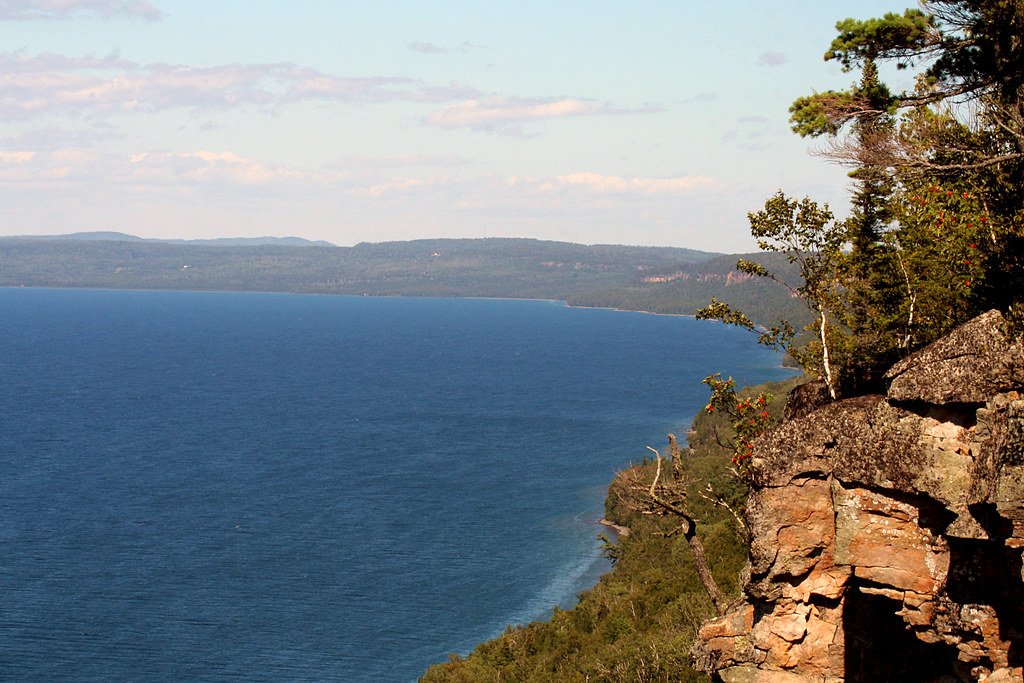
Thunder Bay sits at the western tip of Lake Superior, the largest freshwater lake on earth by surface area, and it wears that geography proudly. The city's skyline is dominated not by towers but by grain elevators — for decades this was the busiest grain-shipping port in the world, funnelling prairie wheat through the Great Lakes to the Atlantic. That industrial past still shapes the place: it is practical, unpretentious, and quietly proud.
The city was created in 1970 by merging the twin towns of Fort William and Port Arthur, and the seam between them is still visible. The south side (Fort William) is more working-class, the north side (Port Arthur) more gentrified, with the waterfront marina and most of the restaurant and bar scene. Locals tend to identify with one or the other, and the rivalry is still gently alive.
What brings travellers here is wilderness. Sleeping Giant Provincial Park, on the Sibley Peninsula just across the bay, is one of the great hiking destinations in Ontario. Kakabeka Falls, 30 kilometres west, is legitimately spectacular. The surrounding boreal forest offers fishing, canoeing, and winter skiing within easy reach of the city. Thunder Bay is also a city with a large Indigenous population and a meaningful connection to Anishinaabe culture — Fort William Historical Park, the reconstructed Northwest Company fur trade post, is one of the best living history sites in Canada.
The Terry Fox Memorial stands at the city's eastern approach, at the spot where Fox — a Thunder Bay boy — was forced to end his Marathon of Hope in 1980. It remains one of the most moving roadside monuments in the country.