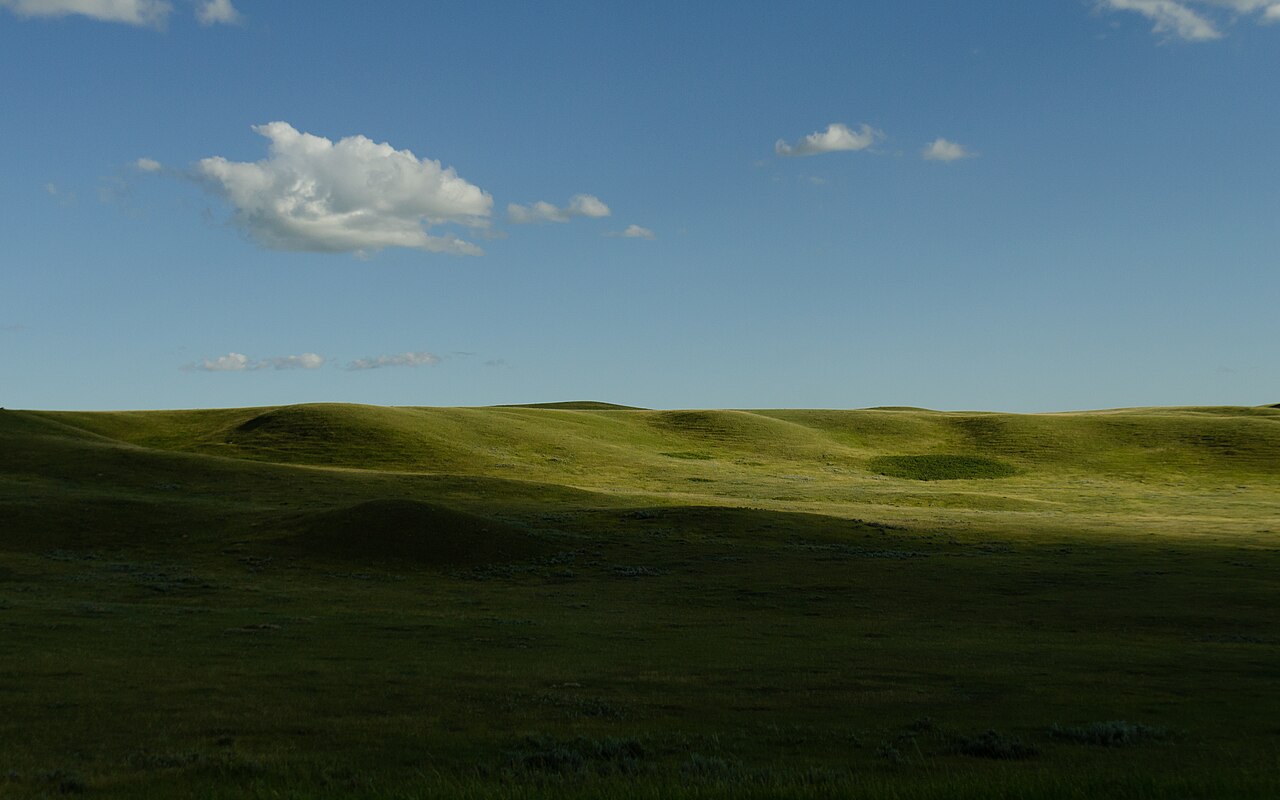
Grasslands National Park protects a piece of southern Saskatchewan that was never turned into wheat field: mixed-grass prairie, coulees, prairie dog colonies, exposed badlands, and a sky so dark that the park is known for stargazing as much as hiking. It is remote, dry, and quiet in a way that feels rare in Canada.
The park is split into two blocks. The West Block, reached from Val Marie, is the more straightforward first visit, with the Ecotour Scenic Drive, bison range, short hikes, and 70 Mile Butte. The East Block, reached from the Wood Mountain side, is rougher and more badlands-focused, with the Valley of 1000 Devils as its headline walk.
This is not a park of waterfalls, lakes, or dramatic mountain silhouettes. Its strength is space: grass moving in the wind, hawks over coulees, bison at a respectful distance, and the odd comedy of black-tailed prairie dogs standing upright beside their burrows. If you are crossing southern Saskatchewan and have a day to spare, Grasslands is one of the province's best detours.
Val Marie is the main service village for the West Block and the location of the visitor centre, but the travel value belongs to the park itself. Bring fuel, water, sun protection, and a real map; cell coverage is patchy and distances feel longer than they look.