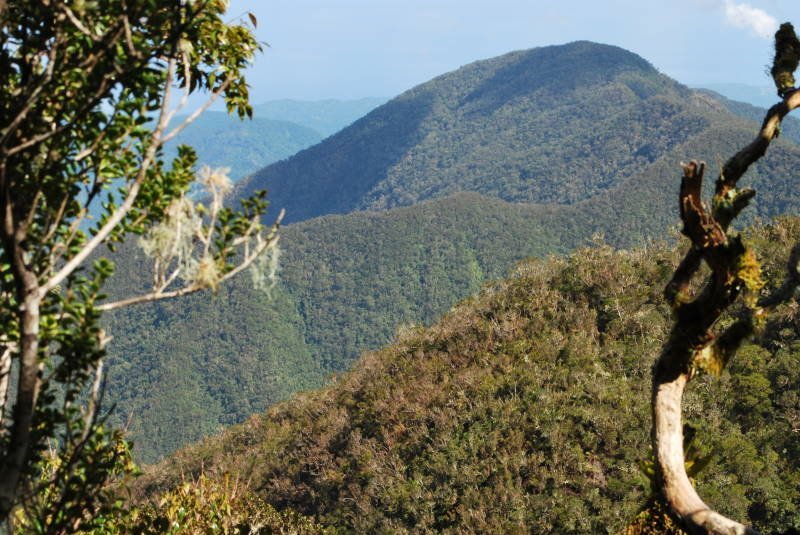
Blue Mountains
©
Blue Mountains

Blue Mountains

Eastern Jamaican mountain range where misty high slopes produce the island's famous Blue Mountain coffee.

The Blue Mountains form the spine of eastern Jamaica, rising to 2,256 m at Blue Mountain Peak — the highest point in the Caribbean outside Hispaniola. They're named for the blue mist that hangs over them in the mornings, visible from Kingston below.

The mountains are the source of Blue Mountain coffee, grown on small farms between about 900 m and 1,800 m altitude. The combination of altitude, rich volcanic soil, cool temperatures, and high rainfall produces beans that command some of the highest prices in the world. Most of the genuine crop is exported to Japan.

The main base for the mountains is Mavis Bank, reached by a winding road from Kingston through the Papine suburb. From Mavis Bank it's a further rough drive (4WD recommended) to the trailheads. The ascent to Blue Mountain Peak is usually done overnight, departing around 2am to arrive at sunrise. The trail passes through montane forest full of ferns, mosses, and tree ferns.

The mountains are also home to the Holywell Recreational Area, a forest park about 1,000 m up the main road from Kingston with cabins, camping, and short hiking trails.

Guide

Getting There

The Blue Mountains are reached from Kingston via a winding road that heads north through the Papine suburb before climbing steeply into the hills. The road is well paved as far as Mavis Bank — a drive of about 45 minutes from New Kingston in reasonable traffic. Beyond Mavis Bank the road deteriorates significantly, and a 4WD vehicle is strongly recommended for reaching the upper trailheads.

There is no reliable public transport into the upper mountains. Route taxis run between Papine and Gordon Town, and occasionally further, but schedules are erratic and the service does not extend to the hiking areas. Most visitors hire a driver or join an organised tour from Kingston.

Guide

Things to Do

The Blue Mountains offer some of the best hiking in the Caribbean. The signature experience is the overnight climb to Blue Mountain Peak, but the mountains reward slower exploration too — birding, coffee farm visits, and forest walks through cloud forest hung with moss and tree ferns.

The Holywell Recreational Area is the easiest entry point, with well-maintained trails and cabins for overnight stays. For the serious hiker, the Blue Mountain Peak trail is one of the great Caribbean treks. And no visit is complete without understanding Blue Mountain coffee — the crop that has shaped this landscape for two centuries.

Guide

When to Go

The dry season from November to April is the best time to visit the Blue Mountains. Trails are firmer, the risk of being caught in heavy rain is lower, and the views from the peaks are more likely to be clear. January and February are the coolest months, with temperatures at the summit sometimes dropping close to freezing before dawn — bring a layer you would not expect to need in Jamaica.

The summer months from June to October bring heavier rainfall and higher humidity. Trails can become muddy and slippery, and the upper peaks are more often shrouded in cloud. That said, the mountains are green and dramatic in the wet season, and the coffee farms are at their most lush. Hurricane season runs from June to November; while the mountains rarely take direct hits, tropical storms can bring sustained heavy rain and make the upper road impassable.