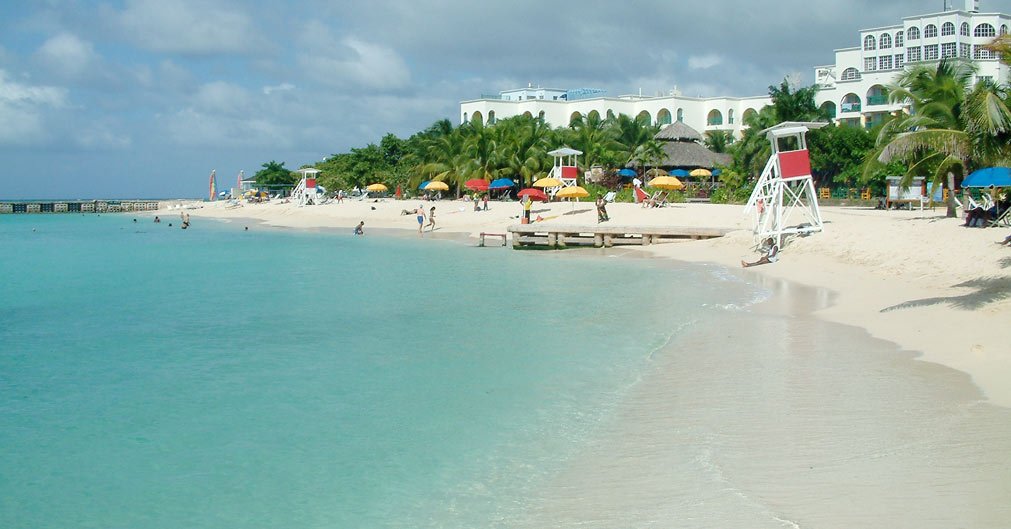
Montego Bay — "MoBay" to everyone who lives there — is Jamaica's second city and its main tourist gateway. Sangster International Airport sits just outside town, and the north coast resort strip stretches east and west from it. Most visitors to Jamaica land here and stay here, never getting much further.
The city sits in a wide bay backed by hills. The Hip Strip (Gloucester Avenue) is the main tourist drag, lined with hotels, bars, and restaurants. Doctor's Cave Beach is the most popular swimming spot — clean, sheltered, and charges a modest entry fee; Cornwall Beach just south is the quieter alternative. The Hip Strip is pleasant enough but essentially a self-contained tourist bubble.
Montego Bay proper — the real town behind the resort strip — has a different character. Sam Sharpe Square in the centre commemorates the Baptist preacher who led the Christmas Rebellion of 1831, one of the largest slave uprisings in Jamaican history, which helped accelerate emancipation. The Cage on the square (a lockup for runaway slaves) is sobering. The Harbour Street Craft Market nearby sells the full range of tourist goods; it's better to browse and negotiate than to walk past. The St James Parish Church up the hill is the oldest in town. East of the city are two of the great plantation houses of the Caribbean — the famous Rose Hall Great House and the quieter, intact Greenwood Great House.
Day trips from Montego Bay: the Martha Brae river (bamboo rafting), the Green Grotto Caves on the road to Ocho Rios, and Falmouth — an excellent Georgian town 35 km east — are all easy and worthwhile.