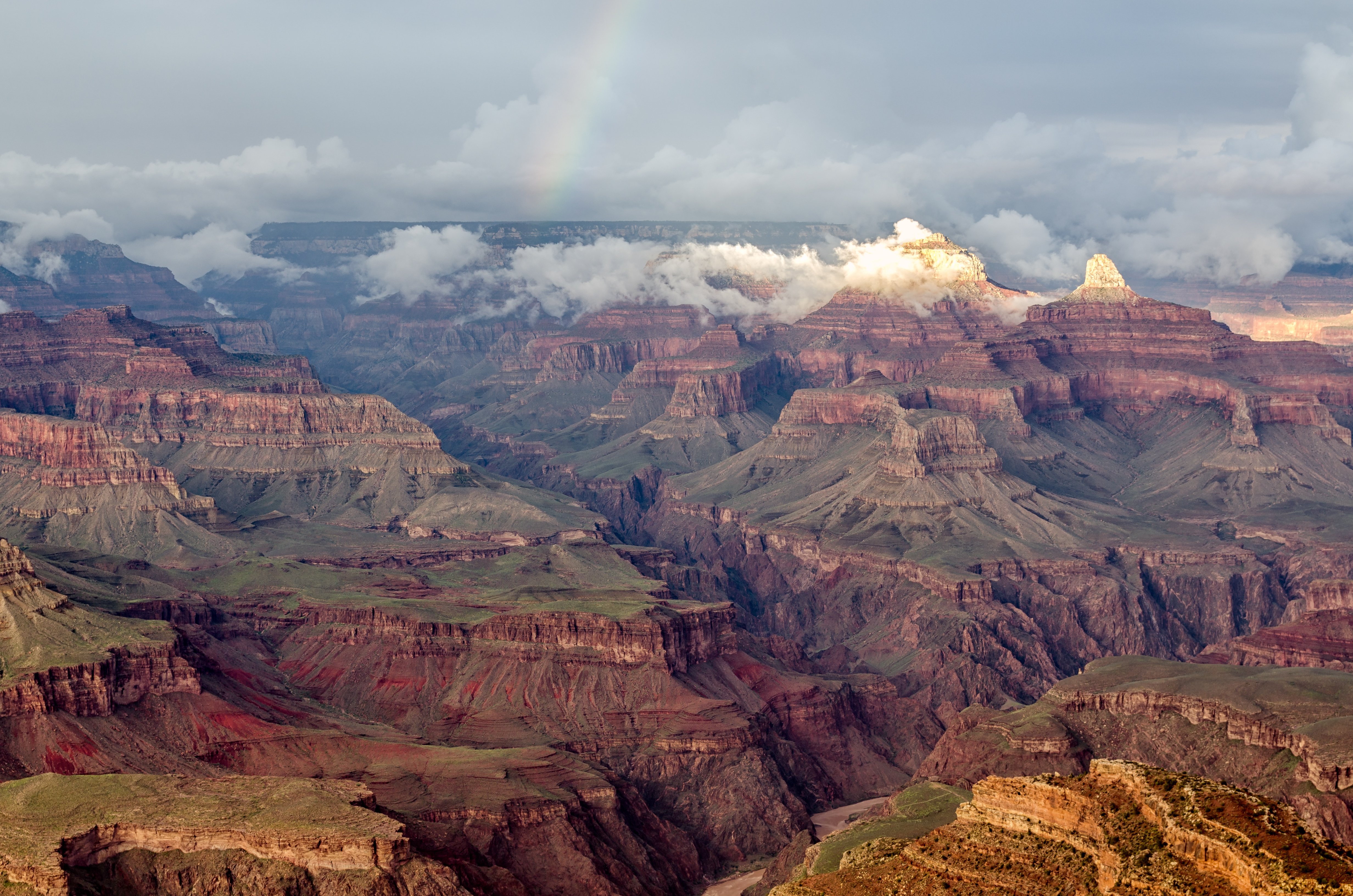
The Grand Canyon is one of those places that genuinely exceeds expectations. You have seen the photographs, watched the documentaries, and heard people struggle to describe it -- and then you stand on the rim and realize none of it came close. The Colorado River has spent roughly six million years carving through nearly two billion years of rock, and the result is 277 miles of layered geology that changes color with every shift of sunlight.
Most visitors see the South Rim, which is open year-round and has the bulk of the infrastructure: lodges, shuttle buses, a well-maintained rim trail, and a series of overlooks strung along Desert View Drive. The North Rim, a thousand feet higher and far quieter, is open from mid-May through mid-October and draws a fraction of the crowds. Both rims are spectacular, but they feel like different parks.
Below the rim is a world apart. The Bright Angel and South Kaibab trails drop you into the canyon itself, where the temperature climbs, the scale shifts, and the Colorado River becomes a real, roaring presence rather than a silver thread far below. Backcountry permits are required for overnight trips and go fast -- plan months ahead if you want to camp at Phantom Ranch or along the corridor trails.
Spring and fall are the best times to visit. Summer brings heat (especially below the rim, where temperatures regularly exceed 100 degrees Fahrenheit) and heavy crowds. Winter on the South Rim is cold but beautiful, with snow dusting the rim and far fewer people. Whenever you go, arrive early -- the canyon at sunrise is worth the alarm.