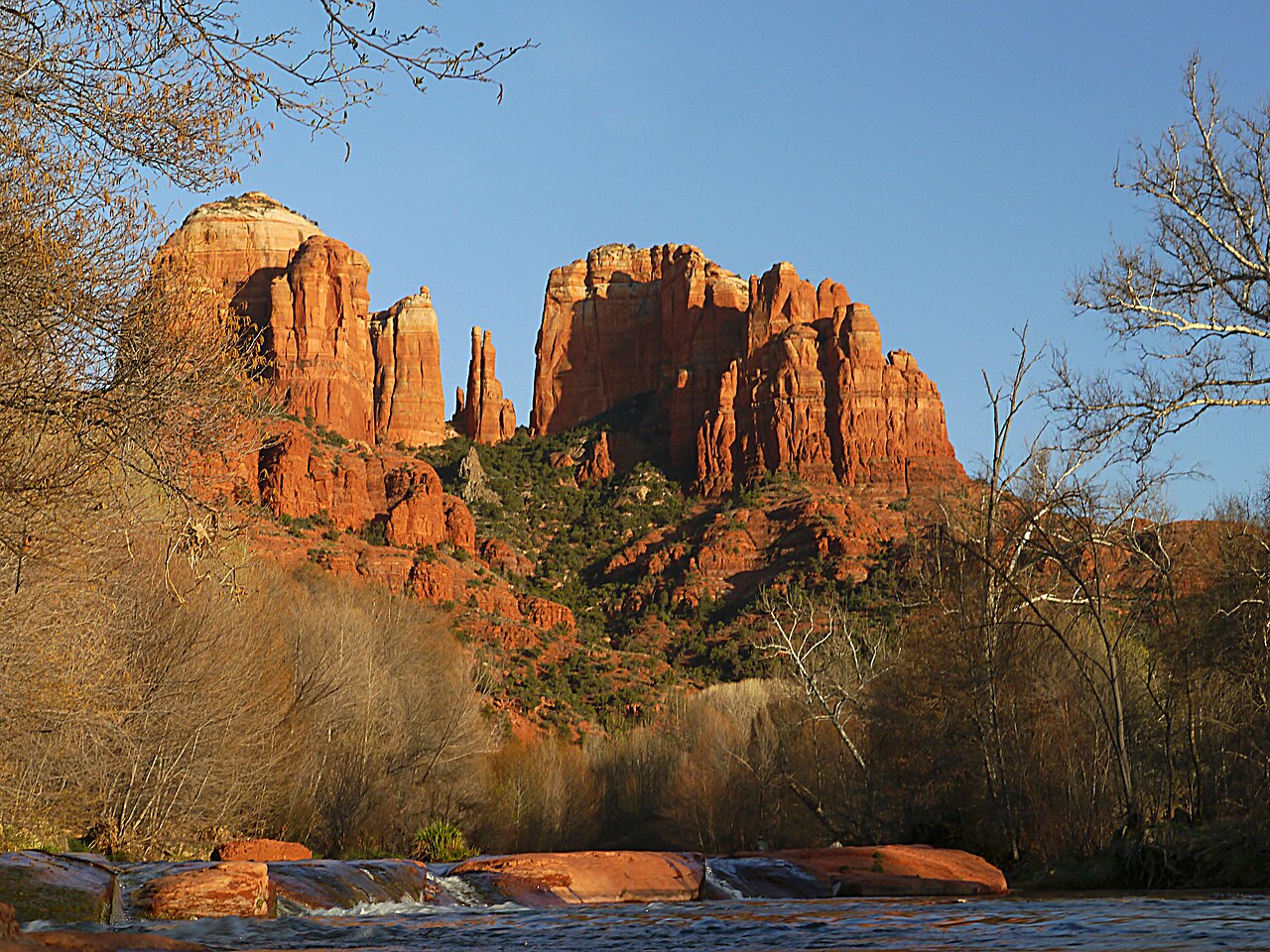
Sedona sits in a red rock canyon in north-central Arizona at the foot of the Colorado Plateau, and it earns the superlatives thrown at it. The formations — Cathedral Rock, Bell Rock, Courthouse Butte, the Margs Draw ridgeline — glow red and orange in the morning light with a vividness that feels almost artificial. Oak Creek runs through town and up Oak Creek Canyon to the north, adding a strip of green cottonwoods against the red stone.
The town itself is a strange mix. You will find world-class hiking trails within a ten-minute drive of excellent restaurants and galleries, but also a thriving industry in crystal shops, chakra readings, and "vortex tours" — local belief holds that certain points in the landscape emit spiritual energy. Whether you believe it or not, the spots are worth visiting: Airport Mesa, Cathedral Rock, Bell Rock, and Boynton Canyon are genuinely atmospheric places to sit and watch the sunset turn the stone colours you did not think rock could be.
The practical base for exploration is Uptown Sedona along Highway 89A, which connects through Oak Creek Canyon to Flagstaff about 45 minutes north. Jerome, the old mining town turned arts colony, is 30 minutes to the west. The Grand Canyon's South Rim is two hours north. Sedona's own art gallery scene on Tlaquepaque — a beautifully designed Mexican-style arts village — is worth a morning on its own. The Chapel of the Holy Cross, built into a red-rock butte on the south side of town, is architecturally one of the most striking buildings in Arizona.
Spring and autumn are the best times to visit, with temperatures in the 60s–70s Fahrenheit (15–25°C). Summers are hot and bring afternoon monsoon storms that can be spectacular from a safe vantage point. The town gets crowded on weekends and in spring break season; mid-week visits in October or November give you the trails and light to yourself.