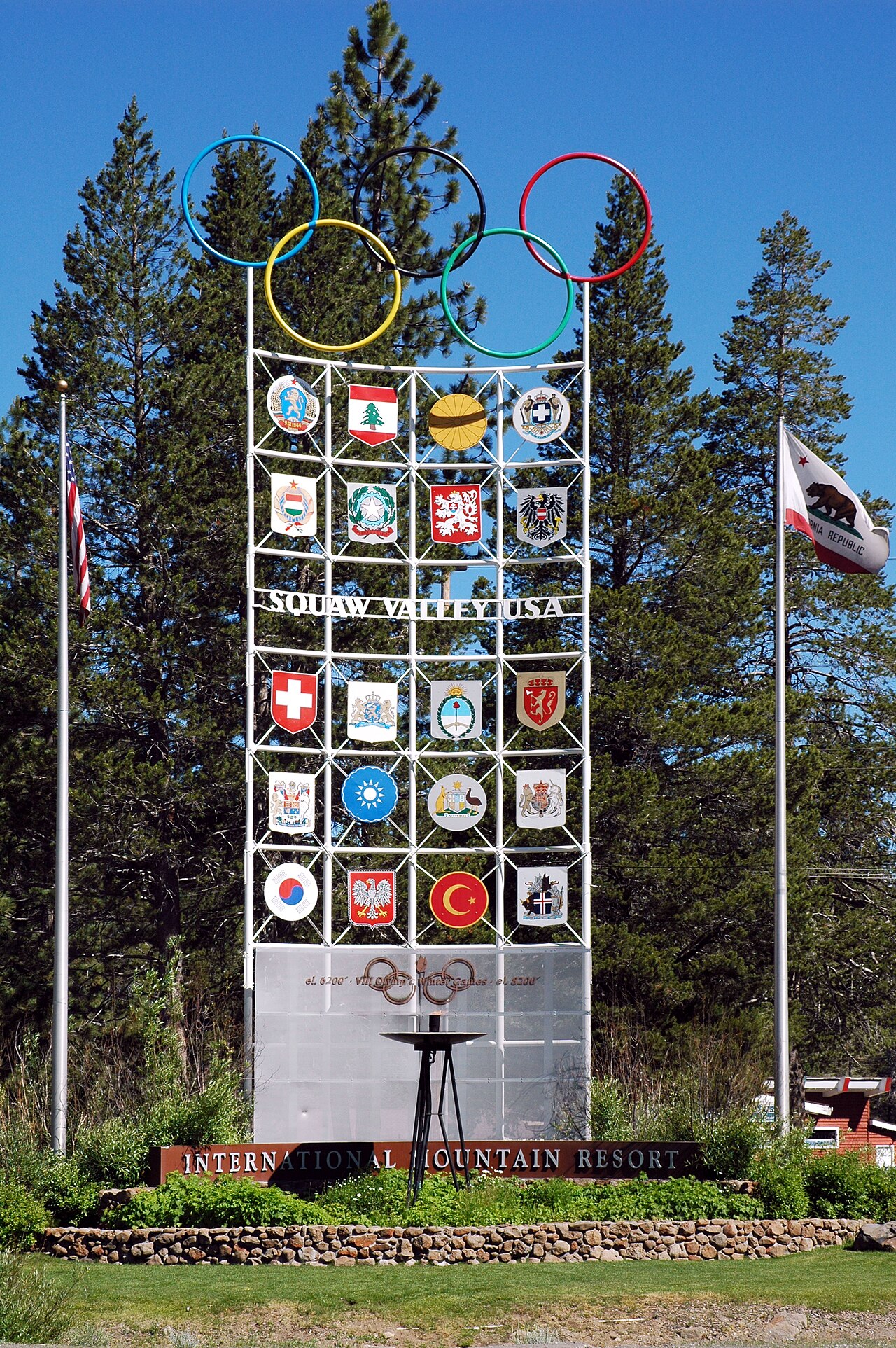
Olympic Valley, formerly known as Squaw Valley, sits in a glacially carved bowl in the Sierra Nevada just northwest of Lake Tahoe. It is one of the most storied ski destinations in North America — the valley hosted the 1960 Winter Olympics, and the resort that grew from those games has become Palisades Tahoe, stretching across two mountains with over 6,000 acres of skiable terrain. The rename in 2021, dropping the offensive original name, felt overdue, and the valley's new identity fits: it is a place more concerned with the mountain than its history.
In winter the terrain runs from long, well-groomed beginner runs at the base to high-alpine chutes and bowls that challenge even expert skiers. The two mountains — Palisades and Alpine Meadows — are linked by gondola, giving skiers access to wildly different characters of terrain in a single day. Snowfall averages around 450 inches a year, enough to keep the season running from November into May in good years.
Summer transforms the valley entirely. The aerial tram still runs, hauling hikers and mountain bikers up to High Camp at 8,200 feet, where panoramic views stretch across Lake Tahoe and the surrounding Sierra. Trail networks fan out across the surrounding Granite Chief Wilderness. The village at the base has restaurants and bars that serve both seasons equally well. Highway 89 connects Olympic Valley to Tahoe City in about 15 minutes, making it straightforward to combine a stay here with the broader Lake Tahoe area.