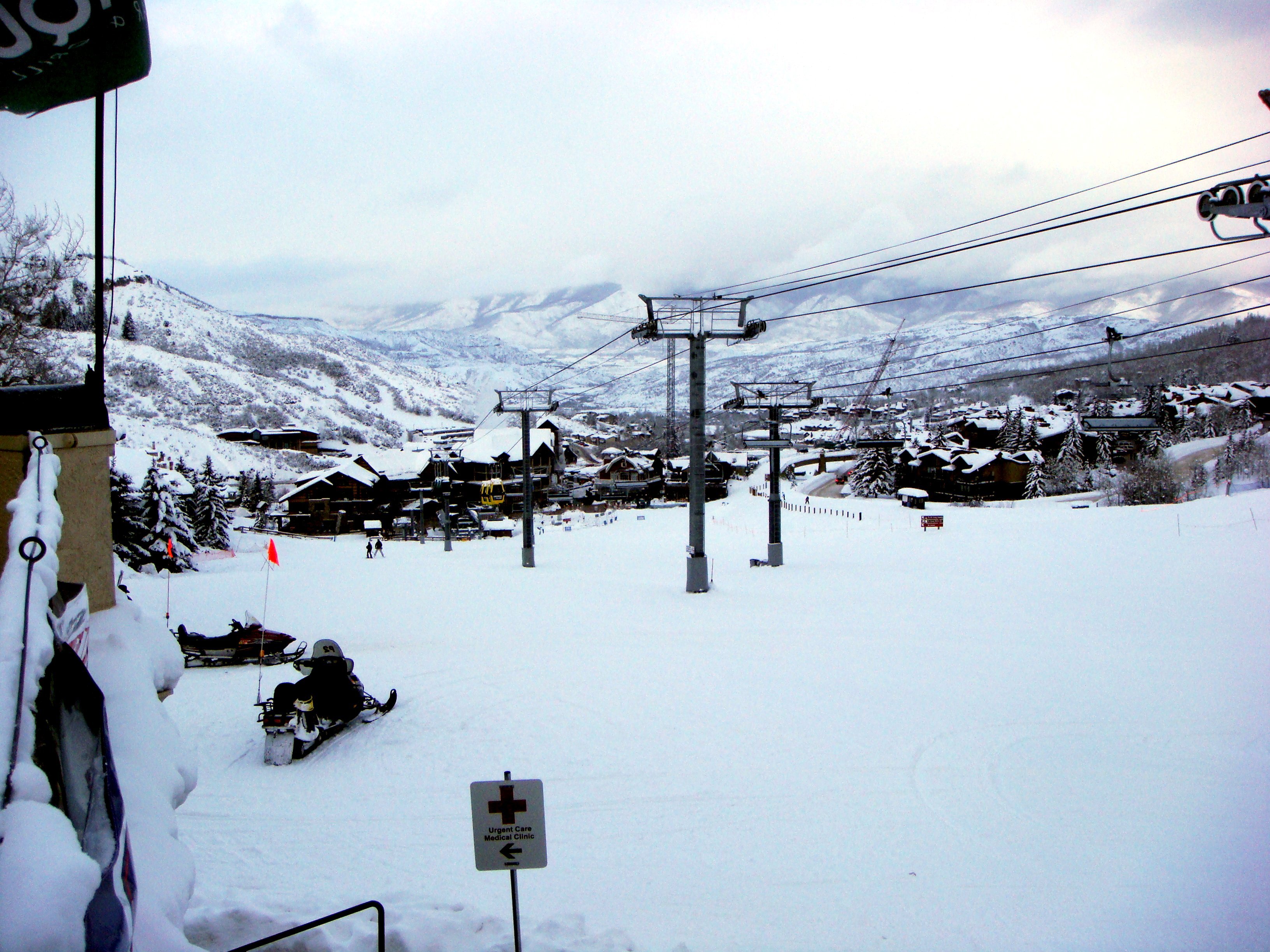
Elk Mountains resort village near Aspen, built around big ski terrain and summer alpine trails.
Snowmass Village is a mountain resort community in Colorado's Elk Mountains, sitting about 12 km from Aspen and sharing the same dramatic scenery. In winter it operates as a major ski resort — the Snowmass ski area has over 90 runs and is one of the largest in Colorado — less glamorous than Aspen, but with more varied terrain and generally shorter lift lines. In summer the ski trails become hiking and mountain biking paths, and the village hosts an outdoor music festival season.
The Base Village at the foot of the mountain has been substantially rebuilt in recent years and now has a concentration of restaurants, shops, and lodging options clustered around a lively plaza. The village is explicitly oriented toward outdoor activity — ski-in/ski-out is the norm in winter, and the summer trail network connects to the Maroon Bells wilderness area above.
Beyond the slopes, the village holds two unexpected institutions: the Anderson Ranch Arts Center, a serious working campus for ceramics and visual arts, and the site of the 2010 Snowmastodon dig — one of the most important Ice Age fossil finds in North America. The summer Jazz Aspen Snowmass festival fills Town Park over Labor Day weekend.
Snowmass makes a practical and slightly less expensive alternative to staying in Aspen itself, with frequent shuttle connections between the two.
Guide
Day Trips
Aspen is the obvious day trip — twenty minutes by the free RFTA bus, with a real downtown, the Aspen Art Museum, several galleries, and the cluster of ski mountains (Buttermilk, Aspen Highlands, Aspen Mountain) shared on the Aspen Snowmass pass.
Glenwood Springs, about an hour down the Roaring Fork valley, is the place to go for an outdoor hot-spring pool — the original Hotel Colorado spring is one of the largest in the world. The drive there through Glenwood Canyon is itself an attraction.
Guide
Eating Out
Restaurants in Snowmass cluster in the Base Village plaza and along the Snowmass Mall, the older walking street higher up. Prices are mountain-resort serious, but generally a notch below equivalent places in Aspen — a small saving that adds up over a week.
Recommended for a mountain dinner: Eight K in the Viceroy Hotel does a tight modern American menu with good wine; Venga Venga, on the plaza, serves Mexican that holds up after several margaritas; Sake is a surprisingly capable sushi place for a town this small. For something lower-key, the Stew Pot on the Snowmass Mall has been around for half a century and still does excellent house-made stews and soups at lunch.
For breakfast the bakery at The Daily Bread on the Mall is the place for pastries and serious coffee. On-mountain dining at Lynn Britt Cabin (a ski-up, snowcat-down sit-down lunch) and the bowl-side Up 4 Pizza are both worth working into a ski day.
Guide
Getting Around
A car is not necessary inside the village — and is mostly inconvenient, since parking is limited and expensive. The Village Shuttle, free, runs continuously between the Base Village, the Snowmass Mall, and the major lodges, and drops at the main lift bases.
The RFTA (Roaring Fork Transportation Authority) free bus runs every 15–30 minutes to Aspen, with extra runs in winter. The ride takes about 20 minutes. If you are skiing the four-mountain pass and want to try Buttermilk, Aspen Highlands, or Aspen Mountain, RFTA is the way to get there.
Bikes can be hired in summer and there is a network of paved bike paths down the valley toward Aspen.
Guide
Getting There
The nearest airport is Aspen/Pitkin County (ASE), about 20 km away, with direct flights from Denver, Dallas, Chicago, and several other US cities in winter. Aspen is a small airport with notoriously weather-affected operations — flights are routinely diverted in snow or fog, so build slack into your schedule.
Many visitors fly into Denver International (DEN) instead and either drive (about 3.5 hours via I-70 and Glenwood Canyon) or take a shared shuttle service. The drive is straightforward in summer; in winter, snow chains or 4WD with snow tires are sometimes required on Independence Pass routes (which is in any case closed November to May — the Glenwood Canyon route is the only winter option).
A free local bus (RFTA) runs frequently between Snowmass Village and Aspen.
Guide
When to Go
Winter season runs from late November through early April. The best snow is usually February through March, when the storms come heavy and the daylight hours start to lengthen. Holiday weeks (Christmas–New Year and the third week of February) are expensive and busy; January and early March are the sweet spot for value and crowds.
Summer season runs from mid-June (once the high trails clear) through late September. July is reliably warm; August brings afternoon thunderstorms over the peaks; September turns the aspen groves around the Maroon Bells gold for about three weeks in the second half of the month — book early for that window.
Shoulder seasons (April–May and October–November) are quiet, with limited dining and lift operations. The off-season is real here.