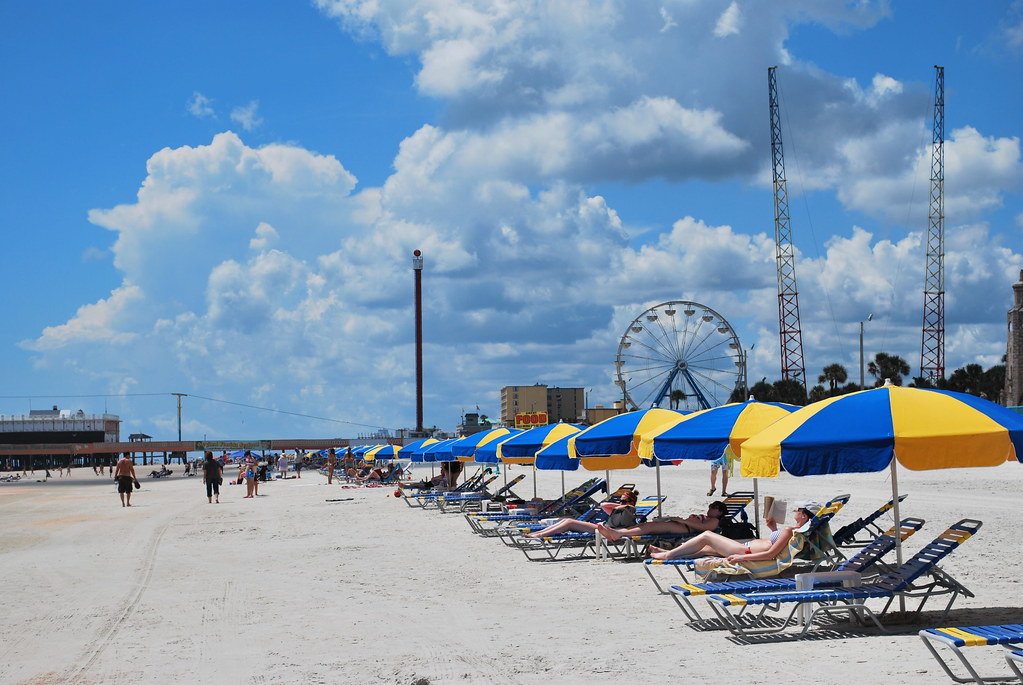
Daytona Beach is Florida's racing capital and one of the East Coast's most famous beach resort towns. The 23-mile stretch of hard-packed sand is wide enough to drive on — and for much of the 20th century, people did, setting land speed records here before the races moved to purpose-built tracks. Today the beach is still open to vehicles (with a fee), which gives it a lively, slightly anarchic atmosphere unlike any other Florida resort.
The city is defined by two obsessions: speed and the sea. The Daytona International Speedway, home of the Daytona 500, looms over the western approach to town and draws half a million visitors every February for NASCAR's most prestigious race. During Bike Week in March and Biketoberfest in October, Harley-Davidson riders fill every bar on Main Street and the roar of engines replaces the sound of surf. Outside these events, the city is quieter, but always has a rough-edged, democratic energy — families and spring breakers, bikers and retirees coexisting along the same strip of ocean.
The beach itself is the main attraction. At low tide the sand is firm enough to support cars, and the broad flat expanse makes for excellent walking and cycling. Ponce Inlet, about 15 minutes south, is where the serious attractions are: the magnificently preserved 1887 lighthouse (the tallest in Florida), excellent seafood restaurants, and calmer waters at the inlet's edge. The Museum of Arts and Sciences on Nova Road has a Cuban art collection and a skeleton of a giant ground sloth. Beyond that, Daytona is honest about what it is: a beach town built around cars, bars, and the ocean.