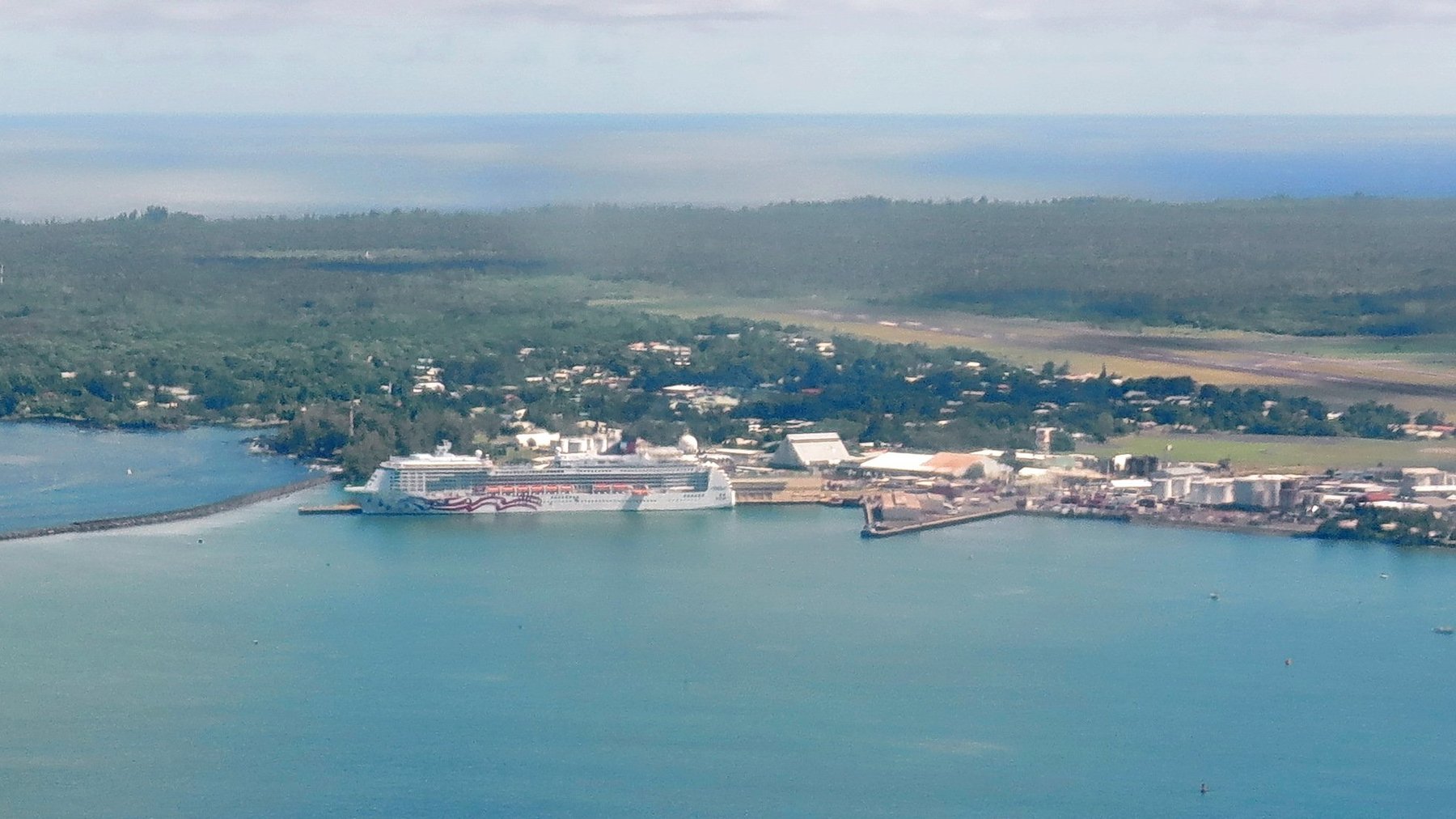
Hilo is the largest town on the Big Island of Hawaii and the quieter, rainier, more local counterpart to the tourist-heavy Kona coast on the other side. It rains here. A lot. Hilo averages more than three metres of rain a year, which makes it one of the wettest cities in the United States — and also one of the greenest, with lush gardens, wild waterfalls, and a general feeling that the jungle is always about to reclaim the place. That climate keeps the beach-resort crowds away and leaves Hilo as the Big Island at its most authentic: a low-rise, slightly faded plantation-era town where the rhythms of everyday Hawaiian life still set the pace.
The town itself is small and walkable. Downtown Hilo, lined with handsome wooden storefronts from the early 20th century that survived a devastating 1946 tsunami, has independent bookshops, thrift stores, galleries, and the excellent Hilo Farmers Market at the corner of Kamehameha Avenue and Mamo Street, open daily but at its fullest on Wednesdays and Saturdays. The Pacific Tsunami Museum tells the story of the 1946 and 1960 waves that devastated this waterfront with genuine force. Liliuokalani Gardens, on the north-eastern edge of Hilo Bay, is the largest Japanese-style garden outside Japan — a quiet grid of koi ponds, stone lanterns, and arched bridges built in honour of Hawaii's immigrant Japanese community. Just beyond it, the Banyan Drive loop passes enormous banyans planted by visiting celebrities in the 1930s, each with a plaque at the base.
The real reasons to come to Hilo are outside the town. Hawaii Volcanoes National Park, 45 minutes south, is one of the most extraordinary national parks in the country — with a drive-in caldera, active lava flows (conditions depending), and walks through steaming craters and lava tubes. Akaka Falls, twenty minutes north, drops 135 metres in a single plume through the rainforest. Rainbow Falls, just outside Hilo itself, is the go-to morning stop when the sun catches the mist and makes rainbows in the spray. The Kaumana Lava Tubes on the western edge of town are free, unguarded, and largely unknown to visitors. And Mauna Kea, Hawaii's highest mountain at 4,207 metres, is an hour's drive up the saddle road — the ʻImiloa Astronomy Center in Hilo connects the summit science to the Hawaiian traditions of sky navigation.
Every April, Hilo hosts the Merrie Monarch Festival, the most important hula competition in the world — hula halau (schools) from across the Hawaiian islands and the wider Pacific compete for a week in both ancient and modern forms. Book accommodation months ahead if you want to come for it. And eat the local food: loco moco (apparently invented here, served at Café 100 since 1946), malasadas at Ken's House of Pancakes, poke eaten at the water's edge from Suisan Fish Market, strawberry mochi from Two Ladies Kitchen, and shave ice from the old-fashioned stand downtown.