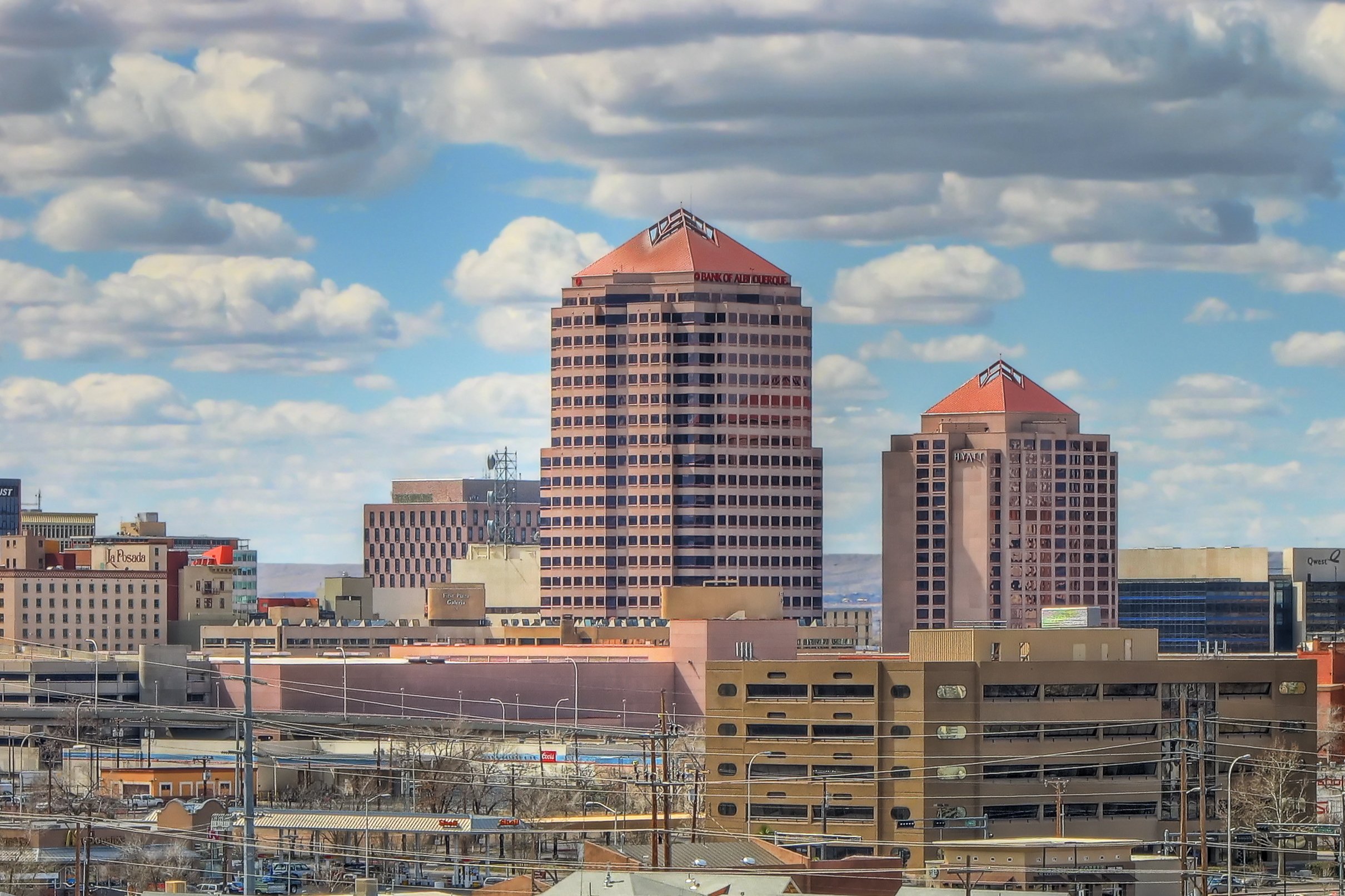
Albuquerque is New Mexico's largest city and its de facto capital in all but name. Sprawling across the Rio Grande valley at the foot of the Sandia Mountains, it is a city of contrasts -- historic adobe neighborhoods sit alongside strip malls, and ancient petroglyphs share the horizon with suburban sprawl.
Start in Old Town, where the Villa of Albuquerque was founded in 1706 around the San Felipe de Neri church. From there, Central Avenue (the old Route 66) stretches east through downtown, past the University of New Mexico, and into the Nob Hill district with its independent restaurants and shops. The west side has Petroglyph National Monument, where ancient rock art panels cover lava boulders beneath small volcanoes. The KiMo Theatre on Central Avenue is one of the most distinctive buildings in the Southwest: Pueblo Deco, a style that exists nowhere else.
A ride on the Sandia Peak Tramway puts you on top of the mountains, where on clear days you can see 15,000 square miles of landscape -- the Rio Grande snaking through cottonwood bosque, dormant volcanoes silhouetted against fiery sunsets, and thousands of lights twinkling at dusk. If there is one thing to do in Albuquerque, this is it. The Indian Pueblo Cultural Center on 12th Street, owned and operated by all 19 Pueblo nations, is the most important cultural institution in the city.
The city is best known for the International Balloon Fiesta every October, when hundreds of hot air balloons fill the morning sky. It draws visitors from around the world, and for good reason -- there is nothing quite like it. Come early, because the mass ascension at dawn is the main event. The International Balloon Museum on the fiesta grounds explains why Albuquerque became the balloon capital of the world.