Harpers Ferry
©
Harpers Ferry

Harpers Ferry

Potomac-Shenandoah confluence town preserved around John Brown's raid and Appalachian Trail history.

Harpers Ferry is a small town of about 300 residents wedged into the confluence of the Shenandoah and Potomac Rivers at the eastern tip of the West Virginia panhandle, and it carries more history per square meter than almost anywhere in the eastern United States. The federal armory that stood here made it the strategic prize that John Brown chose to seize in October 1859 in his attempt to spark a slave rebellion — an event that is usually cited as one of the immediate causes of the Civil War. The raid failed, Brown was hanged, and within two years the country was at war.

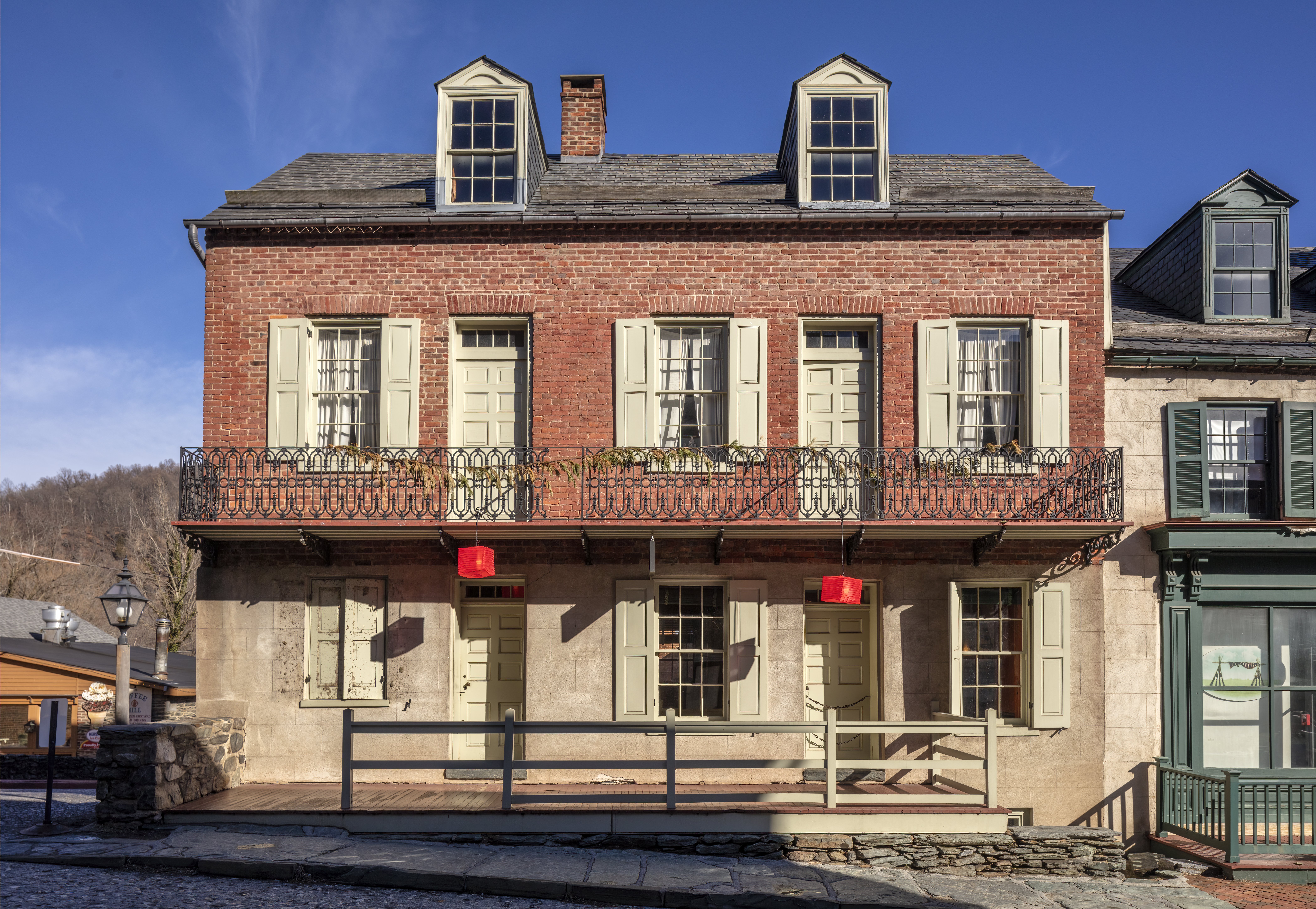
The Harpers Ferry National Historical Park covers most of the lower town, preserving the 19th-century buildings in a state of deliberate historical arrest. The armory itself was burned by Confederate forces early in the war and never rebuilt, but John Brown's Fort — the small fire engine house where Brown made his last stand — survives and has been moved back to approximately its original location. The views from Jefferson Rock, a shale outcrop above the town where Thomas Jefferson stood in 1783 and pronounced the scenery "worth a voyage across the Atlantic," remain as impressive as ever.

Harpers Ferry is also on the Appalachian Trail, which crosses the Shenandoah River here and passes through the town. Long-distance hikers are a regular presence on the streets, and the town's position at the junction of the AT and the C&O Canal towpath makes it a popular destination for cyclists and hikers on multi-day journeys. Maryland Heights, the ridge across the Potomac, offers excellent views of the entire river confluence and is among the best short hikes in this part of the mid-Atlantic.

The town itself is tiny and the lower historic area gets crowded on summer weekends. A Thursday or Friday visit is considerably more pleasant. The surrounding countryside — the Shenandoah Valley to the south, the Blue Ridge to the east — is beautiful and makes Harpers Ferry a logical base for a day or two of driving through what was, in 1862, the most contested landscape in North America.

Guide

Getting There

Harpers Ferry is one of the few small historical towns in the mid-Atlantic accessible by train. MARC commuter rail operates daily service from Washington DC's Union Station and from Martinsburg, West Virginia; the Harpers Ferry station is a handsome old stone building right in the lower town. The journey from Washington takes about 90 minutes. Amtrak's Capitol Limited (Chicago-Washington) also stops here, making it reachable from Chicago without a car.

By car, Harpers Ferry is on US Route 340 at the junction of West Virginia, Virginia, and Maryland, about 120 kilometers west of Washington. Parking is at the main visitor center on the edge of town, with a frequent shuttle bus to the historic district. US 340 coming from the east involves a dramatic crossing of the Potomac River with views over the confluence.

Guide

Things to Do

The Harpers Ferry National Historical Park covers most of what there is to see, and the historic district is compact enough to walk in half a day. John Brown's Fort and Jefferson Rock are the two sites most people prioritize. Storer College on the heights above is worth including for its civil rights history.

For walkers and cyclists, Maryland Heights across the Potomac offers the best panoramic views of the confluence and is the most rewarding physical exertion in the area. The Appalachian Trail passes through the lower town, making Harpers Ferry a popular overnight stop for AT through-hikers — it marks roughly the midpoint of the trail.

The C&O Canal towpath, which runs along the Potomac from Washington DC to Cumberland Maryland, passes right through here. Cyclists doing the full 300-kilometer towpath route (one of the best multi-day cycling routes in the eastern US) pass through Harpers Ferry. The restored canal locks near the town make for a pleasant short walk.

Guide

When to Go

Spring and fall are ideal. October brings fall foliage to the hills surrounding the river confluence, and the light on the rivers in the early morning is extraordinary. May is pleasant for the Appalachian Trail hiking season. Summer weekends are crowded and hot; the town's narrow streets fill with day-trippers and the parking situation becomes difficult. Weekdays in any season are far more enjoyable.

The town can be done as a day trip from Washington or an overnight stop. The surrounding area — Shenandoah National Park is about 60 kilometers south, Antietam Battlefield is 20 kilometers north in Maryland — makes Harpers Ferry a logical center for several days of Civil War and landscape exploration.