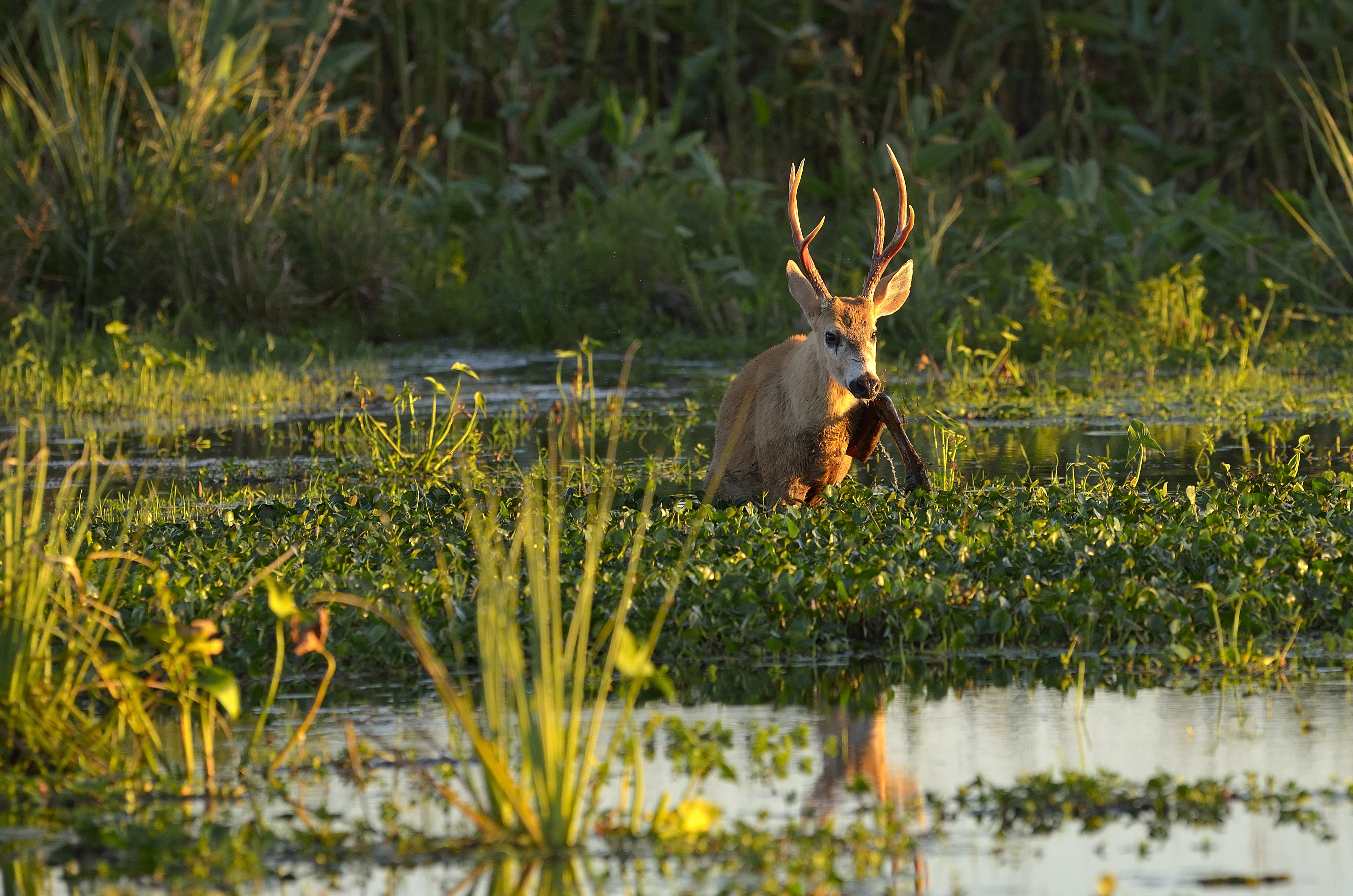
The Esteros del Iberá are one of the world's great wetland wildernesses — a vast mosaic of lakes, floating islands, marshes, and gallery forest covering around 1.3 million hectares of northeastern Argentina. Second in size only to Brazil's Pantanal, the wetlands hold over 4,000 species of plants and animals, including populations of capybara, caiman, marsh deer, and giant anteaters that can be observed at extremely close range from small boats and on foot.
For decades the Iberá were largely off the tourist radar, known mainly to fishermen and hunters. That changed dramatically from the late 2000s onwards, when a large-scale rewilding programme began reintroducing species that had been hunted out over the previous century. The list of reintroductions reads like a roll call of South America's most spectacular fauna: giant anteater, pampas deer, tapir, giant river otter, collared peccary, ocelot, red-and-green macaw, and most dramatically, the jaguar. In 2021, jaguars were released into the Iberá after an absence of over 70 years. By 2024, more than 35 individuals were living and breeding in the wild within the park boundaries.
The main gateway for most visitors is Colonia Carlos Pellegrini, a small village of around 900 people on the shores of Laguna Iberá, reachable by 120 km of road from the town of Mercedes (80 km of which is gravel). From here, guided boat trips onto the lagoon bring you within metres of capybara, caimans, and wading birds. The Iberá National Park itself was formally created in 2018 and encompasses around 195,000 hectares; the surrounding provincial reserve adds another 5,500 km². Additional access portals near Mercedes and along the Corriente River offer alternative entry points for different wildlife experiences.