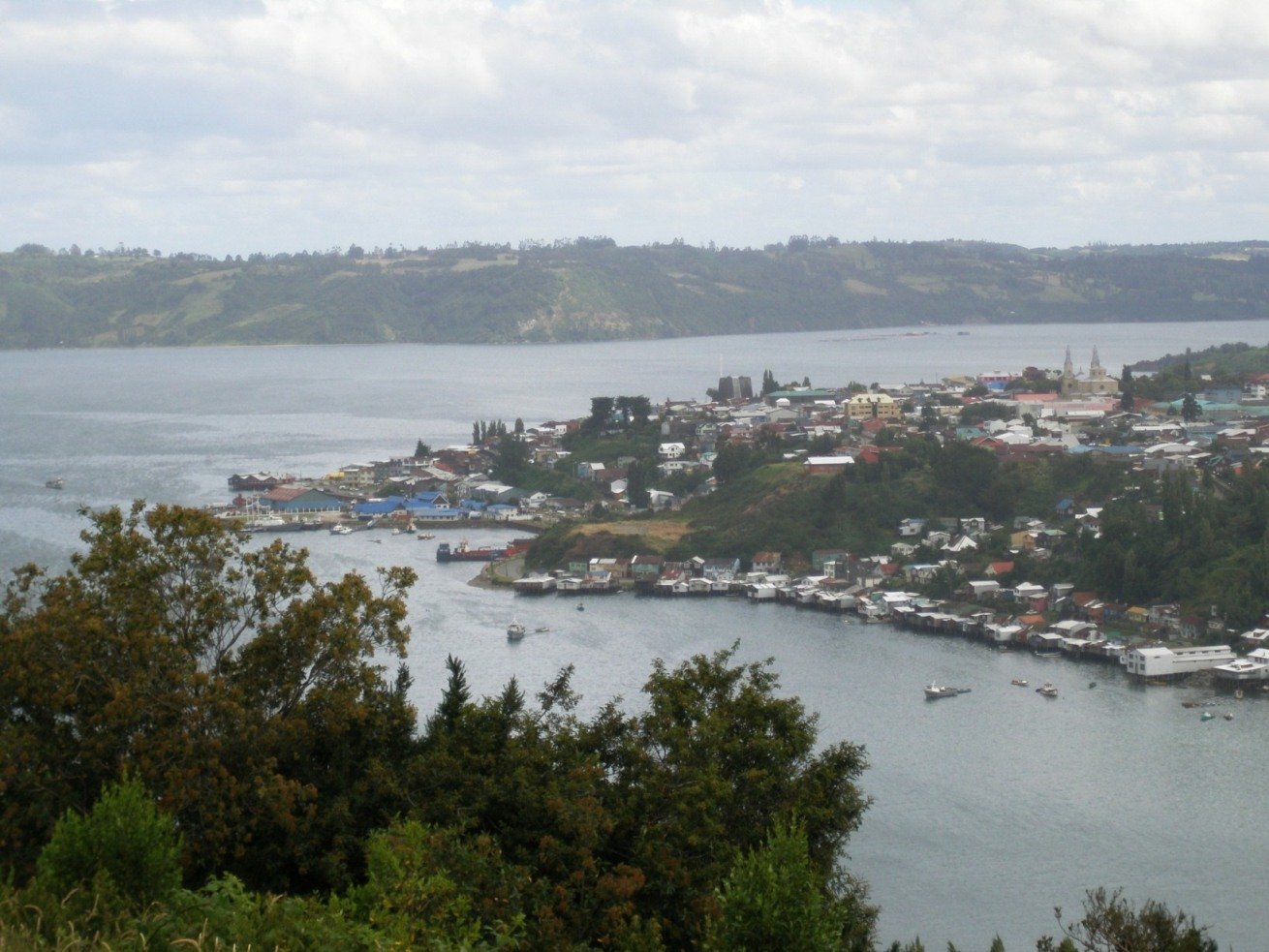
Castro is the capital of Chiloé Province and the archipelago's main town, a compact city of wooden houses cascading down steep hills to the fjord below. It is rainy, practical, and visually memorable: fishing boats in the bay, wooden shingles on old houses, and bright palafitos standing on stilts over the tide.
The Plaza de Armas is dominated by the remarkable Church of San Francisco in its improbable yellow-and-lilac paint scheme. Below the church, markets and waterfront stalls sell what you came to Chiloé to find: native potatoes, smoked shellfish, woollen ponchos, and the ingredients for curanto, the island feast of seafood, meat, and potatoes.
The palafitos are the image most travelers remember. Some are still working homes, others have become guesthouses and restaurants, but together they give Castro a waterfront unlike anywhere else in Chile.
Castro is also a good base for the rest of Chiloé Archipelago. Buses run to Ancud, Dalcahue, Chonchi, Quellón, and Chiloé National Park, and the town is small enough to explore on foot between rides.