Duitama
©
Duitama

Duitama

Boyacá highland city in a cool mountain valley, used as a base for nearby colonial towns

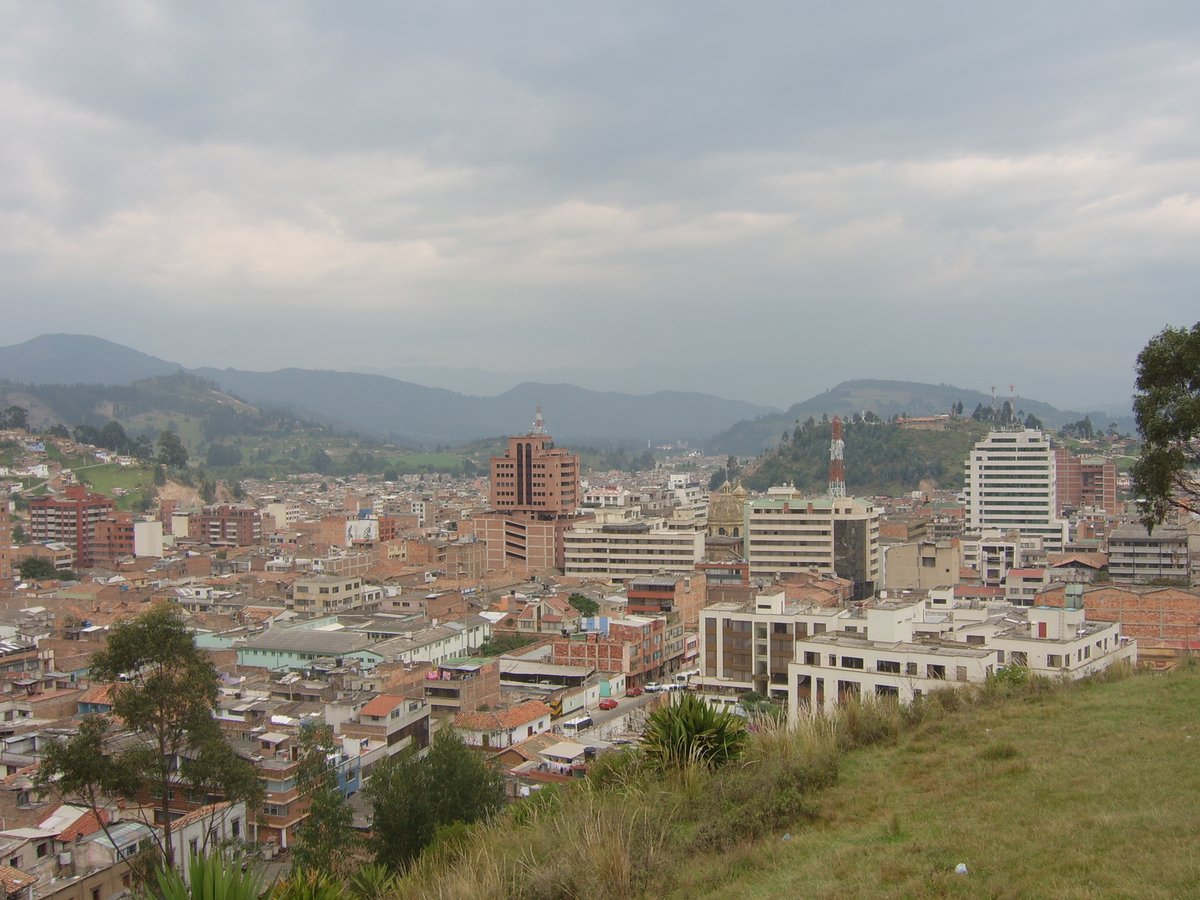
Duitama is a small city in the Boyacá highlands of Colombia, about three hours northeast of Bogotá. It sits at 2,500 metres in a green valley surrounded by mountains, and the climate is cool and pleasant year-round. The city is a practical base for exploring Boyacá — one of Colombia's most historically rich departments.

The main attraction nearby is the Pueblito Boyacense, a replica village on the outskirts that recreates the architectural styles of different Boyacá towns. More interesting are the genuine colonial towns within easy reach: Tibasosa, just to the south, has colonial balconies and a square that Simón Bolívar visited in 1820. Villa de Leyva, 90 minutes by road, is one of Colombia's finest colonial towns. The adventure town of San Gil — with rafting, paragliding, and caving — is two hours northeast.

Duitama itself is modest but has a lively market and good local food — particularly the Boyacá staples of cuchuco soup and arepas boyacenses. Cycling fans will know the city as the host of the 1995 UCI Road World Championships, where Abraham Olano won the road race and Jeannie Longo took the women's title.

Guide

Eating Out

Duitama's food is rooted in the Boyacá highlands tradition. The staples are filling and inexpensive: cuchuco de trigo (a thick wheat and pea soup with pork), arepas boyacenses (flat corn cakes, larger and thicker than Bogotá-style arepas), and mazamorra chiquita, a hearty corn and vegetable stew. Chicha — fermented corn drink — is available at traditional establishments and market stalls.

The Pueblito Boyacense food stalls give a reasonable survey of regional dishes, particularly on weekends. For sit-down meals, the streets around the central plaza have local restaurants serving set lunches (almuerzo del día) at very reasonable prices.

Guide

Getting There

Duitama is about 200 km northeast of Bogotá, roughly three hours by bus via the Autopista Boyacá. Buses from Bogotá's Terminal de Transporte del Norte run frequently to Duitama directly, or you can change at Tunja (50 km southwest), which has more frequent onward connections.

From Tunja, shared taxis (colectivos) and buses run to Duitama throughout the day and take about 45 minutes. The ride along the Altiplano Cundiboyacense, with green hills on both sides and the occasional colonial town flashing past, is pleasant.

There is no airport at Duitama; the nearest is El Dorado in Bogotá.

Guide

Things to Do

Duitama's main attraction for visitors is Pueblito Boyacense on the edge of town — a replica colonial village built to showcase the different architectural styles of Boyacá's municipalities, with craft shops, food stalls, and weekend performances.

Within easy reach of Duitama, several genuinely old colonial towns are worth a half-day: Tibasosa, just to the south, has elegant two-storey houses with colonial balconies and a church square that Simón Bolívar visited in 1820. The town of Iza, a short drive further, sits near Lago de Tota — Colombia's largest natural lake — and is worth combining with a lakeside stop.

Villa de Leyva, about 90 minutes by road, is the flagship colonial town of Boyacá: a large cobblestone plaza, whitewashed walls, and a well-developed food and craft scene that makes it worth the trip. San Gil, two hours northeast, is the adventure sports hub of Colombia, with rafting, paragliding, and caving all available.

Duitama itself has some cycling history: it hosted the 1995 UCI Road World Championships, where Abraham Olano of Spain took the road race title ahead of Miguel Indurain, and Jeannie Longo of France won the women's race.