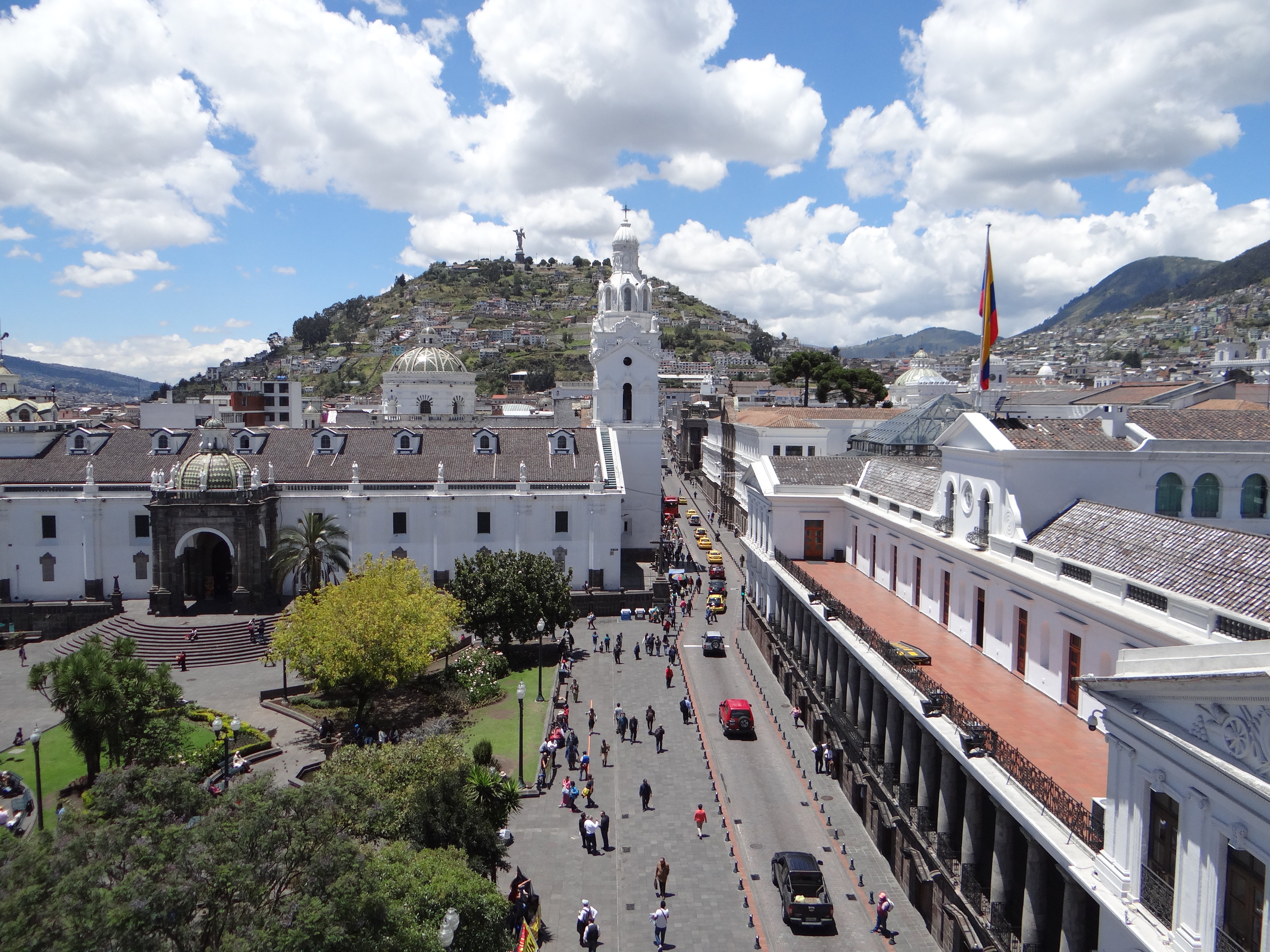
Quito is one of the highest capital cities in the world, at 2,850 metres above sea level, and the first city to be declared a UNESCO World Heritage Site (in 1978, jointly with Kraków). Its Centro Histórico is one of the best-preserved colonial urban centres in the Americas — forty churches, seventeen plazas, and streets that have changed little since the 16th century. The backdrop is extraordinary: the city fills a long, narrow valley with the active Pichincha volcano immediately to the west and a ring of snowcapped peaks visible on clear days.
Quito is not the biggest city in Ecuador (that is Guayaquil) but it is the main international entry point and transport hub. It is also genuinely one of the best cities in South America to spend a week: the combination of the colonial city, the modern neighbourhoods, the altitude (which gives it a permanently spring-like climate), and the ease of day trips to remarkable nearby landscapes makes it an unusually complete destination.
The Historic Centre is where most travellers spend most of their time — wandering between the Plaza Grande, the Church of La Compañía, the vast San Francisco complex, and dozens of smaller churches and museums. The Basílica del Voto Nacional tower climb is essential. For views, El Panecillo hill and the Teleférico cable car are the two options; the Teleférico is more dramatic. Day trips to Mindo cloud forest and the Mitad del Mundo equatorial monument round out the standard visit.