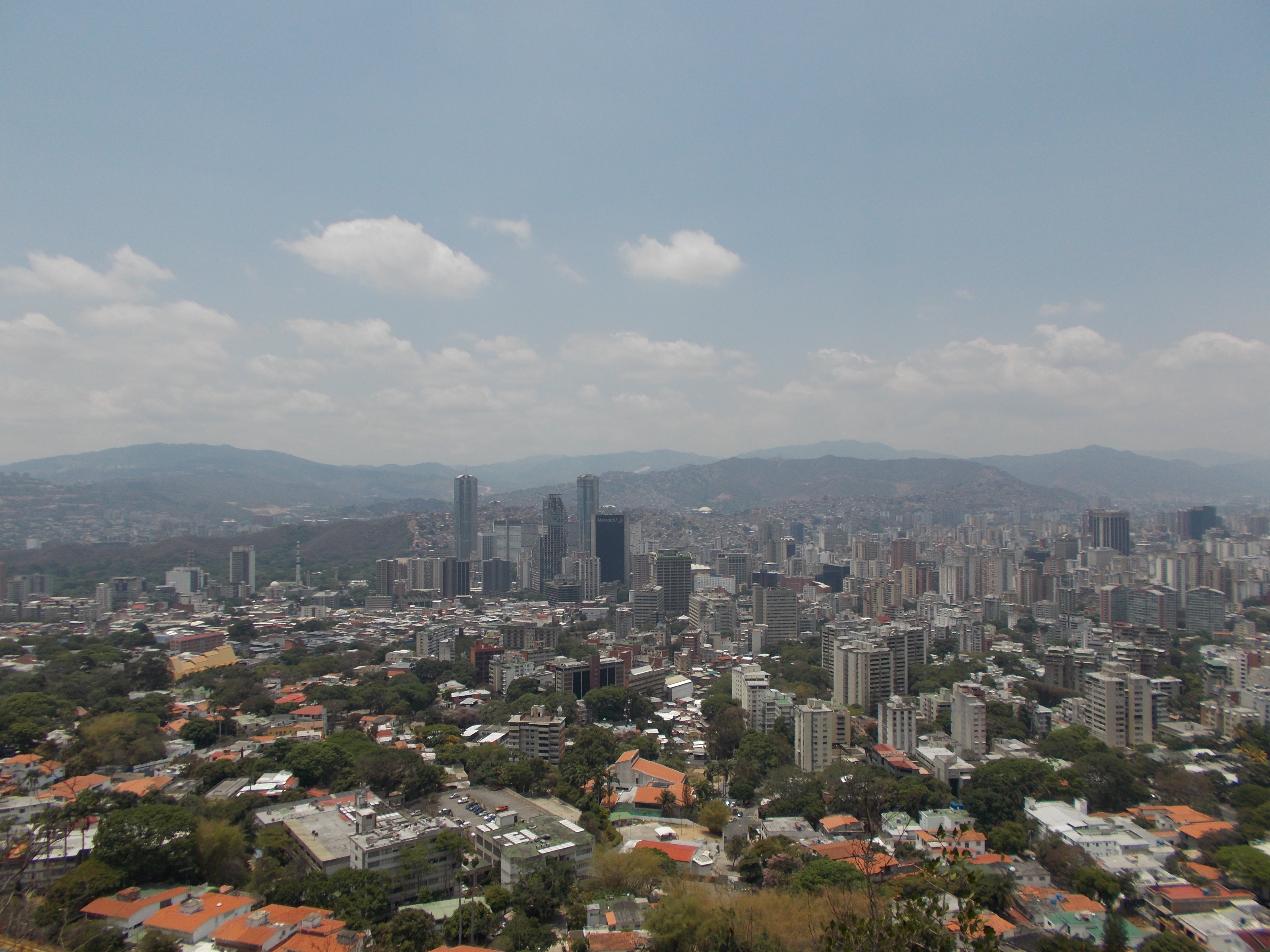
Caracas is the capital of Venezuela: a Spanish-American city that runs east to west along the narrow valley of the Río Guaire, hemmed in by the green wall of the Ávila mountain to the north and lower hills to the south. The setting is dramatic — 900 metres above sea level, with what locals call the eternal spring climate — and the contrast between that natural amphitheatre and the dense, often chaotic city below is the first thing every visitor notices.
Founded in 1567 by Diego de Losada and named after the Indigenous Caracas people who lived in the valley, the city is the birthplace of Simón Bolívar — El Libertador — and his memory dominates everything from street names to the National Pantheon where he is buried. The old colonial core, around Plaza Bolívar, holds the cathedral, the National Capitol, the Casa Natal where Bolívar was born, and a clutch of colonial churches that survived the 1812 earthquake. East of the centre, the city becomes modernist: the postwar towers of Centro Simón Bolívar, the brutalist Parque Central complex, and the UNESCO-listed Ciudad Universitaria campus by Carlos Raúl Villanueva — one of the great pieces of Latin American 20th-century architecture.
Caracas is also a city in deep crisis. Since 2013 hyperinflation, economic collapse, and political repression have hollowed out infrastructure, services, and the middle class. Crime — particularly armed robbery, kidnapping, and homicide — is among the worst in the Americas, and most Western governments advise against non-essential travel. Visitors who come tend to do so with a fixer or trusted local, fly in and out of Maiquetía, and stick to safer eastern districts like Chacao, Altamira, Las Mercedes, and El Hatillo. The old centre is best seen by day, on foot, and with someone who knows the streets.
The eastern neighbourhoods feel like a different city: leafy Altamira and La Castellana with their walled houses and good restaurants, Las Mercedes with its art galleries and clubs, the cobbled colonial village of El Hatillo perched on the hillside above. The Sabana Grande boulevard, once the city's promenade, is a pedestrian street that connects Plaza Venezuela to Chacaíto. North of the city, the Ávila — officially Parque Nacional Waraira Repano — rises 2,000 metres, with hiking trails up from Sabas Nieves and a cable car from Maripérez to the old Hotel Humboldt at the summit.
What remains is a city that still has world-class architecture, a generous and resilient population, an extraordinary mountain setting, and a food culture — arepas, hallacas, pabellón criollo, cacao that is among the best in the world — that travels well. It is not an easy place to visit, but for those who put in the preparation, Caracas rewards the effort.