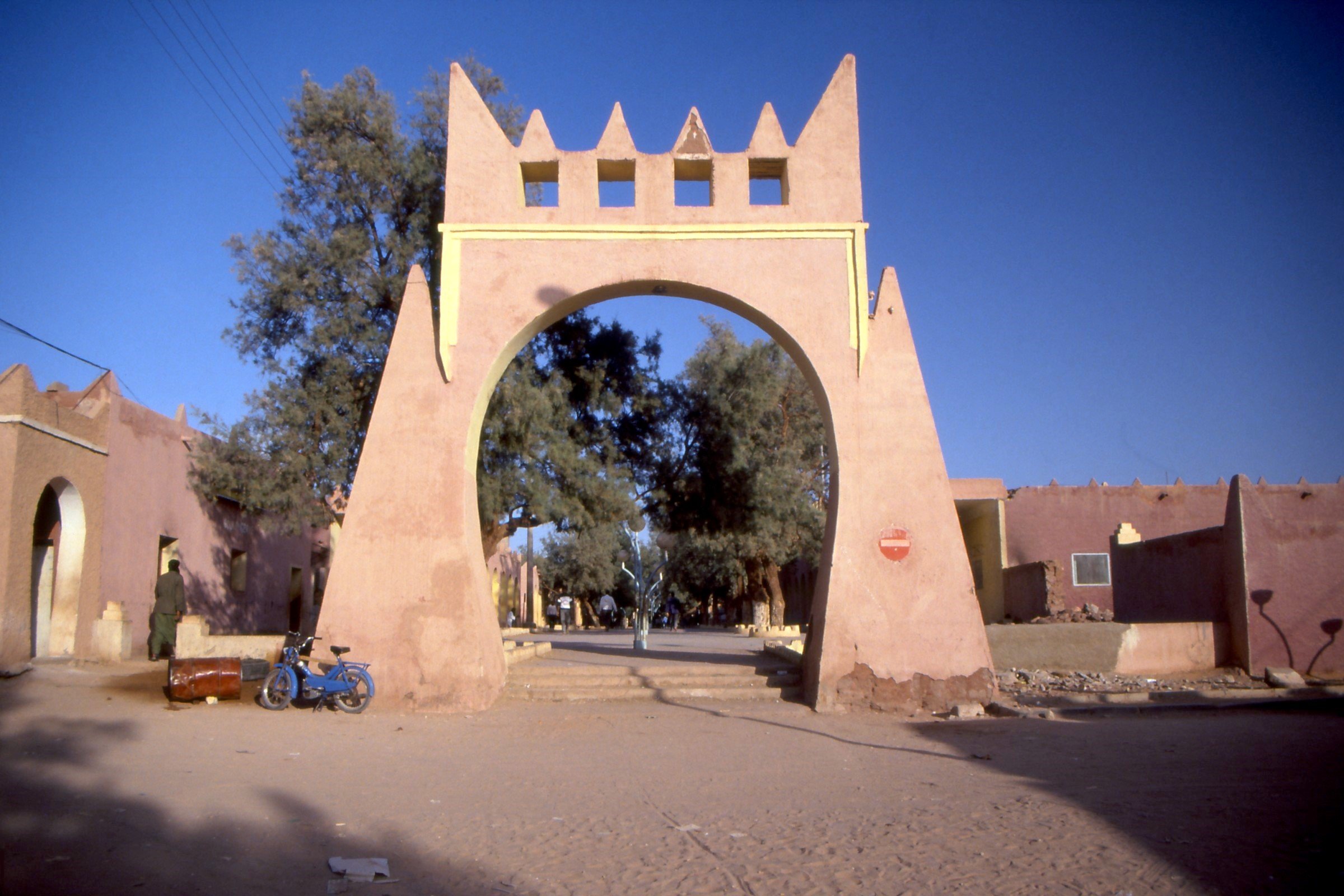
In Salah
©
In Salah

In Salah

Deep Sahara oasis town on the Trans-Saharan Highway through one of Algeria's hottest regions.

In Salah is an oasis town deep in the Algerian Sahara, roughly halfway between Ghardaia to the north and Tamanrasset to the south on the Trans-Saharan Highway. It sits in the Tidikelt region, one of the driest and hottest places in the world — summer temperatures regularly exceed 50°C.

The town is a transit stop for overland travellers crossing the Sahara rather than a destination in its own right, but it has a certain austere charm. The old ksar with its red-earth architecture is worth exploring, the date palmery is watered by an ancient network of underground foggaras, and the moving dune on the northern edge of town is one of the strangest sights in the Algerian Sahara. The Tidikelt cultural centre in the main square has a small library.

Getting to In Salah involves long drives through empty desert. The national road between El Golea and In Salah can be in poor condition, and the stretch south toward the Hoggar Mountains is similarly remote. Come prepared with fuel, water, and a reliable vehicle.

Guide

Things to Do

In Salah's interest is mainly in what it is — an oasis in one of the most extreme environments on earth — rather than in any specific monument. The old ksar, the surrounding date palmeries, and the ingenious foggara irrigation system that has kept the town alive for a thousand years are the things to see. The famous "moving dune" — a sand mountain that the town's residents have been trying to outrun for generations — sits on the northern edge.

Guide

When to Go

Do not come to In Salah in summer. From May through September the daytime temperatures regularly exceed 45°C and have been recorded above 50°C — among the highest temperatures registered anywhere on earth. Travel is impractical, dangerous in the open desert, and most travellers passing through plan their journeys to avoid the worst.

The viable window is October through April. November to February has the most pleasant temperatures — warm days, cold nights — and clear skies. Sandstorms (the harmattan) can roll through from February into spring and reduce visibility for days. Carry plenty of water year-round; even in winter the desert is unforgiving.