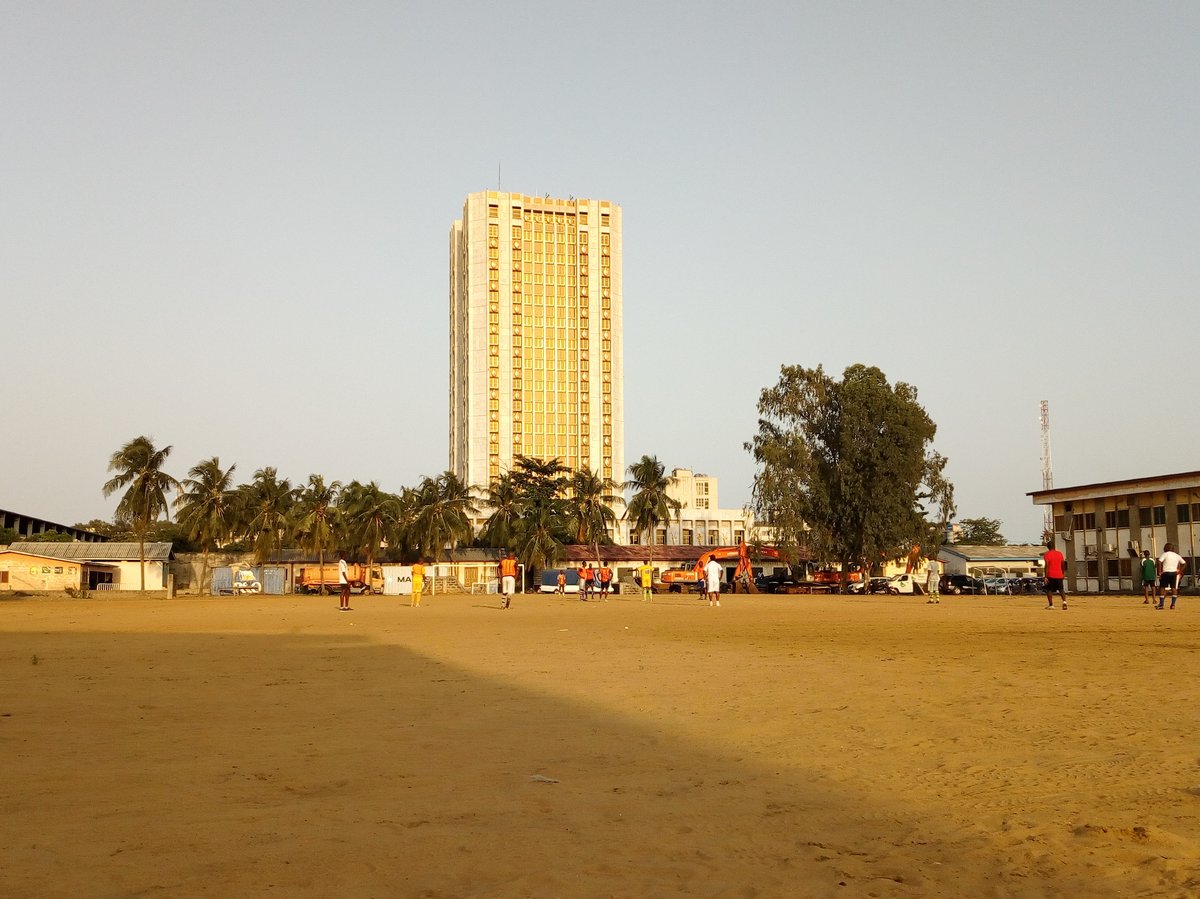
Cotonou is the most important city of Benin. Porto-Novo is the official capital, but in economic activity Cotonou takes the first place. It is the country's commercial engine, its transport hub, and the place to arrange visas and onward travel.
The city has genuine appeal of its own. The Dantokpa Market — commonly called Tokpa — is one of the largest open-air markets in West Africa, a 20-hectare sprawl of fabric, dried fish, spare parts, and fetish medicines that takes hours to explore properly. Near Boulevard de la Marina, the striking Amazon Monument commemorates the Dahomey Amazons, the legendary all-female army of the Kingdom of Dahomey, with a 30-metre bronze warrior rising above a roundabout. The Cotonou Cathedral, with its distinctive burgundy-and-white striped facade, stands near the old bridge over the lagoon. And the BCEAO Tower, decorated with cowrie-shell reliefs, is the city's most prominent landmark.
Cotonou is also an ideal base for day trips. Ganvie, the stilt village on Lake Nokoué that earned the nickname "Venice of Africa," is just a short boat ride north. Porto-Novo is 20 minutes east with its museums and royal palace. The slave port of Ouidah with its Route des Esclaves and Python Temple is 40 km west. Abomey, ancient capital of Dahomey, is 100 km north on a paved road.
The Boulevard Saint-Michel is the busy commercial spine of the city, and the zem (motorcycle taxi) is the only way to move through traffic with any efficiency. Fidjrosse Beach, a few kilometres west, is where Cotonou residents head on weekends for grilled fish, cold beer, and surf.