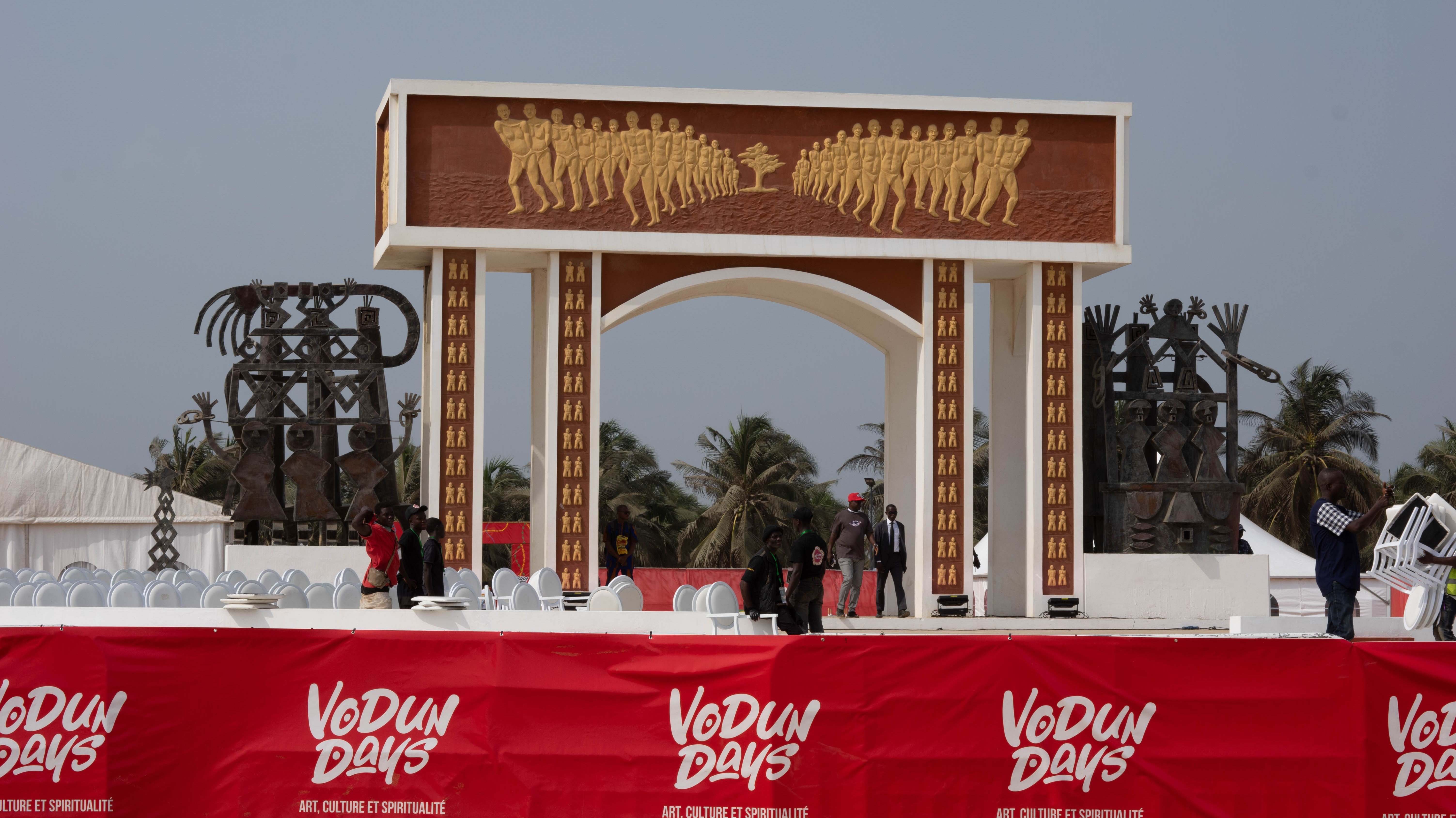
Ouidah is one of the most historically charged towns in West Africa. For nearly two centuries it was the principal port through which enslaved people were shipped to the Americas — estimates suggest more than a million people left from its shore. That history is inescapable here, and it lends the town a weight that few other places in the region carry.
Bruce Chatwin's novel The Viceroy of Ouidah brought the town to wider attention, telling the story of Francisco de Souza, a Brazilian slave trader who became one of the most powerful men on the coast. His descendants still live in Ouidah, and his former compound is among the sites worth visiting.
Ouidah is also the spiritual home of Vodun — the religious tradition that spread from here to Haiti and Brazil. The Python Temple, where sacred pythons move freely through the compound, is a genuine cult site and not just a tourist attraction. The annual Vodun Festival in January draws practitioners from across the diaspora. The Route des Esclaves, a three-kilometre path leading to the sea, is lined with sculptures and ends at the Door of No Return, a memorial arch on the beach. The old Portuguese fort in the centre of town now houses the Musée d'Histoire, and the Forêt Sacrée holds sculptures of the major Vodun divinities.
The town is 40 km west of Cotonou and can be visited as a long day trip, though an overnight stay rewards you with a slower encounter with its temples, shrines, and colonial-era architecture.