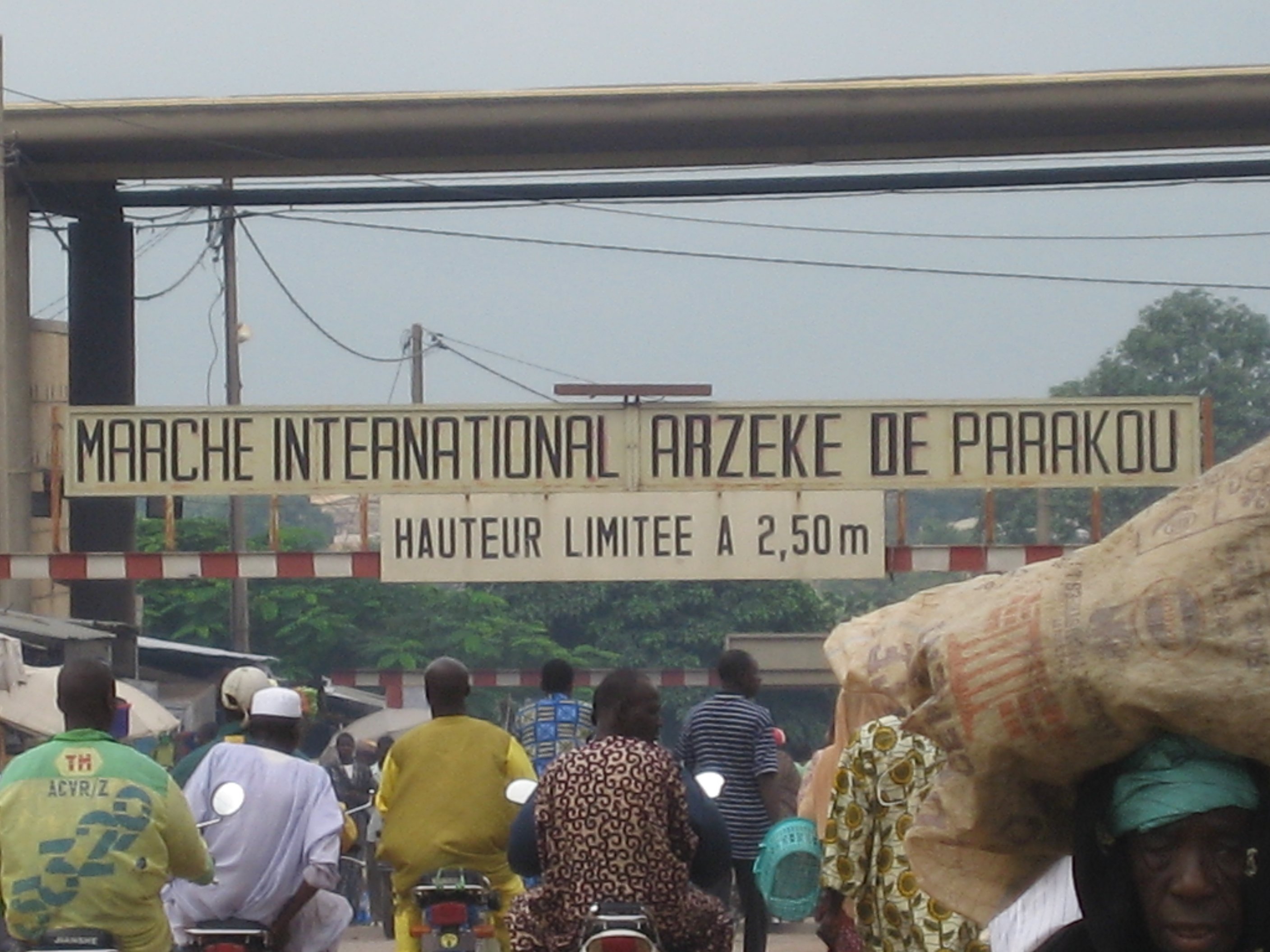
Northern Benin commercial hub at the railway end, with a large market for Bariba textiles.
Parakou is Benin's second largest city and the main hub of the north, sitting at the end of the railway line from Cotonou and at the crossroads of routes heading to Natitingou, Djougou, and the Niger border. If you are heading to the Atakora region or Pendjari National Park, you will almost certainly pass through here.
The city has a busy, sprawling feel — a commercial centre for the surrounding cotton-growing region rather than a tourist destination. The Grand Marché is one of the largest markets in northern Benin and worth a wander, particularly for its textiles — hand-woven Bariba cloth and indigo-dyed fabrics from the region's cotton country — and the bustle of the transport hub around it. The Grande Mosquée nearby reflects the city's deep Islamic roots, brought here centuries ago along the trans-Saharan trade routes.
The Gaani festival, held annually in September, is the city's biggest cultural event, a celebration rooted in the traditions of the Bariba and Dendi peoples with horse parades, drumming, and dancing. If your dates coincide, it is well worth planning your itinerary around it.
Parakou is functional rather than charming, but it has decent enough facilities for an overnight stop — street food around the gare routière serves igname pilée and wagashi cheese at very little cost, and a few reasonable places to stay. Most travellers use it as a staging point: stock up on supplies here before heading into the parks or the Atakora hills to the northwest.
Guide
Getting There
Parakou sits 420 km north of Cotonou on Route Nationale 2 — the main artery through central Benin. The road is paved and in reasonable condition, and bush taxis and buses run the route throughout the day, taking around five to seven hours depending on stops and the vehicle. The ATAC bus company runs the most reliable scheduled services from Cotonou.
The rail link from Cotonou once made Parakou the northern terminus of Benin's railway, but passenger services have been intermittent for years and are currently not running. Verify the status if you're determined to travel by train. There is a small airport (Parakou Airport) that handles domestic flights from Cotonou; Air Côte d'Ivoire and occasionally other regional carriers serve the route, but schedules change frequently.
From Parakou, bush taxis and shared minibuses run north to Natitingou (about four hours), east toward the Nigerian border at Kandi, and west toward Djougou. The gare routière is the hub for all these departures.
Guide
When to Go
Parakou has two distinct seasons. The dry season runs from October or November through to April: clear skies, dusty harmattan winds from the Sahara from December onward, and temperatures that can hit 40°C in March and April before the rains return. This is the easier time to travel — roads are passable everywhere and accommodation is readily available.
The rainy season runs roughly May to September, with rains typically heaviest in July and August. Roads to the northwest and toward Pendjari can become difficult or impassable after heavy rain, so check conditions before setting out. The upside is that the landscape greens dramatically and the heat is less punishing.
September is the best month to combine comfortable travel with the Gaani festival, Parakou's major cultural event. The rains are tapering off, the city is lively, and the surrounding countryside is at its most colourful.