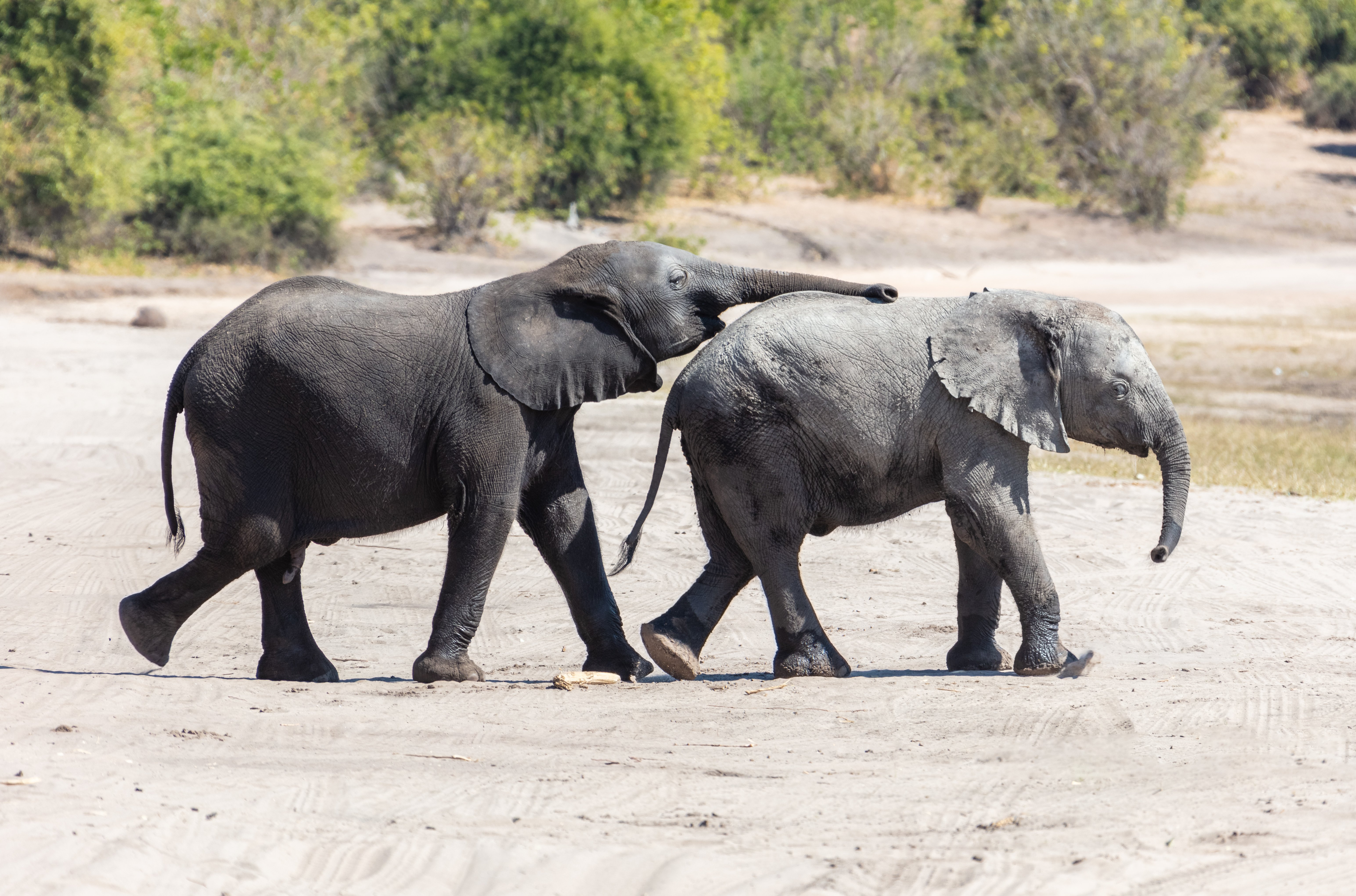
Chobe National Park is Botswana's first national park and one of Africa's finest wildlife areas. It covers nearly 11,000 square kilometres of northern Botswana and encompasses several distinct ecosystems: the Chobe River floodplain in the north, the Savuti marsh in the centre, and the remote Linyanti wetlands in the west. The park has the highest concentration of elephants in Africa — estimates range from 50,000 to over 120,000, depending on the season. In the late afternoon along the Chobe River waterfront, seeing hundreds of elephants drinking simultaneously while hippos yawn in the shallows and fish eagles cry overhead is one of the genuinely overwhelming wildlife spectacles on the continent.
The main base is Kasane, a small town on the Chobe River at the park's northeastern corner, about five hours by road from Maun or 90 minutes from Victoria Falls in Zimbabwe. Kasane has a strip of lodges and campsites ranging from budget to luxury along the river. The town sits at what Botswana calls the "Four Corners" — the point where Botswana, Namibia, Zambia, and Zimbabwe share borders (more or less — the geometry is disputed, but close enough that the sign with all four flags is a mandatory photo stop). Day trips to Victoria Falls from Kasane are straightforward, making Chobe a natural stop on any southern Africa circuit.
Boat safaris on the Chobe River are the signature experience — drifting quietly past elephant families bathing in the shallows, watching crocodiles and hippos, and seeing the extraordinary bird life of the river at sunset. The Savuti area, 160km south of Kasane on a sandy track, is famous for its lions and wild dogs and is one of the best places in Africa to see predator-prey interactions. The Linyanti wetlands in the west, shared with the adjacent Kwando Concession, are more remote still — accessible only in a 4WD or by fly-in camp — with excellent game and practically no other visitors.
Chobe is part of the vast Kavango–Zambezi Transfrontier Conservation Area (KAZA), the world's largest transboundary conservation area, which also encompasses the Okavango Delta, Hwange National Park, and large areas of Namibia, Zambia, and Zimbabwe.