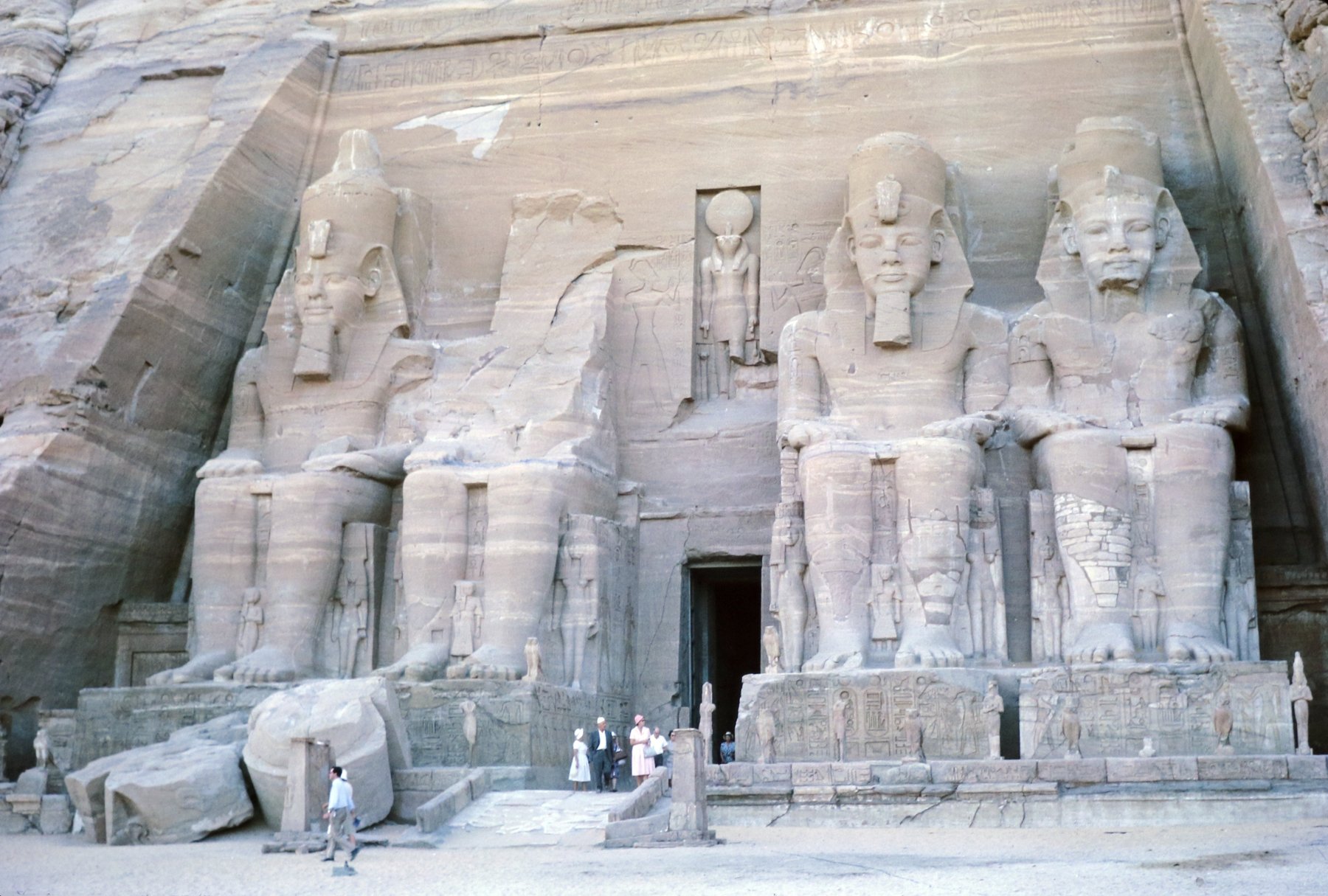
Abu Simbel sits in the far south of Egypt, almost on the Sudanese border, where the Nile opens out into the vast expanse of Lake Nasser. It is one of the great stops on any trip to Egypt — a pair of colossal rock-cut temples that Ramses II had carved directly into a sandstone cliff in the 13th century BC, intended to intimidate anyone arriving from the south and to remind the gods of his own divinity.
The temples would have been lost forever when the Aswan High Dam was built in the 1960s. Instead, in one of the most ambitious salvage operations in archaeological history, a UNESCO-led team cut the entire cliff face into twenty-ton blocks, moved them sixty-five metres uphill, and reassembled the whole complex on an artificial mountain above the rising waters of Lake Nasser. The original orientation was preserved so precisely that twice a year — on 22 February and 22 October — the sunrise still reaches down the temple axis and lights up the statues of the gods in the inner sanctuary.
Most visitors arrive on a long day trip from Aswan, leaving in convoy before dawn to be on site by the time the temperature climbs. The drive across the Nubian desert is part of the experience: flat, empty, shimmering, with nothing between you and Sudan but sand.