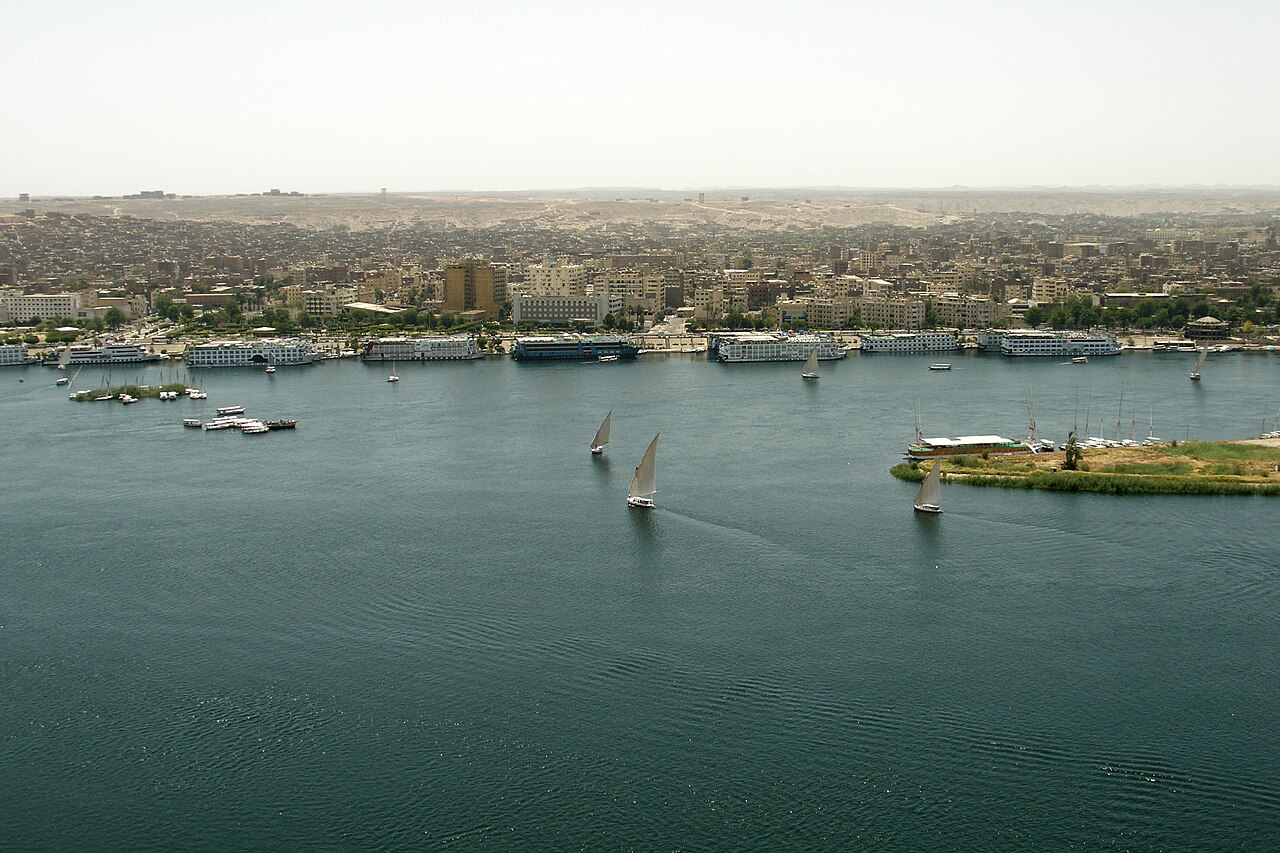
Aswan is the southernmost city in Egypt and the gateway to ancient Nubia. It sits on the east bank of the Nile where the river cuts through granite hills, and the landscape here feels markedly different from the rest of the country — more African, warmer, slower. The Nile is at its most beautiful in Aswan, dotted with feluccas and islands, its banks lined with palm groves rather than concrete.
The city and its surroundings were Nubia in ancient times, and that identity persists. The Nubian villages on the west bank, with their brightly painted houses, are worth visiting in their own right. The Nubian Museum on the east bank does an excellent job of telling the story of this culture, much of whose homeland now lies under Lake Nasser.
The main sights cluster around the river: Elephantine Island with its ancient ruins, Kitchener's Island and its botanical garden, the hilltop Mausoleum of Aga Khan III, and the remains of the Monastery of St Simeon on the west bank. Just south of the city, the Philae Temple — relocated block by block to save it from the rising waters of the High Dam — is one of the most atmospheric temples in Egypt. The Unfinished Obelisk in the granite quarries north of the city reveals how these colossal monuments were cut from rock. A felucca on the Nile is the best way to take all of it in at once.
Aswan is also the jumping-off point for Abu Simbel to the south and the temples at Kom Ombo and Edfu to the north. Many visitors arrive or depart on Nile cruises between here and Luxor. The Old Cataract Hotel, where Agatha Christie wrote Death on the Nile, has a terrace that commands the finest view in town. The Aswan Souq on Sharia el-Souq is the best place to buy hibiscus, spices, and Nubian crafts.