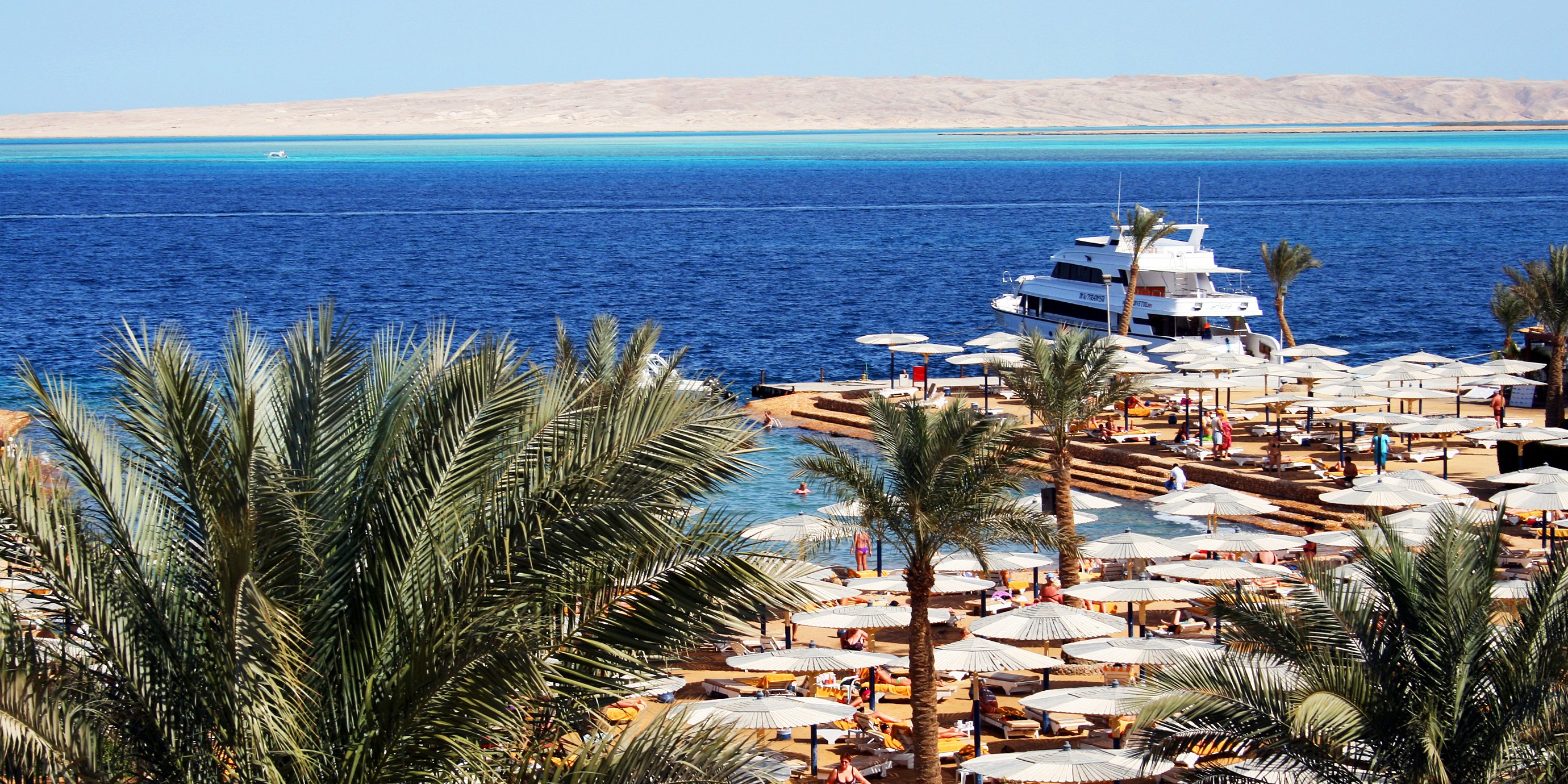
Hurghada was a small fishing village on the Egyptian Red Sea coast until the 1980s, when developers noticed the water. Today it is Egypt's largest beach resort, a 30 km strip of hotels, dive centers, and tourist infrastructure stretching along one of the world's great reef systems. The transformation was fast and not always elegant — large stretches of the coast are dominated by all-inclusive resorts, and the resort zone has little to do with Egyptian life — but the sea is genuinely spectacular and the diving is among the best in the world.
The old town, El Dahar, sits north of the resort strip and preserves some of the original character: a bazaar, mosques, cheap restaurants, and shisha cafes where locals gather in the evenings. It's worth a walk and a meal if you want a break from the resort bubble. The newer Sakkala district bridges El Dahar and the southern resort strip, with a mix of mid-range hotels, supermarkets, and the town's nightlife concentration.
Underwater, Hurghada excels. The Red Sea has exceptional visibility, warm water year-round, and a diversity of reef life that rivals any tropical destination. Giftun Island, the dive sites around Sha'ab Abu Ramada (nicknamed "the aquarium"), and the deeper walls off the offshore islands are all within easy reach by day-trip boat. Dozens of dive centers cater to everyone from first-time snorkelers to liveaboard veterans.
On land, options beyond the beach are limited. The Hurghada National Museum is worth a visit for its Eastern Desert collection. The desert behind town provides a backdrop for sunset jeep safaris and camel rides. Day trips to Luxor are popular and worthwhile. The nearby town of Safaga, 53 km south, is a quieter alternative with its own excellent diving and a devoted windsurfing crowd.
Hurghada is not for everyone. If you're looking for cultural depth, Cairo and Luxor offer far more. If you want Egypt's best diving, uncrowded beaches, and warm water in January, Hurghada is hard to beat.