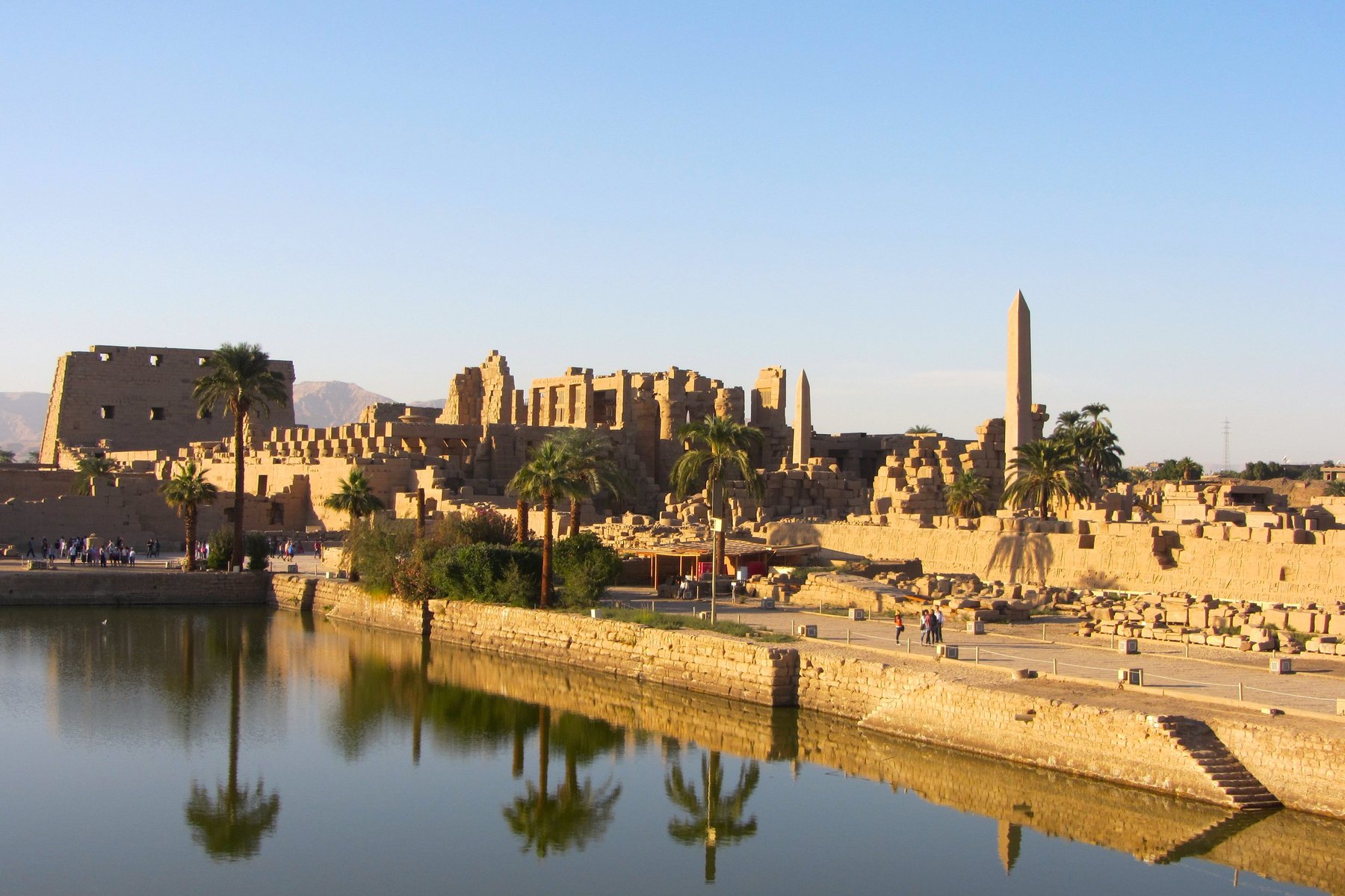
Karnak is the site of ancient Thebes, and one of the most staggering human constructions on earth. The complex is massive — 1,500 metres by 800 metres — built, added to, restored, enlarged and redecorated over a period of 1,500 years. At its heart is the enormous Amun Temple, largely constructed between 1570 and 1090 BC. Later pharaohs kept adding their own touches, and the Ptolemies and early Christians also left their mark.
The highlights come thick and fast: a processional avenue of ram-headed sphinxes, a fifty-metre first pylon (still unfinished after all these centuries), and the tallest obelisk in Egypt — 29.6 metres of pink granite. But nothing prepares you for the Great Hypostyle Hall, built in the late 13th century BC by Seti I and completed by Ramses II. It is a forest of 134 towering papyrus-shaped columns, every surface carved in delicate sunken and raised relief, covering 6,000 square metres — enough to swallow the floor plans of St. Paul's Cathedral and St. Peter's Basilica combined. Standing inside it, you understand why ancient Egyptians believed their gods lived here.