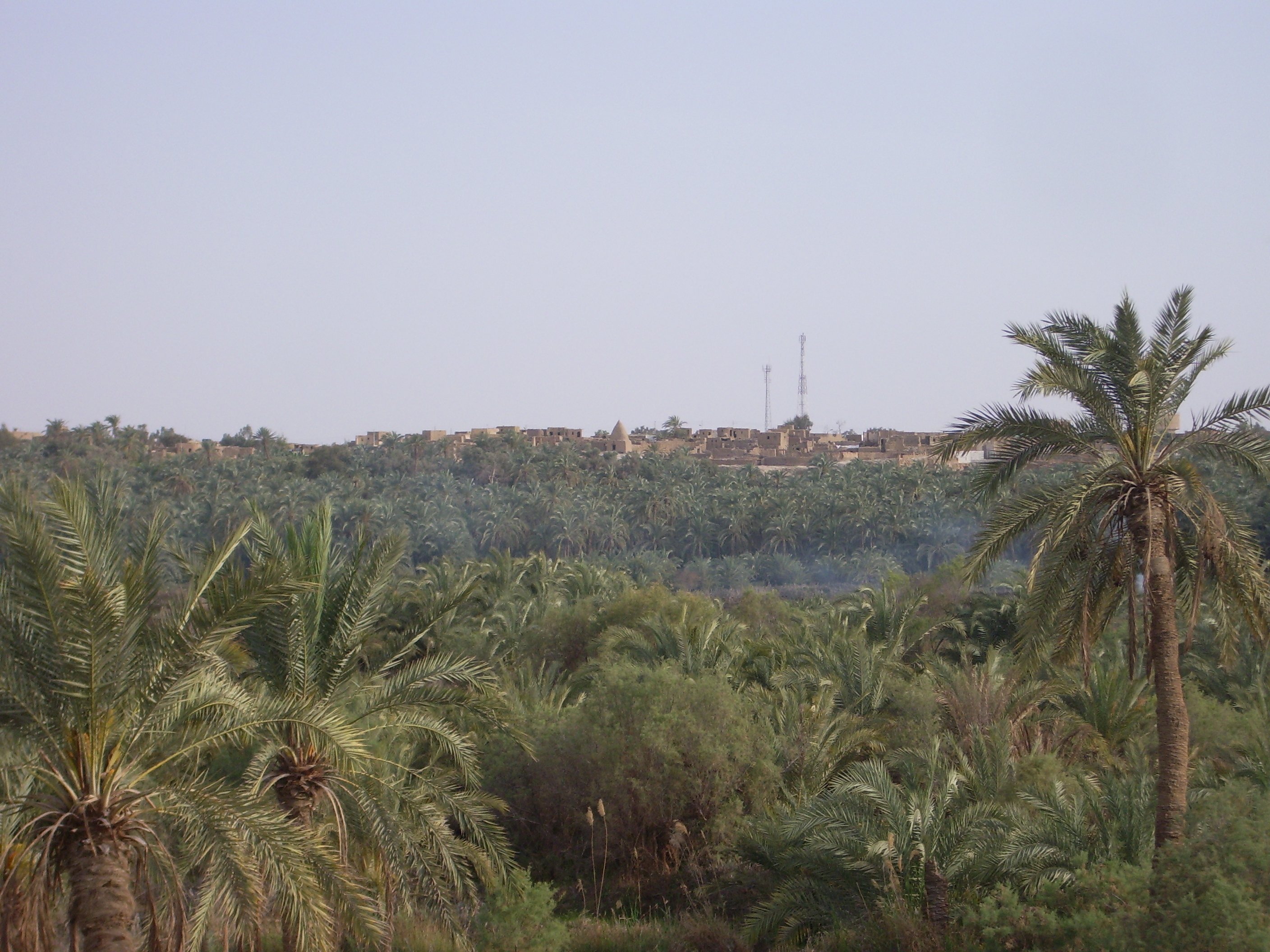
Bahariya is the northernmost of Egypt's Western Desert oases — a depression in the plateau about 365 km southwest of Cairo, where underground springs have sustained human settlement since pharaonic times. The oasis is 94 km long and 40 km wide, and the main town of Bawiti sits roughly 150 metres below the surrounding desert plateau. Around 30,000 people live here across several villages; palm groves, olive orchards, and irrigated fields cluster around the springs, with bare black volcanic hills rising behind them.
Most visitors come for two things: the extraordinary archaeological cache at the Valley of the Golden Mummies — a Greco-Roman cemetery discovered in 1996 that may contain over 10,000 mummies — and the surreal desert landscapes that surround the oasis. To the south, the Black Desert is a volcanic plateau whose hills are draped in dark basalt, a completely different visual world from the golden sand dunes most visitors expect. Beyond it, the White Desert is where wind erosion has sculpted chalk formations into shapes so improbable they appear designed — mushrooms, arches, towers, and tables of brilliant white rock against bare desert.
The oasis has been inhabited continuously since at least the New Kingdom. The Temple of Alexander the Great in Bawiti is one of only a handful of confirmed Alexander-era temples in Egypt. Pharaonic tombs of the 26th Dynasty are well-preserved and open to visitors. Hot sulphur springs outside town provide outdoor bathing, popular with Egyptian tourists on weekends. Bahariya makes a natural stopping point on the desert route south to Farafra and Siwa; most visitors from Cairo do it as a two or three day trip, adding the White Desert as a one-night desert camp.