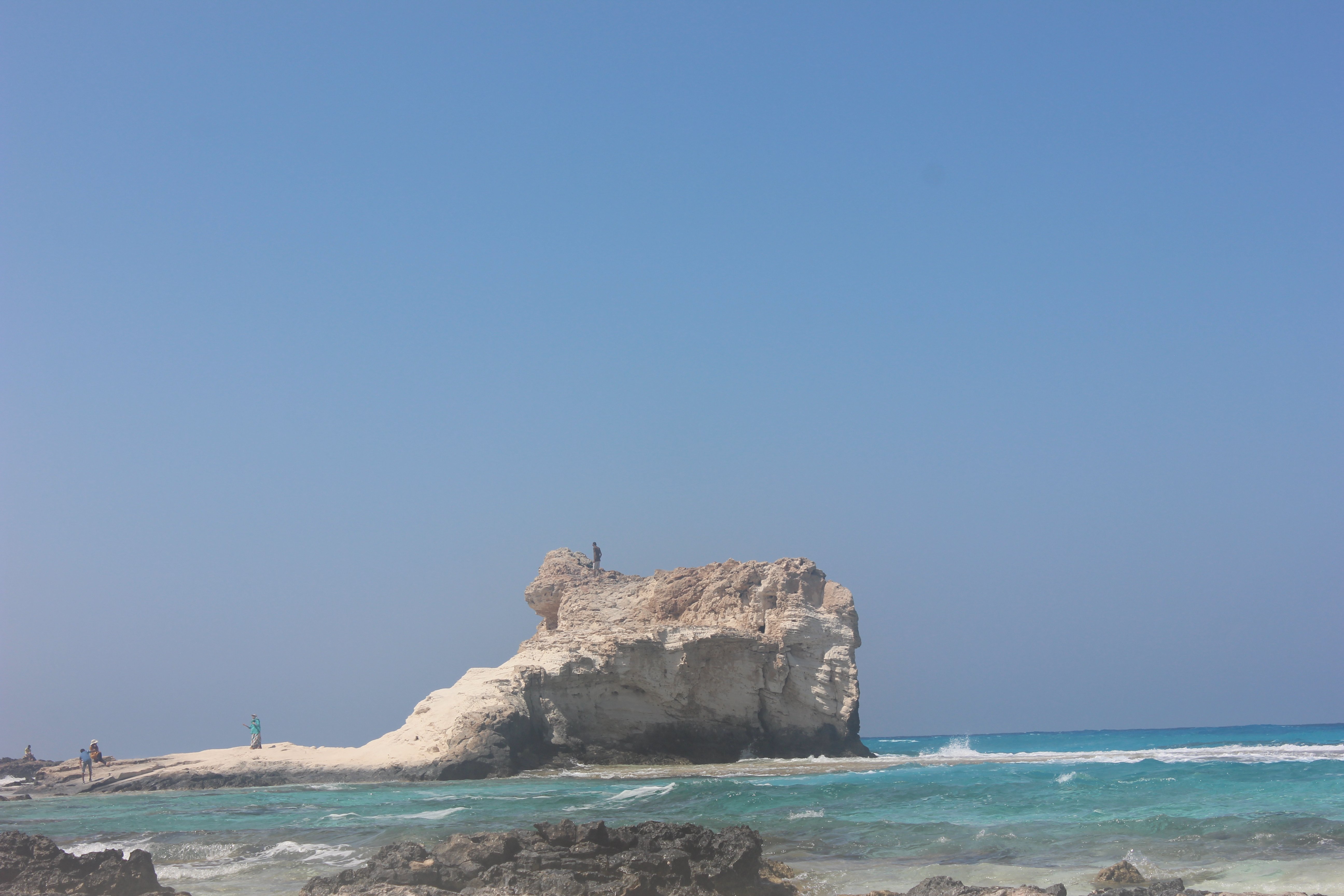
Egyptian Mediterranean resort town where sheltered turquoise bays draw summer crowds from Cairo.
Marsa Matruh sits on Egypt's Mediterranean coast, about 290 kilometres west of Alexandria and roughly halfway to the Libyan border. It is a summer resort town, popular with Egyptian families escaping the heat of Cairo, and the beaches here are genuinely striking — white sand, turquoise water, and a sheltered bay that makes the sea unusually calm for the open Mediterranean.
The most famous beach is Cleopatra's Beach (Hammam Cleopatra), a natural rock pool on the headland west of town where, according to local legend, the queen once swam. Whether or not the story is true, the setting is beautiful. Ageeba Beach, a few kilometres further west, is dramatic — a cove reached by stone steps cut into the cliff, with transparent water and rocky shelves for diving.
Outside the summer months (June to September), Marsa Matruh is quiet to the point of emptiness. Most hotels and restaurants cater to the Egyptian holiday season and wind down in autumn. The town itself is functional rather than charming, but the coastline in both directions is spectacular. Rommel's Cave Museum is an unexpectedly good small museum covering the 1942 desert campaign, and the Marsa Matruh War Cemetery is quietly moving. The World War II battlefields of El Alamein lie about 250 kilometres to the east, and the oasis of Siwa is reachable by a desert road heading south — a journey of about four hours.
Guide
Day Trips
The most obvious day trip from Marsa Matruh is El Alamein, about 250 kilometres east along the coastal highway. The battlefield and its associated cemeteries — the Commonwealth War Cemetery, the German memorial, the Italian memorial — are among the most moving sites in Egypt. The El Alamein Military Museum puts the 1942 campaign in context. Plan a full day.
Siwa Oasis is a full day's drive south through the Western Desert — about four hours on a road that eventually becomes a single track cutting through pale limestone desert. Siwa is one of Egypt's most remote and rewarding destinations: a lush oasis with Berber culture, ancient temples and salt lakes. The overnight option makes more sense, but determined day-trippers can manage the round trip.
Guide
Getting There
Marsa Matruh has its own airport, Mersa Matruh Airport, which handles seasonal charter flights and occasional domestic Egyptian routes, though service is limited and variable. Check current schedules as flights often only operate in summer.
By road from Alexandria, the journey is about 290 kilometres along the coastal highway — roughly three hours by car or microbus. Microbuses depart from Sidi Gaber and Moharam Bek stations in Alexandria throughout the day. From Cairo, the bus journey via Alexandria takes around six to seven hours; regular services run from Cairo's Turgoman station.
By train, there is a railway line connecting Marsa Matruh to Alexandria, with a few departures daily in each direction. The journey takes roughly four to five hours. Check current timetables at the station, as services are reduced outside summer.
Guide
When to Go
Marsa Matruh is first and foremost a summer resort. June to September is the high season, when Egyptian families pour in from Cairo and Alexandria to escape the heat of the Nile Delta. The beaches are crowded, accommodation is expensive, and the town is lively. The sea temperature is warm — around 26–28°C — and the water is at its calmest. Book accommodation well in advance for July and August.
May and October are the sweet spots: the sea is still warm enough to swim, the crowds have thinned, and prices drop sharply. Spring can bring the occasional khamsin — a hot, dusty desert wind off the Sahara — but these are short-lived. Autumn is generally more settled.
Winter (November to March) is very quiet. Most hotels and restaurants close or operate at skeleton capacity. The weather is mild by European standards — daytime temperatures of 15–20°C — but the wind off the sea can be sharp. The beaches are empty, which makes for fine walking, and the war sites and museums are uncrowded.