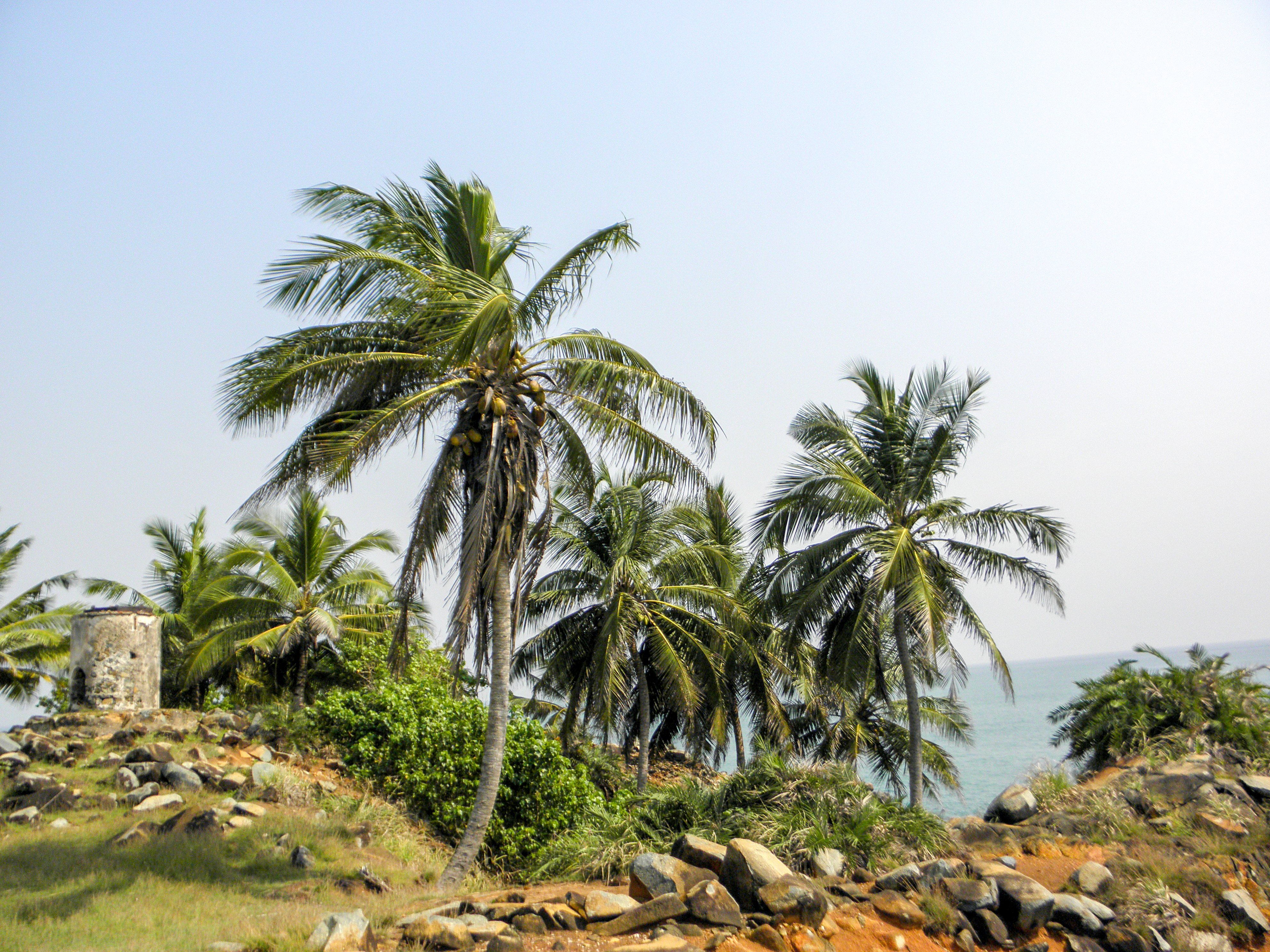
Ghana's southernmost peninsula, with lighthouse views, surf, forest reserve, and fishing villages.
Cape Three Points is the end-of-the-road corner of Ghana's Western Region, a small peninsula where forest, fishing villages, and rough Atlantic surf meet at the country's southernmost tip. It is often described as the land closest to Null Island, the imaginary 0 degrees latitude and 0 degrees longitude point far out in the Gulf of Guinea.
The cape is not a polished resort. Roads are slow, transport is irregular, and most visitors come as a long day trip from Butre, Busua, Dixcove, or Akwidaa. That is part of the charm. The mood is quieter and more remote than the better-known beaches around Cape Coast and Elmina.
The main reason to come is the Cape Three Points Lighthouse, where the ruined 1875 light and the working 1925 tower mark a high lookout over the coast. Around it are beaches, patches of protected forest, and the fishing village of Cape Three Points. If you have your own transport, combine the cape with Akwidaa or the fort at Princes Town.
Guide
Beaches
The beaches around Cape Three Points are beautiful but not tame. Expect open Atlantic swell, rocks in places, and rip currents. They are better for long walks, body surfing with care, and watching fishing canoes than for casual swimming.
Turtle nesting can happen along this coast in season. If you see tracks, nests, or hatchlings, keep distance and avoid lights on the sand at night.
Guide
Getting Around
Once at the cape, you move mostly on foot, by arranged taxi, or by local motorbike. The lighthouse and village are close enough for a slow walk, but heat and humidity make distances feel longer.
Do not count on finding return transport late in the day. Keep the driver who brought you, or arrange a pickup through your guesthouse.
Guide
Getting There
The easiest approach is by charter taxi from Busua, Butre, Dixcove, or Agona Nkwanta. Public transport can get you part of the way, but the last stretch is slow and irregular, so day-trippers should negotiate waiting time before leaving.
Road conditions change after rain. If you are staying on the coast, ask locally before setting off; a trip that looks short on a map can take much longer than expected.