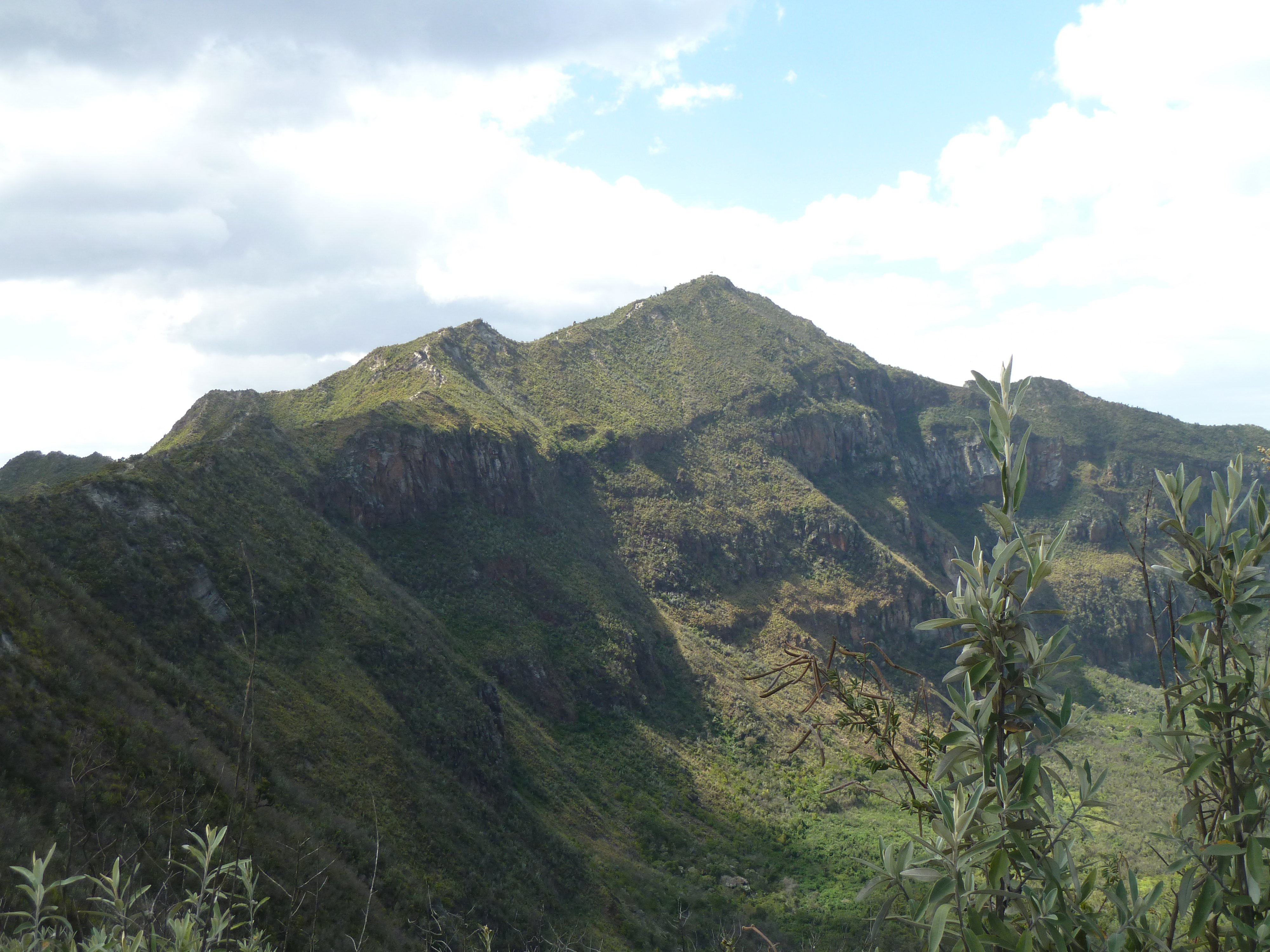
Mt Longonot is a dormant stratovolcano rising to 2,886 m above the floor of the Great Rift Valley, about 60 km northwest of Nairobi. The hike to the crater rim takes less than an hour, and the full rim circuit adds another two to three hours — with sweeping views across the Rift Valley on one side and straight down into the steep, forested crater on the other. It is one of the most satisfying day hikes in Kenya.
The park is managed by Kenya Wildlife Service and has a single trail. From the gate you climb steadily through scrubby vegetation to the rim, where the path circles the entire crater. The southern section of the rim is higher and rockier; the northern arc is lower and greener. Along the way you pass a series of steam vents — a quiet reminder that the volcano is dormant, not dead. With a guide and technical gear you can descend into the crater itself, though most visitors are happy with the rim walk.
Getting there without a car is straightforward: take a matatu from Nairobi toward Naivasha and ask to be dropped at Longonot town, then walk or hire a boda-boda for the 7 km to the park gate. If you have your own vehicle, follow the signposted road from the Naivasha–Nairobi highway. Camping near the gate is possible — ask the KWS rangers on arrival. The trip is easily done as a day excursion from Nairobi or Naivasha.