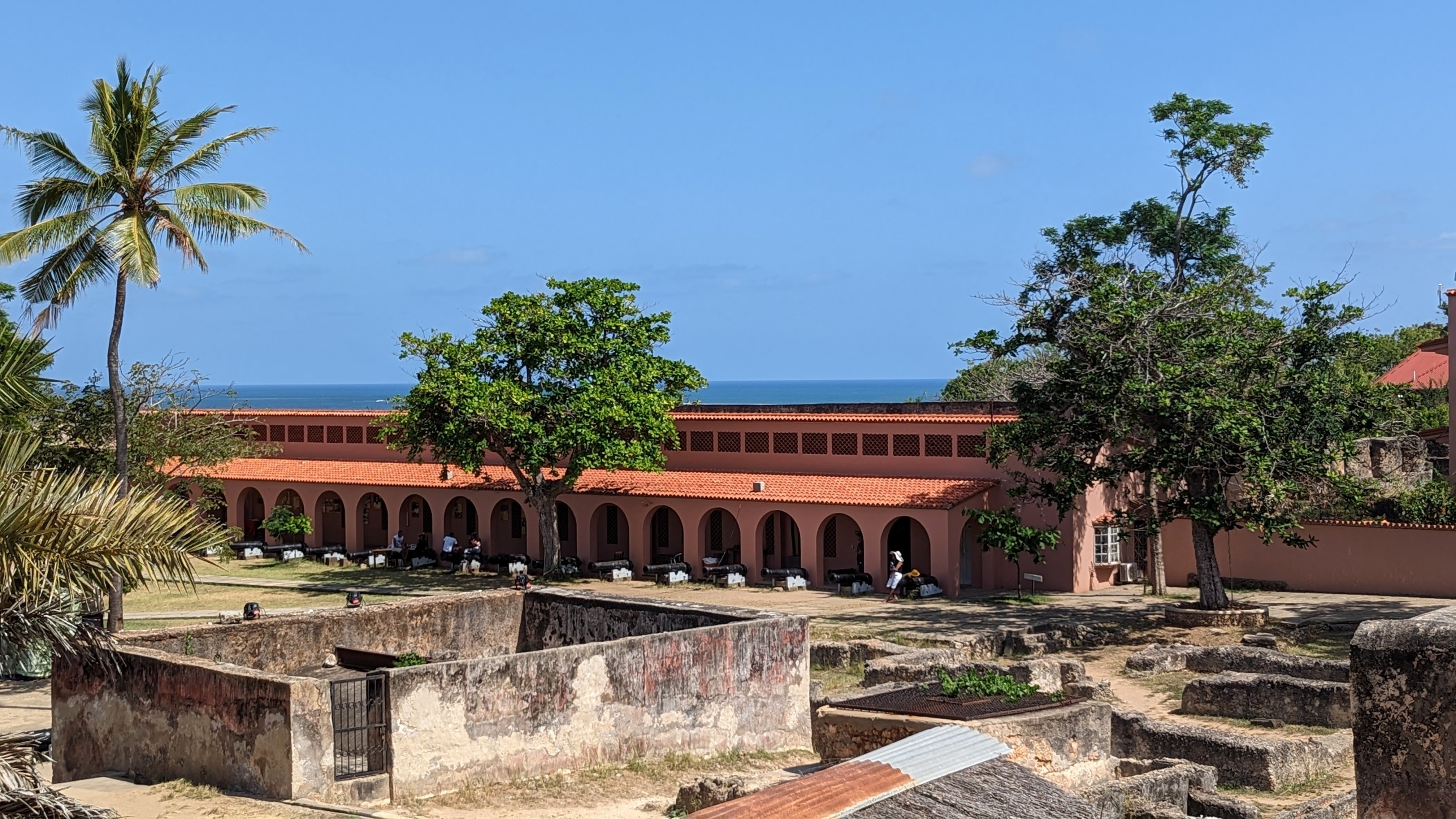
Mombasa is Kenya’s second city and the busiest port in East Africa, an island of nearly 1.3 million people wrapped in Indian Ocean creeks on the country’s southern coast. Its Swahili name is Mvita — "Island of War" — which captures 2,000 years of conquest by Arabs, Persians, Portuguese, Omanis and finally the British. The result is one of the most distinctive places in East Africa: a coastal, overwhelmingly Muslim, Swahili-speaking city that feels more connected to the Arabian Peninsula and the old Indian Ocean trade world than to the inland savannah of the rest of Kenya.
The heart of the old city is Mombasa Old Town, a dense quarter of coral-rag houses, carved wooden doors, mosques and Omani-era mansions that still smells of cloves and woodsmoke. On its southern edge rises Fort Jesus, the massive Portuguese fortification built in 1593 to control the spice route — a UNESCO World Heritage Site, and the most impressive colonial-era fort on the East African coast. The modern city spreads out across Mombasa Island and onto the mainland on three sides, linked by the Likoni Ferry to the south and the Nyali Bridge to the north.
Most visitors, though, come not for the city itself but for the beaches. The North Coast — Nyali, Bamburi, Shanzu — is a nearly continuous strip of white-sand resorts, palms, and reef-sheltered swimming, with the northern end at Watamu and Malindi. The South Coast, reached via the Likoni Ferry, is quieter and on the whole lovelier; Diani Beach, about an hour from the city, is the finest beach on the Kenyan coast. Offshore, the coral reef runs the length of the coastline and offers good snorkelling and dhow cruises. Mombasa is also the obvious starting point for trips into Tsavo East and Tsavo West National Parks — together one of the largest protected areas in Kenya, with big herds of the famous red-earth elephants.