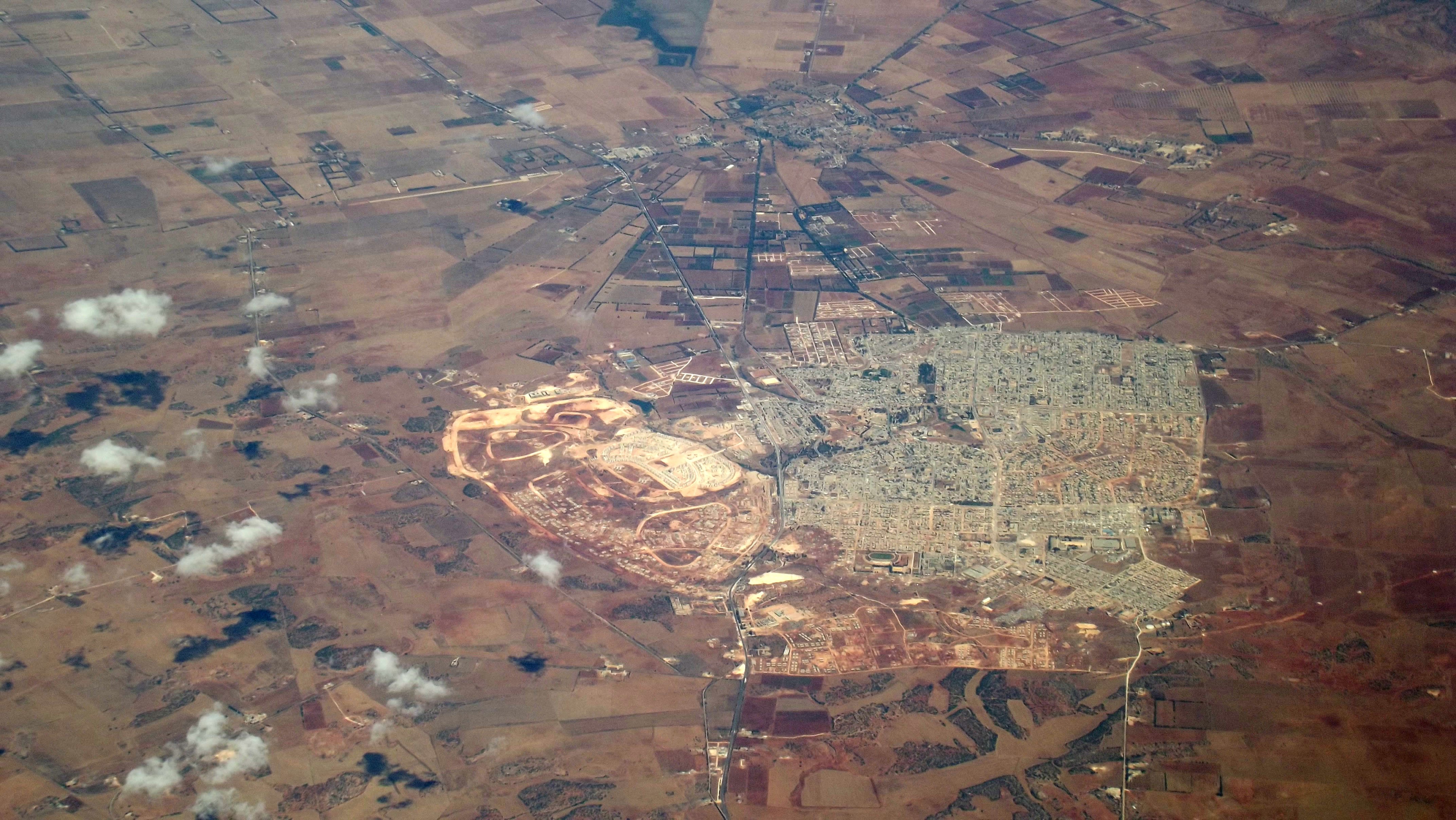
El Merj, usually written Al Marj, is a Jebel Akhdar city with a stranger history than its quiet modern appearance suggests. The name means "the meadows", a fair description in a country where green land is rare. It sits east of Benghazi on routes toward Al Bayda, Cyrene and the coast.
The old city is generally associated with ancient Barca or Barce, one of Cyrenaica's important settlements and a name that echoed through Greek, Roman, Byzantine and early Islamic history. The modern city was rebuilt several kilometres away after a destructive earthquake in 1963, which is why El Merj can feel more recent than its past really is.
For travellers, the point is not a long checklist but context: the old Barca site, the Turkish fort, the Al-Mnaykhrat tomb and the city's main mosque together make a useful stop on a Green Mountain itinerary. El Merj also works as a road break between Benghazi, Jebel Akhdar and Derna.
As elsewhere in eastern Libya, check current security and access before travelling. Archaeological areas may be unmarked, and local guidance is valuable.