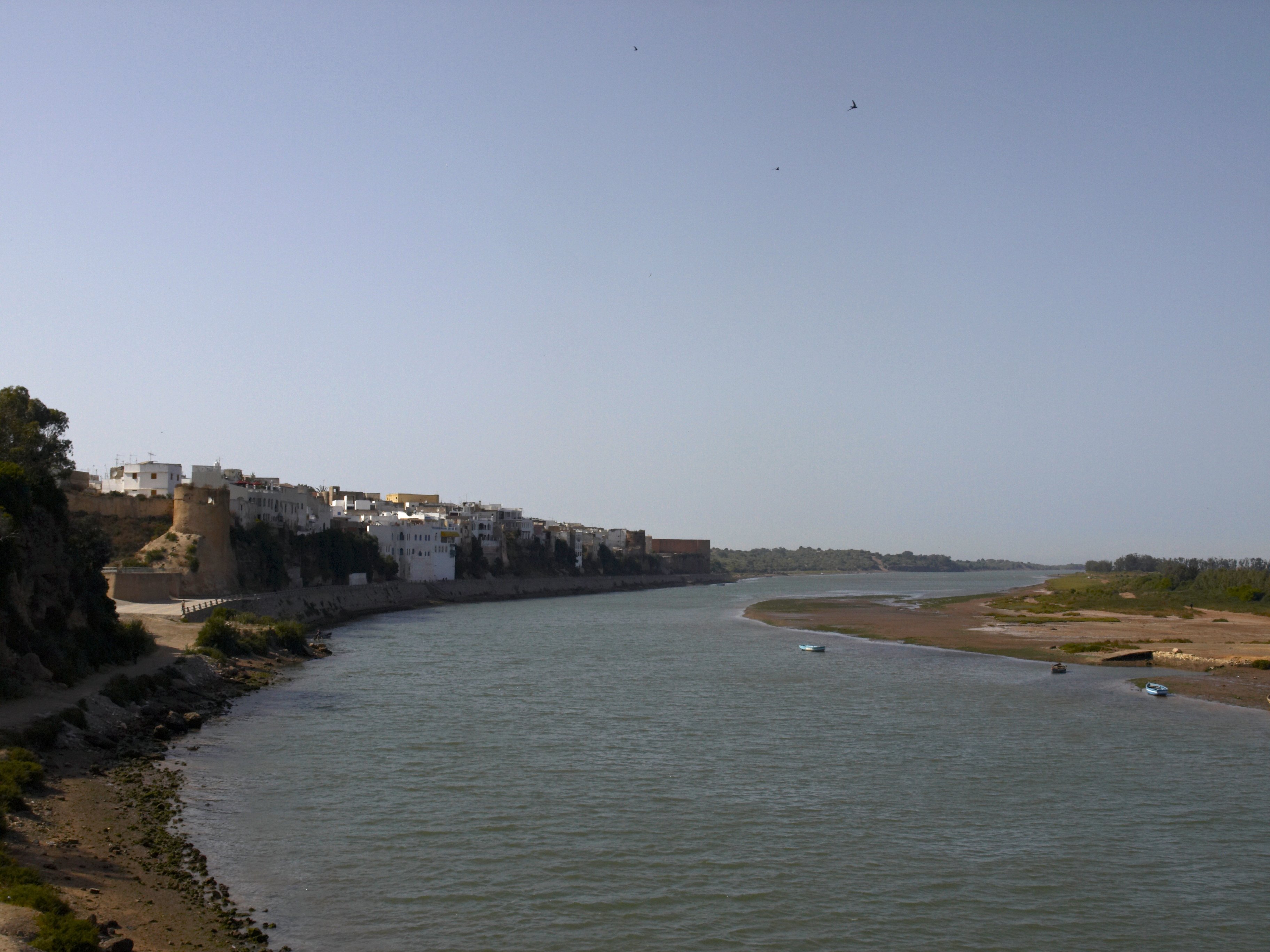
Azemmour is the least visited of Morocco's Atlantic coastal towns, and the quieter for it. It sits where the Oum er-Rbia — Morocco's largest river — meets the Atlantic, about 15 km north of El Jadida and 75 km south of Casablanca. The Portuguese occupied the town from 1513 to 1541 and left a circuit of walls and ramparts that remain largely intact; the best views are from across the river, where the whitewashed medina rises directly from the water.
The medina and mellah are compact and relaxed, with few tourists and a genuine neighbourhood feel. Azemmour is also known for its distinctive embroidery — blue and black geometric threadwork on white linen, a tradition unique to this town. The Oum er-Rbia riverbank is one of the finer walks in the region, with views of the ramparts and good birdwatching at the river mouth during migration season.
Azemmour has an unexpected connection to world history: it was the birthplace of Estevanico, enslaved here by the Portuguese and later becoming the first African to explore what is now the United States, accompanying Spanish expeditions across the continent in the 1530s.