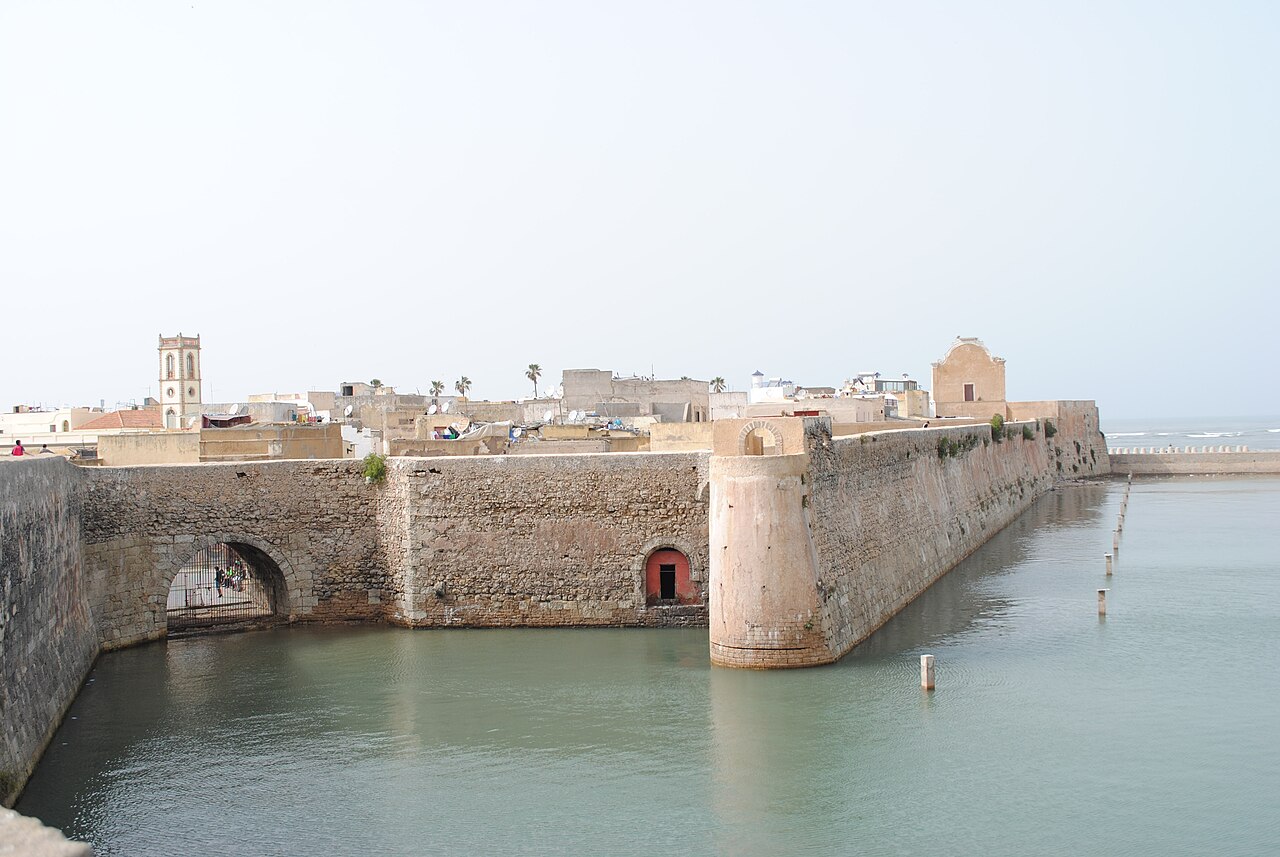
El Jadida sits on the Atlantic coast of Morocco about 100 kilometres south of Casablanca, and it has a claim on history that most Moroccan coastal towns lack: the old medina here was built by the Portuguese in the 16th century, and its fortified walls, bastions, and the extraordinary underground cistern they constructed still stand largely intact. The Portuguese called it Mazagan, and the historic centre they built was added to the UNESCO World Heritage List in 2004 — one of the best-preserved examples of early modern Portuguese colonial architecture in the world.
The cistern is the centrepiece. Built in 1514 as a water reservoir, its vaulted stone arches reflect in a thin layer of water that covers the floor, creating a haunting, mirror-image symmetry that photographers love and guidebooks can't adequately describe. You simply have to go in. The ramparts above give wide views over the Atlantic; the sea gate through which Portuguese ships once entered is still largely intact.
Outside the old walls, El Jadida is a working Moroccan city with a lively seaside promenade, good fish restaurants near the port, and beaches that attract Moroccan families from Casablanca on summer weekends. It is not a resort town. The corniche is popular but not over-developed, and the general atmosphere is considerably more relaxed than Marrakech or Essaouira. The city makes a comfortable base for exploring the wider Doukkala region — the plains behind the coast are fertile farmland, with the old town of Azemmour, ten kilometres up the Oum Errabia river estuary, worth an afternoon visit for its whitewashed walls and traditional tanneries.