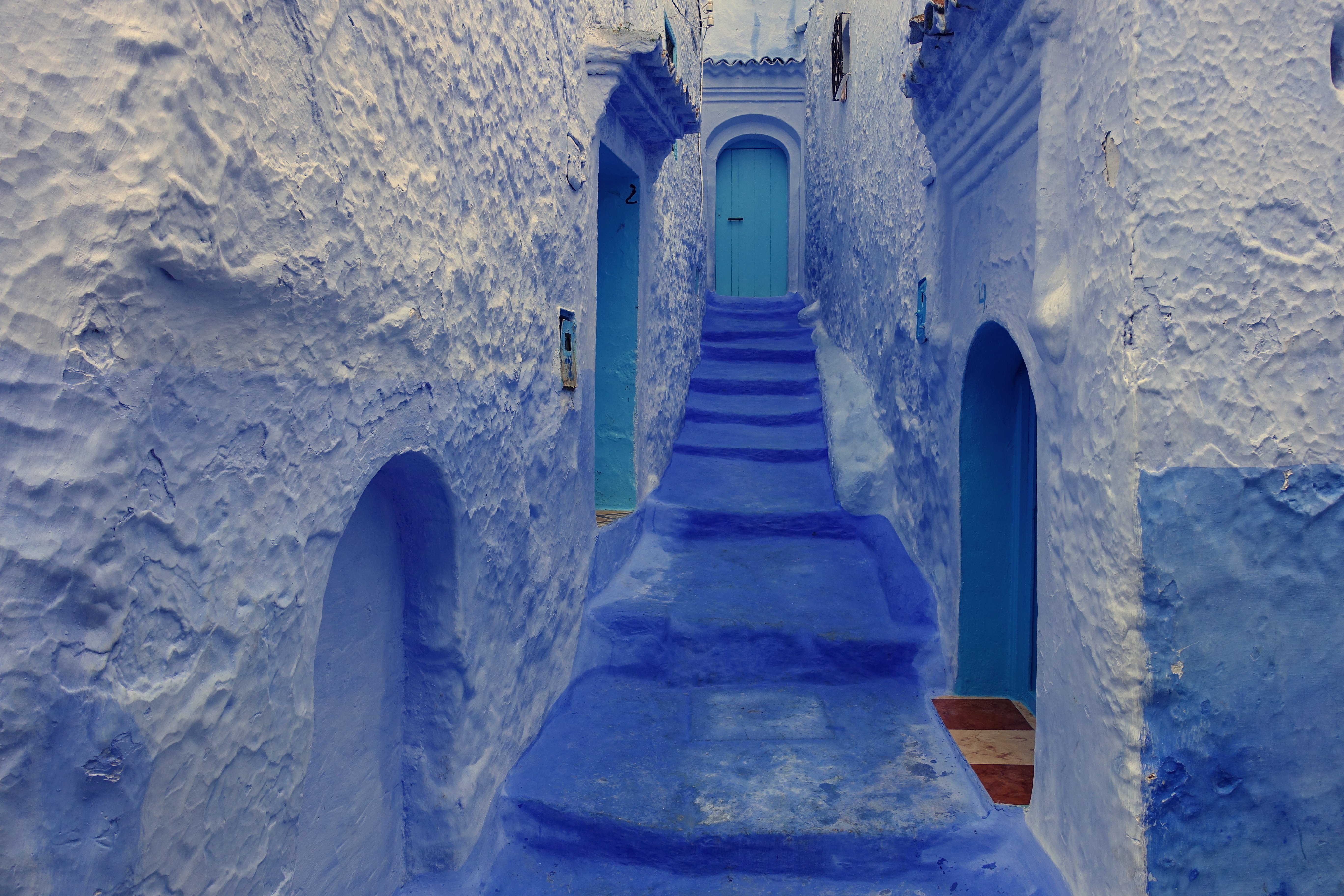
Chefchaouen — usually shortened to Chaouen — is a small, blue-washed town tucked into the Rif Mountains of northern Morocco. The name means "look at the peaks," and it lives up to it: the medina climbs a hillside beneath two rocky horns (the chaouen themselves), every wall and staircase painted in shades of cobalt, sky, and powder blue. The effect is dreamlike and, these days, heavily photographed, but the town has kept its scale and its rhythm — children still greet you in Spanish, old men play cards in shaded squares, and by ten at night the medina is quiet.
Founded in 1471 as a mountain refuge for Muslims and Jews fleeing Andalusia, Chaouen stayed closed to Christians for four centuries. That isolation gave it the Andalusian feel that still marks the architecture: whitewashed walls, red-tiled roofs, and the distinctive blue that locals started painting buildings in the 1930s, reportedly under the influence of Jewish refugees. The main square, Plaza Uta el-Hammam, is the heart of it all — sip a mint tea at one of the cafés, watch the Grand Mosque's octagonal minaret change colour with the light, and wander into the 15th-century kasbah on the north side, which has a small ethnographic museum and a garden.
The surrounding Rif is kif country — hashish has been grown here for centuries, and someone will offer you some before the end of your first afternoon. A polite no is fine. The better reason to be in the mountains is the hiking: the Akchour waterfalls and God's Bridge, a natural rock arch, are a morning's drive and an easy walk away. The Talassemtane National Park, which covers the peaks south of town, has longer trails for anyone with a day or two to spend.
Chaouen is four hours by bus from Fez or Tangier and makes a natural break in the journey between the two. Come for two nights: one to lose yourself in the medina, one to walk into the mountains.