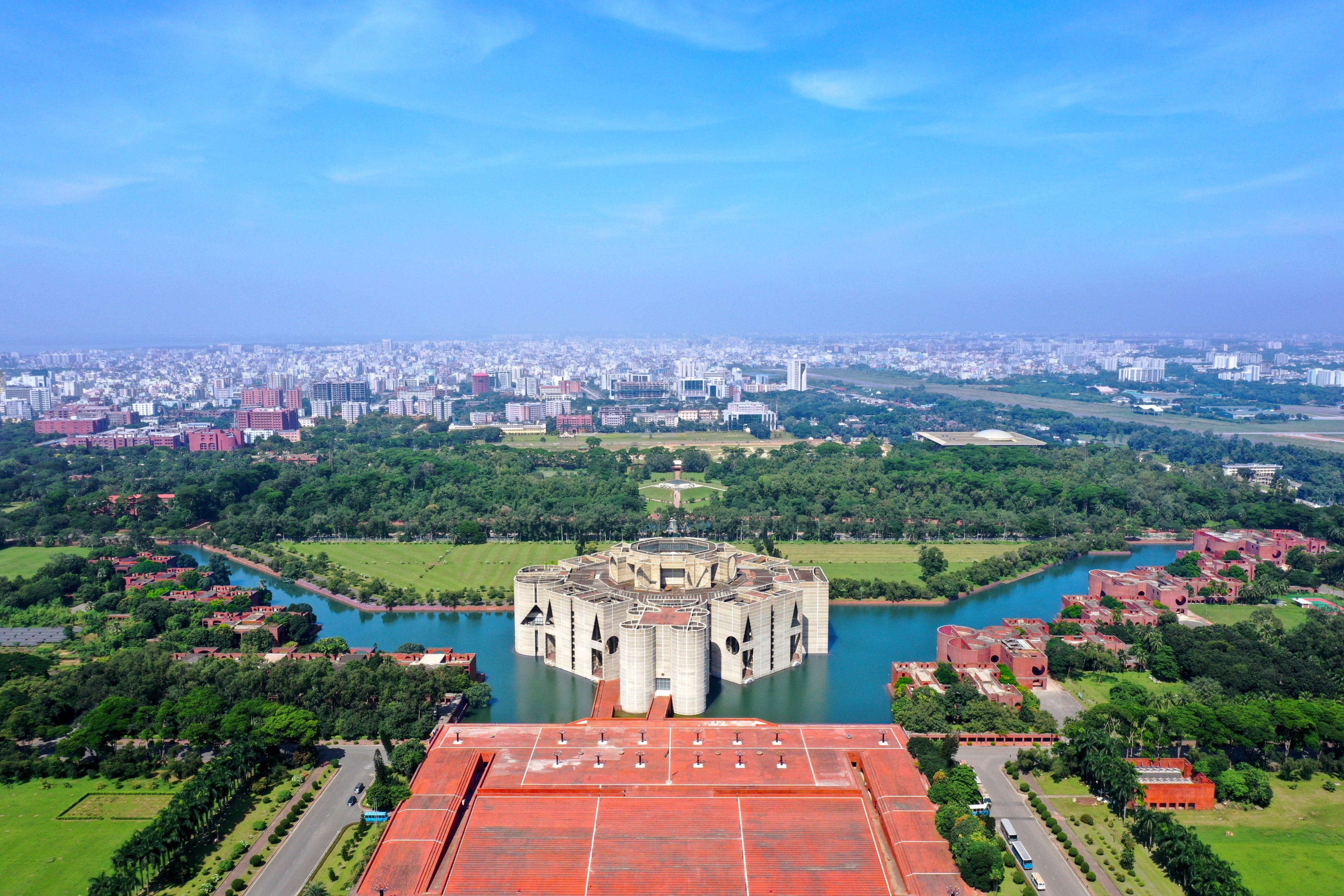
Dhaka is one of the most densely populated cities on earth — around 22 million people in a sprawling delta metropolis where traffic moves at a crawl and the streets never fully sleep. It is chaotic, noisy, and genuinely fascinating. Most visitors arriving in Bangladesh pass through Dhaka, and it rewards more time than most people give it.
The old city, Puran Dhaka, is the heart of what makes Dhaka compelling. The Lalbagh Fort (17th century, never fully completed) is the main historical monument. The Ahsan Manzil — the pink palace of the Nawabs of Dhaka, now a museum — gives a sense of the city's pre-partition Muslim aristocracy. The Dhakeshwari National Temple is the most important Hindu site in the country. Between these sights, the lanes of Puran Dhaka are full of rickshaws, spice markets, metalworkers, and some of the best biryani in Bangladesh.
The modern city has the National Assembly Building — a masterwork of modernist architecture by Louis Kahn, completed in 1982 — which is worth seeing for its sheer architectural ambition. Guided tours are available.
Once you have spent a couple of days in Dhaka, the city opens up. Day trips to Sonargaon (the old capital of Bengal, with a folk art museum) and the weavers' village of Dhamrai are easy by car or CNG.