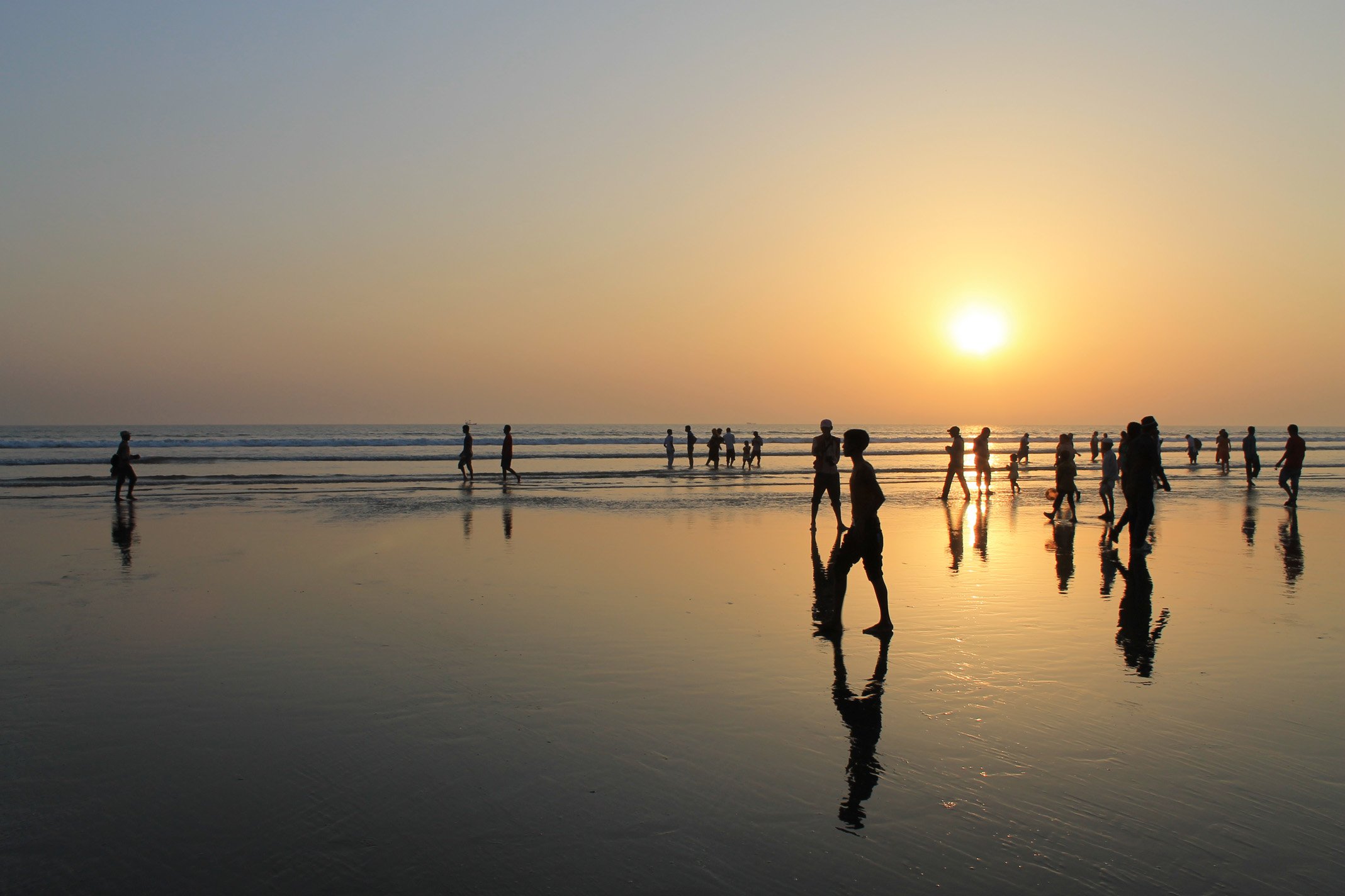
Cox's Bazar has one of the longest natural beaches in the world: 120 kilometres of unbroken sandy shoreline, backed by low forested hills, running south along the Bay of Bengal toward the Myanmar border. On weekdays and outside Bangladeshi holidays, it is far less crowded than the numbers suggest. At sunrise and sunset the light on the water is extraordinary.
The town itself is chaotic and commercial, catering mainly to domestic tourists. The Hotel Motel Zone, the main tourist strip, is functional without being attractive — a dense run of hotels, restaurants, and souvenir shops between the inland road and the beach. The beach north of the main town, toward Inani, is the most attractive part — cleaner, quieter, and more scenic. Inani beach has dark sand flecked with coral and is much prettier than the main town beach.
Cox's Bazar has a significant Marma Buddhist population descended from Arakanese migrants, and the Buddhist heritage of the area rewards some time. The monastery of Aggmeda Khyang in the old town is active and open to visitors. The village of Ramu, 10 kilometres east, has pagodas, a bronze Buddha, and traditional woodcarving workshops. From Cox's Bazar you can take a boat to Maheshkhali Island, where a Buddhist temple and a Shiva shrine sit side by side on a hill above a working fishing community.
St. Martin's Island, Bangladesh's only coral island, is further south and reachable by boat from Teknaf — calm, small, and very different in character from the mainland. The Dulhazra Safari Park, 50 kilometres north near Chakaria, has Bengal tigers and Asian elephants and makes a reasonable half-day excursion in the other direction.
The area around Cox's Bazar also hosts the world's largest refugee settlement — over a million Rohingya people, displaced from Myanmar's Rakhine State, live in camps north of the town. Visitors should be aware of this context; the camps are not tourist sites, but the humanitarian presence means the area has a complex character that goes well beyond beach tourism.