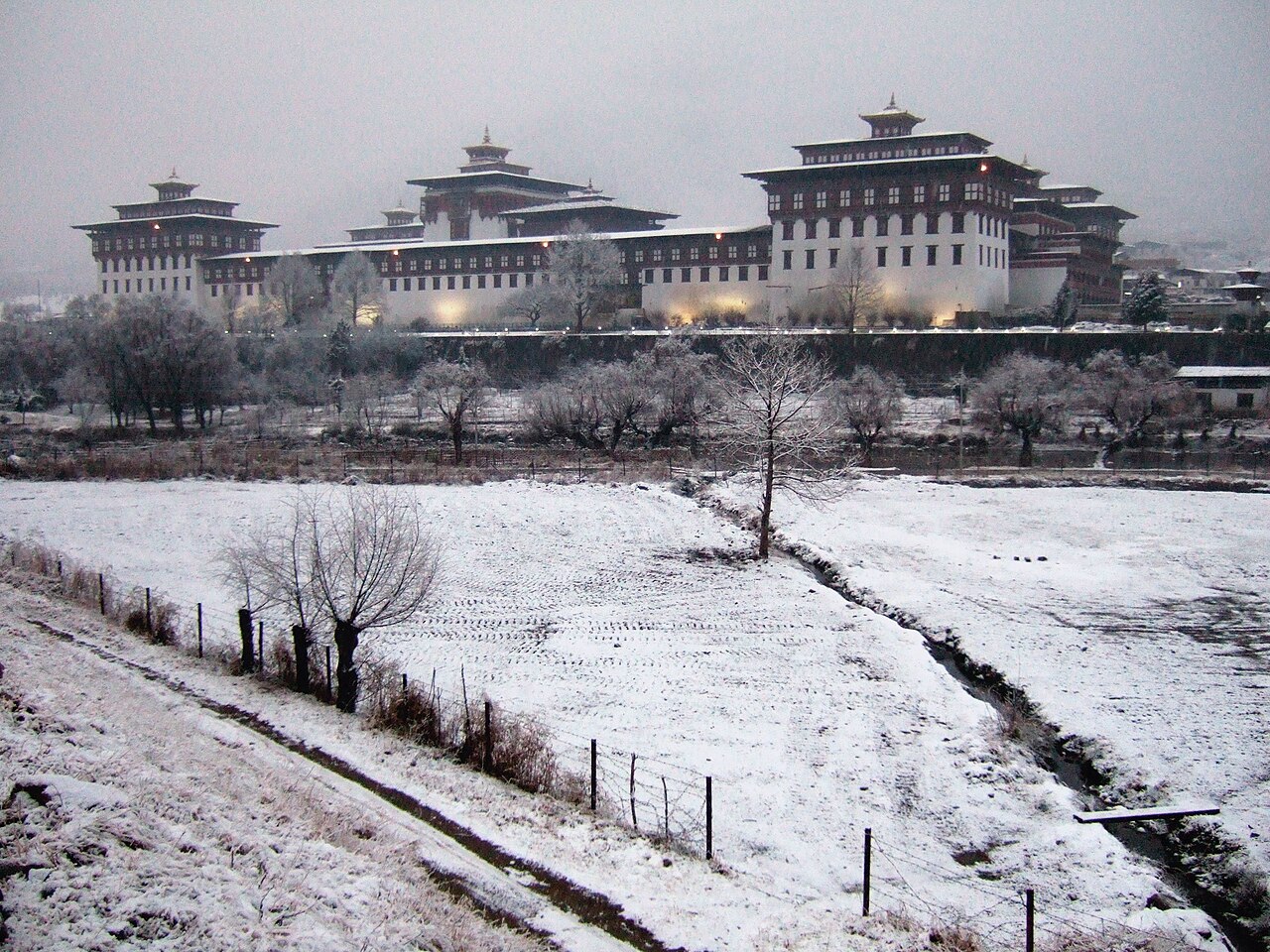
Thimphu is the capital and largest city of Bhutan, situated at about 2,300 metres in the Wang Chhu river valley in the western part of the country. It is one of the world's smallest and most unusual capitals: there are no traffic lights (a policeman directs vehicles at the main intersection), all new construction must conform to traditional Bhutanese architectural styles, and the population of around 100,000 gives it the pace of a large town rather than a city.
The Tashicho Dzong — the great fortress-monastery at the north end of the valley — houses the government and the country's senior monks. The Memorial Chorten, a white stupa in the city centre, is an active place of devotion where elderly Bhutanese make their daily circumambulations. The weekend market, the National Museum, and the Government Handicraft Emporium provide most of the sightseeing. The Thimphu Tshechu, a three-day religious dance festival, takes place each autumn at the dzong. Simtokha Dzong, the earliest surviving dzong in Bhutan (1629), is 5 km south of the city centre and now houses a school of Dzongkha studies.