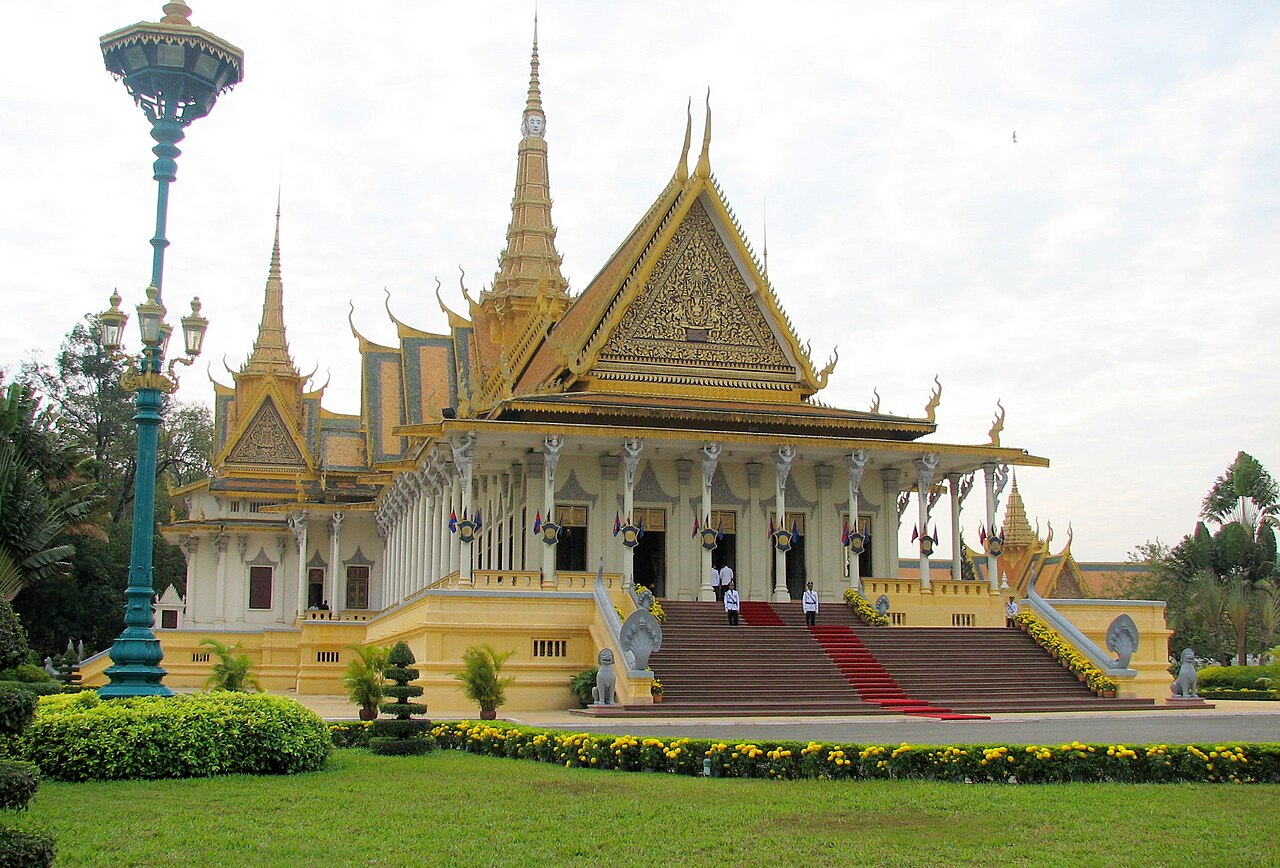
Phnom Penh is one of Southeast Asia's most compelling capitals — a city where gilded spires rise above the confluence of the Mekong and Tonle Sap rivers, and French colonial architecture lines broad boulevards still shaded by tamarind trees. It is chaotic, noisy, and utterly alive.
The city rewards those who give it time. The Royal Palace and Silver Pagoda are genuinely spectacular, the National Museum holds one of the finest collections of Khmer sculpture anywhere, and Wat Phnom — the hilltop temple that gave the city its name — offers a panoramic view over the rooftops. But Phnom Penh is not just a highlight reel. The riverfront promenade along Sisowath Quay fills with joggers and food vendors at dusk, the Central Market's art deco dome shelters everything from jewellery to fresh fish, and the backstreets around Bassac Lane have some of the best cocktail bars in the region.
You cannot visit Phnom Penh without confronting its recent history. The Tuol Sleng Genocide Museum and the Killing Fields of Choeung Ek are devastating, essential stops. They are difficult — and they should be. The guides, many of whom survived the Khmer Rouge era, share stories that no exhibit panel can convey.
Beyond the sights, Phnom Penh is a great city for eating. Street stalls sell fish amok, lok lak, and num banh chok (rice noodles with green curry) for a dollar or two. The restaurant scene has grown enormously, with Cambodian, French, and pan-Asian kitchens filling the streets around BKK1 and the Russian Market.