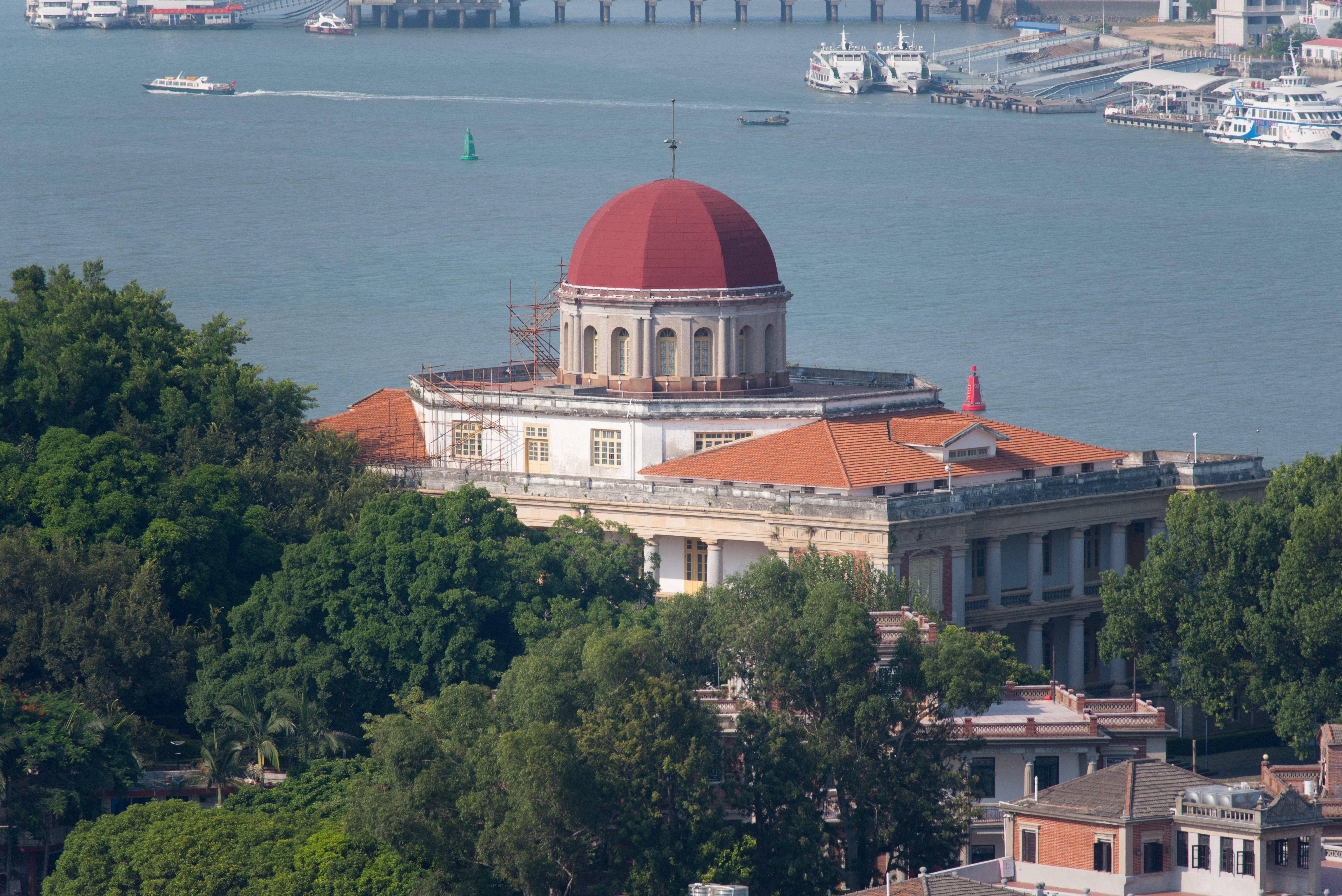
Gulangyu is a two-square-kilometre island a few minutes by ferry from the Xiamen waterfront, and it is among the most unusual places in China: a UNESCO World Heritage Site where no motor vehicles are permitted, the streets are quiet enough to hear birdsong, and the architecture is a layered collision of Victorian, Spanish, Dutch, and Japanese colonial styles alongside traditional Fujianese buildings. From the 1840s to the 1940s it served as a foreign concession and international settlement, and the mansions and consulates built during that century give the island a physical character found nowhere else on the Chinese coast.
The island is best explored on foot, wandering the colonial architecture lanes away from the main commercial drag near the ferry terminal. Sunlight Rock, the highest point, rewards the climb with panoramic views over the city and sea, and bears an inscription by Koxinga — the 17th-century Ming loyalist whose memory is preserved in the Koxinga Memorial Hall. The Piano Museum holds a serious collection of historic instruments — the island earned its "Piano Island" nickname from the remarkable concentration of pianos owned by foreign missionary families in the 19th century, and the musical tradition stuck — alongside the world's only dedicated organ museum. Shuzhuang Garden, built by a Taiwanese merchant in 1913, integrates the coastline into its design in a way that feels genuinely inventive rather than merely decorative.
The warning that needs to be delivered: Gulangyu is now one of the most-visited sites on the entire UNESCO list, and on weekends and public holidays it is crushingly overcrowded. The island transforms from a place of genuine character into a theme park of snack stalls and selfie spots. The solution is to visit on a weekday, arrive early on the first ferry, and stay until mid-afternoon when the day-trip crowds depart. An overnight stay — there are guesthouses in converted colonial buildings — gives access to the island at dusk and dawn, when it is genuinely beautiful and largely empty.