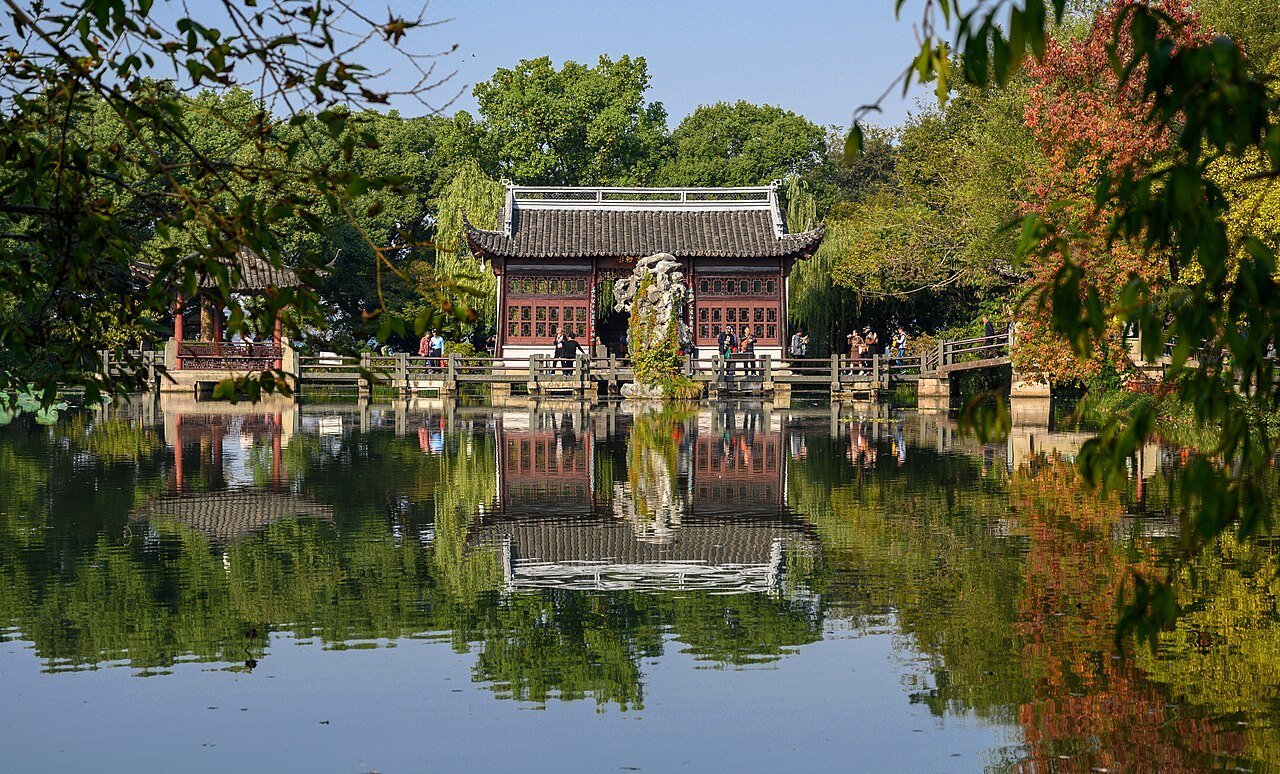
Hangzhou is one of China's most celebrated cities, famous since Marco Polo reportedly called it the finest city in the world. The claim still has some force: West Lake, right at the city's centre, is a genuinely beautiful expanse of water ringed by pagodas, willow-lined causeways and wooded hills. It's been a place of literary and artistic pilgrimage for a thousand years, and even with the crowds it manages to feel serene in the early morning.
The lake's surroundings reward slow exploration on foot or by bike. The Su Causeway, Broken Bridge, and Leifeng Pagoda are the classic sights, but the gardens and tea plantations in the hills above the western shore are just as good. The Longjing (Dragon Well) tea village grown here is among the finest green tea in China — a walk through the terraced fields and a cup at a farmhouse teahouse is something you won't want to skip. The China National Tea Museum in the tea hills explains the whole story.
The Yue Fei Temple on the northern shore is a monument to one of China's most beloved military heroes and one of the most visited historic sites in the country. The Zhejiang Provincial Museum on Lone Hill island has Neolithic jade that predates anything most museums can offer. Beyond the lake, Hangzhou has a strong old-town area around Hefang Street, the impressive Song Dynasty Six Harmonies Pagoda at the Qiantang River, and a well-regarded local cuisine built around river fish and the local tea.
It's under an hour from Shanghai by high-speed train, which makes it the most popular day trip from that city — aim to stay overnight if you can to see it without the worst of the crowds.